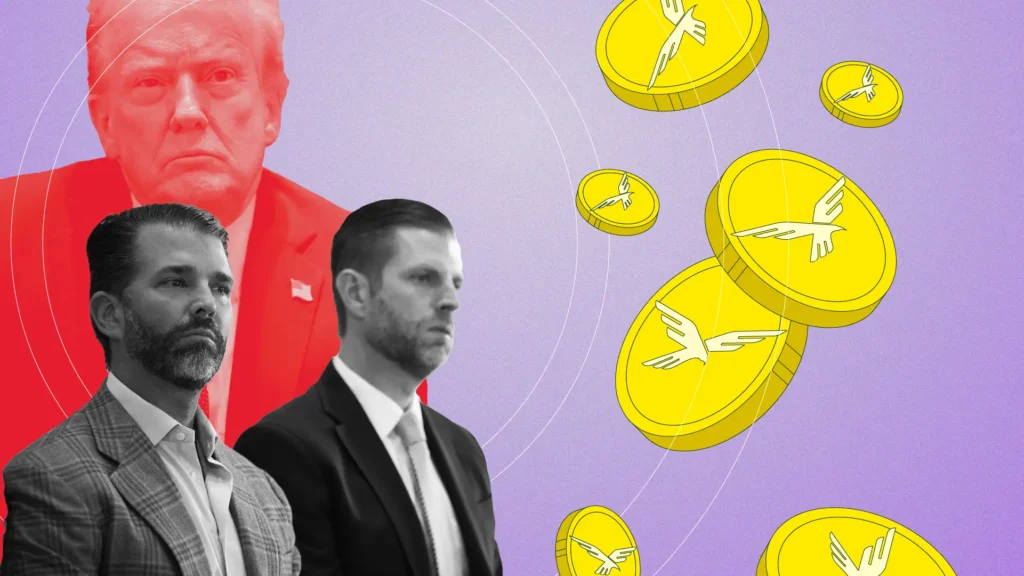
How much does a crypto pardon cost under Donald Trump's administration? | Credit: CCN.
Share
Key Takeaways
Donald Trump’s crypto and political pardons have reportedly wiped out over $1 billion in fines.
Some reports claim that lobbying firms connected to Trump’s allies have sought fees of up to $5 million to help clients secure clemency.
Trump’s growing number of crypto-related pardons has intensified debate over whether clemency in the digital finance world carries a financial cost.
President Donald Trump’s second term has unleashed a wave of presidential pardons that critics say blur the line between mercy and money.
According to PolitiFact in June 2025, a review of former Justice Department pardon attorney Liz Oyer’s claims that Trump’s clemency orders have erased more than $1 billion in court-ordered debts is likely true.
As of mid-2025, Trump had approved more than 1,500 clemency actions, including hundreds related to the Jan. 6 Capitol riot, which already surpassed most modern presidents over similar periods.
The findings have fueled concern that presidential clemency under Trump has become a privilege sold to the highest bidder, where wealth and connections determine who receives forgiveness from the Oval Office.
Try Our Recommended Crypto Exchanges
Sponsored
Disclosure
We sometimes use affiliate links in our content, when clicking on those we might receive a commission at no extra cost to you. By using this website you agree to our terms and conditions and privacy policy.
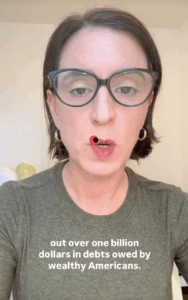
Oyer, who led pardon reviews inside the Justice Department until her dismissal in March 2025, compiled a list of 24 individuals and companies whose fines or restitution obligations were nullified by Trump’s pardons.
“President Trump has granted pardons that have wiped out over $1 billion in debts owed by wealthy Americans who have committed fraud and broken the law.”
The former attorney said the number was around $1.3 billion in total, including criminal penalties that had been imposed or were pending final approval by federal courts.
Liz Oyer went viral after exposing the claims on TikTok | Source: TikTok
PolitiFact, which analyzed her calculations in June, rated the claim “mostly true,” noting that most of the figures were supported by sentencing records, even if some totals were not finalized at the time of pardon.
Legal scholars told the fact-checking outlet that unpaid restitution or fines are generally wiped away once a full pardon is issued, unless a court has already received the payment.
The Pardon Economy
Beyond the figures themselves, the pardons have spotlighted a reportedly lucrative influence network.
The New York Center for Foreign Affairs analysts reported in June that lobbying and consulting firms linked to Trump’s allies have charged wealthy clients up to $5 million to help bring clemency requests to the president’s attention.
The group’s analysis, based on interviews with individuals familiar with the process, described a “growing pardon economy” in which political access and financial capacity shape outcomes.
The practice is not unprecedented; past presidents have faced similar accusations, but the sums involved and the frequency of pardons have raised eyebrows.
However, unlike previous administrations, Trump has issued pardons on a rolling basis rather than saving them for the end of his term, and has often bypassed recommendations from the Justice Department’s Office of the Pardon Attorney.
A Break from Tradition
Under long-standing DOJ guidelines, pardon applicants are expected to complete their sentences, wait five years, and pay all restitution before seeking clemency.
Those standards appear to have been set aside in many of the recent cases.
As of mid-2025, Trump had approved more than 1,500 clemency actions, including hundreds related to the Jan. 6 Capitol riot—already surpassing most modern presidents over similar periods.
While the White House has defended the decisions as “acts of compassion” for over-penalized individuals, officials warn the approach risks undermining faith in the rule of law.
“Some people who are familiar with the procedure are worried about the growing use of the pardon authority because it may give the impression of financial and political bias, which might undermine trust in the clemency process,” New York Center for Foreign Affairs analysts wrote.
List of High-Profile Pardons So Far
Trevor Milton, the Electric-Truck Founder
The single largest case on Oyer’s list involves Trevor Milton, founder of electric-vehicle start-up Nikola Corporation.
Milton was convicted in 2023 of securities and wire fraud for misleading investors about the company’s technology.
Federal prosecutors had requested $676 million in restitution, but the request was still pending when Trump granted a full pardon in March 2025.
That action not only cleared Milton’s sentence but also halted efforts to recover money for shareholders.
Ross Ulbricht, the Silk Road Pioneer
Trump’s full and unconditional pardon of Ross William Ulbricht, founder of the Silk Road darknet marketplace, fulfilled a campaign promise made repeatedly to his libertarian supporters.
Ulbricht, who had served more than 11 years of a double life sentence plus 40 years, was convicted in 2015 for creating and operating Silk Road, an anonymous online platform that enabled the sale of illegal drugs and illicit services using crypto.
He had also been ordered to pay $184 million in restitution.
Trump announced the pardon on Truth Social, writing that he had called Ulbricht’s mother “in honor of her and the Libertarian Movement, which supported me so strongly.”
The President called the decision a “pleasure” and criticized what he described as the “ridiculous” severity of Ulbricht’s sentence.
In a video message posted to X three days later, Ulbricht expressed gratitude for his release, saying:
“I was doing life without parole, and I was locked up for more than 11 years, but he let me out. I’m a free man now. So let it be known that Donald Trump is a man of his word.”
Ulbricht’s family, who had campaigned for nearly a decade to secure his freedom, celebrated the pardon online, calling it a victory for “everyone who loves freedom and cares about second chances.”
The decision followed months of speculation and even wagers on the prediction platform Polymarket, where traders overwhelmingly bet that Trump would fulfill his pledge.
According to Polymarket, about 92% of users correctly predicted that Ulbricht would receive clemency by April 2025.
Changpeng Zhao, Binance Founder
Trump’s decision to pardon Changpeng Zhao (CZ), founder of crypto exchange Binance, has drawn sharp criticism from lawmakers and the financial industry.
Especially after in recent days the President claimed to not even know who the convicted crypto mogul was.
During an interview on CBS’s 60 Minutes program, Trump told the interviewer:
“I don’t know who he is,” Trump said.
Adding: “I know he got a four-month sentence or something like that. And I heard it was a Biden witch hunt.”
Zhao had been sentenced in April 2024 to four months in prison after pleading guilty to U.S. money-laundering violations and completed his sentence in September 2025.
The pardon allows Binance to resume operations in the U.S. following more than a year of lobbying from the company and its representatives.
Senator Elizabeth Warren, who has been famously anti-crypto, said in a statement:
“First CZ pleaded guilty to a criminal money-laundering charge” and then he boosted one of Trump’s crypto ventures and “lobbied for a pardon.”
CZ pleaded guilty to a criminal money laundering charge and was sentenced to prison.
But then he financed President Trump’s stablecoin and lobbied for a pardon.
“If Congress does not stop this kind of corruption in pending market structure legislation, it owns this lawlessness,” she added.
Republican Senator Thom Tillis also told Semafor that the pardon “sent a bad signal.”
“[It] opens up the aperture for future pardons—and maybe the calculus for people making questionable decisions, saying, ‘Well, I may have a shot here.’ I don’t think it’s a good policy for a free-market economy,” he said.
Honorable Mentions
Beyond the higher-profile cases, several other notable figures also appeared on Oyer’s list of Trump pardon recipients.
While the financial amounts involved were smaller, the names continue to reflect the political reach of Trump’s clemency decisions.
Among them was Devon Archer, former business partner of Hunter Biden, who had been questioned by congressional Republicans during their investigation into President Joe Biden’s family business dealings.
Media executive Carlos Watson, founder of Ozy Media Inc., also received a pardon after being convicted on multiple fraud counts tied to investor misrepresentations.
Reality television personalities Todd and Julie Chrisley, who were serving sentences for bank and tax fraud, were also granted clemency.
Former politicians Michael Grimm, John Rowland, Michelle Fiore, and Alexander Sittenfeld—each with previous federal convictions ranging from tax fraud to corruption—were likewise cleared of wrongdoing and financial penalties.
Kurt Robson is a London-based reporter at CCN, specialising in the fast-moving worlds of crypto and emerging technology. He began his career covering local news in Cornwall after graduating from Falmouth University with First Class Honours in Journalism. There, he cut his teeth on everything from council meetings to missing swans.
He quickly rose through the ranks to become a frontline journalist at several of the UK’s leading national newspapers. Over the years, he has interviewed musicians and celebrities, reported from courtrooms and crime scenes, and secured multiple front-page exclusives.
Following the upheaval of the COVID-19 pandemic, Kurt shifted his focus to technology journalism—just ahead of the AI boom. With a natural curiosity and a trained eye for emerging trends, he has found a new rhythm in reporting on innovation.
At CCN, Kurt's work focuses on the cutting edge of crypto, blockchain, AI, and the evolving digital world. Drawing on his background in people-first reporting and his deep interest in disruptive tech, Kurt delivers stories that are insightful, entertaining, and human-centric.