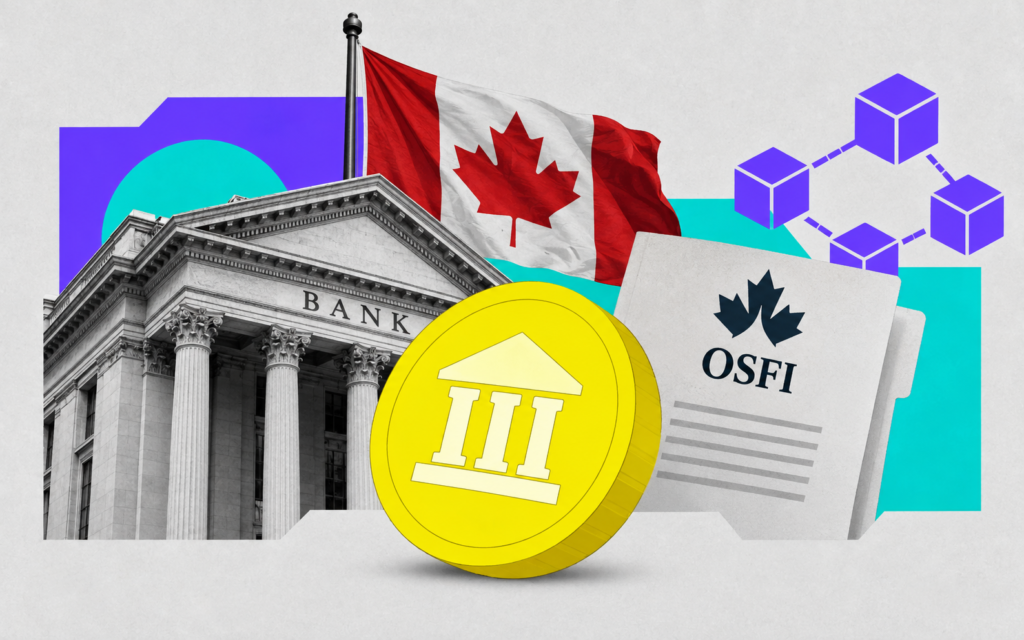
Canada Proposes 100% Stablecoin Reserves, 3-Day Redemptions and $10M Penalties
Share
Key Takeaways
Canada has proposed new stablecoin regulations requiring issuers to maintain at least 100% reserve backing and process redemptions within three business days.
The framework would prohibit issuers from paying yield on stablecoin holdings, cap redemption fees at 1% and introduce penalties of up to C$10 million for very serious violations.
The proposals are open for public consultation until Dec. 23, 2026. They are not yet enforceable regulations.
Canada is moving toward a federal stablecoin regulatory framework that could reshape how issuers such as Circle and domestic Canadian-dollar stablecoin providers operate in the country.
On Oct. 24, the Department of Finance published proposed regulations under the Stablecoin Act, outlining requirements for reserves, redemptions, custody, disclosures and supervision by the Bank of Canada.
Canada proposes stablecoin rules that require 1:1 reserves and ban yield payments. | Source: gazette.gc.ca
The rules would require issuers to maintain sufficient high-quality liquid assets to fully back outstanding stablecoins, while introducing a three-business-day redemption deadline and penalties of up to C$10 million for the most serious violations.
However, the proposals go beyond consumer protection. They also seek to prevent stablecoins from functioning like interest-bearing bank deposits, raising questions about how issuers can compete for users without offering returns on token balances.
Try Our Recommended Crypto Exchanges
Sponsored
Disclosure
We sometimes use affiliate links in our content, when clicking on those we might receive a commission at no extra cost to you. By using this website you agree to our terms and conditions and privacy policy.
Canada Targets Stablecoin Yield and Tightens Reserve Rules
One of the most consequential provisions concerns interest and rewards.
Under the proposal, issuers would be prohibited from paying interest or yield simply for holding stablecoins. The restriction would also cover indirect arrangements involving third parties.
For example, an issuer could not fund a rewards program designed to encourage customers to maintain larger stablecoin balances or hold tokens for longer periods.
However, rewards linked exclusively to using stablecoins for transactions would remain permitted.
The distinction is deliberate. Canada’s Department of Finance wants stablecoins to operate primarily as payment instruments rather than compete directly with bank deposits and interest-bearing investment products.
Issuers could continue earning returns on eligible reserve assets, provided the reserves remain sufficient to back outstanding tokens. Those returns could not be distributed to holders as prohibited holding-based yield.
What Canada’s 100% Reserve Requirement Means for USDC and Other Stablecoins
The proposed framework would require issuers to maintain reserves worth at least the full value of their outstanding stablecoins at the end of each day.
Those reserves would need to be denominated in the currency to which the stablecoin is pegged.
Eligible assets would be limited to cash and demand deposits, government debt with remaining maturities of no more than three months, overnight reverse repurchase agreements, and money market funds composed entirely of eligible assets.
The government also proposes requiring reserve assets to be held by qualified Canadian-incorporated custodians in segregated, bankruptcy-remote accounts.
This could have implications for international stablecoin issuers operating in Canada, including Circle, the issuer of USDC.
The Stablecoin Act’s framework covers domestic and foreign non-financial issuers making stablecoins available to Canadians. It does not apply directly to prudentially regulated financial institutions, such as banks.
However, whether a particular issuer would need to change its custody arrangements, reserve composition, or business structure would depend on its existing operations and any exemptions granted under the framework.
The proposed rules also allow the Bank of Canada to recognize substantially similar regulatory requirements in certain circumstances, potentially reducing overlapping obligations.
Stablecoin Holders Could Get Redemptions Within Three Business Days
Canada’s proposed redemption requirements would establish several protections for stablecoin holders.
Issuers would have to offer redemption at par, without imposing a minimum redemption amount.
The rules would also require redemption within three business days and limit redemption fees to 1% of the amount redeemed.
Importantly, the government’s explanatory statement clarifies that the three-business-day deadline is intended to ensure issuers have liquidated the necessary reserve assets and initiated the transfer of fiat funds.
It should not automatically be interpreted as a guarantee that the money will appear in every customer’s bank account within three business days.
The Department of Finance said current direct redemption fees are generally around 0.1%, considerably below the proposed maximum.
The higher ceiling is intended to provide flexibility for smaller issuers facing higher operational costs.
Issuers would also have to publish redemption policies and provide at least seven days’ notice before increasing fees.
Bank of Canada Could Impose Penalties Up to C$10 Million
The proposals would give the Bank of Canada a central role in supervising stablecoin issuance.
Issuers falling within the framework would have to register, submit regular reports, and maintain governance, cybersecurity, risk management, and recovery plans.
The proposed enforcement structure distinguishes between two categories of violations.
Violation category
Maximum penalty
Serious
C$1 million
Very serious
C$10 million
Failures to maintain adequate reserves or to redeem stablecoins at their required value could constitute very serious violations.
The financial implications extend beyond penalties.
The government estimates the Bank of Canada’s annual supervision costs at approximately C$2.5 million, which would be recovered from regulated issuers.
Under the proposed assessment structure, issuers with at least C$750,000 annual base assessment, plus an allocated share of additional recoverable costs.
Issuers with between C$500 million and C$1 billion outstanding would face a C$350,000 base assessment, while smaller issuers would face a C$25,000 base assessment.
These figures are in Canadian dollars and refer to proposed supervisory fees, not fines
When Will Canada’s Stablecoin Rules Take Effect?
The government intends to bring the Stablecoin Act and its supporting regulations into force in fall 2027.
For now, the regulations remain proposals.
The public consultation runs through Dec. 23, 2026, allowing issuers, payment companies, financial institutions and other stakeholders to comment before the rules are finalized.
Existing issuers would receive a transitional period, provided they apply for Bank of Canada registration within 30 days after the framework comes into force.
The Bank of Canada is also expected to publish further guidance before implementation.
However, the commercial consequences remain uncertain.
Stricter reserves, Canadian custody requirements, and yield limits could improve protections for holders while increasing operating costs and limiting certain business models.
The central question is whether Canada’s proposed framework can attract new stablecoin issuers while maintaining the safeguards regulators consider necessary for widespread payment adoption.
Disclaimer:
The information provided in this article is for informational purposes only. It is not intended to be, nor should it be construed as, financial advice. We do not make any warranties regarding the completeness, reliability, or accuracy of this information. All investments involve risk, and past performance does not guarantee future results. We recommend consulting a financial advisor before making any investment decisions.
Dr. Guneet Kaur is a senior editor at CCN.com and a Science Fellow at Exponential Science. She is a fintech and blockchain expert with extensive experience in digital finance education, blockchain ecosystems, and cryptocurrency markets. She has worked with global media such as Cointelegraph, as well as education and blockchain platforms, to design and lead strategic content and learning initiatives. As an educator and assessor for top-tier executive programs, she bridges real-world fintech trends with academic insight.
Dr. Kaur is also a published researcher and peer reviewer across fintech and data science journals, including Financial Innovation Journal and International Journal of Big Data Intelligence and Applications. Her work spans data-driven analysis, Web3 innovation, and technical content development. With a strong foundation in both industry and academia, she translates complex financial technologies into practical applications, empowering learners, professionals, and institutions across the rapidly evolving digital finance landscape.