Key Takeaways
- The Senate’s crucial CLARITY Act vote is scheduled for Sept. 15, less than 24 hours before the Federal Reserve announces its latest interest-rate decision.
- At the time of reporting, Bitcoin is trading near $77,300.
- CCN asked four AI models to predict what would happen to Bitcoin.
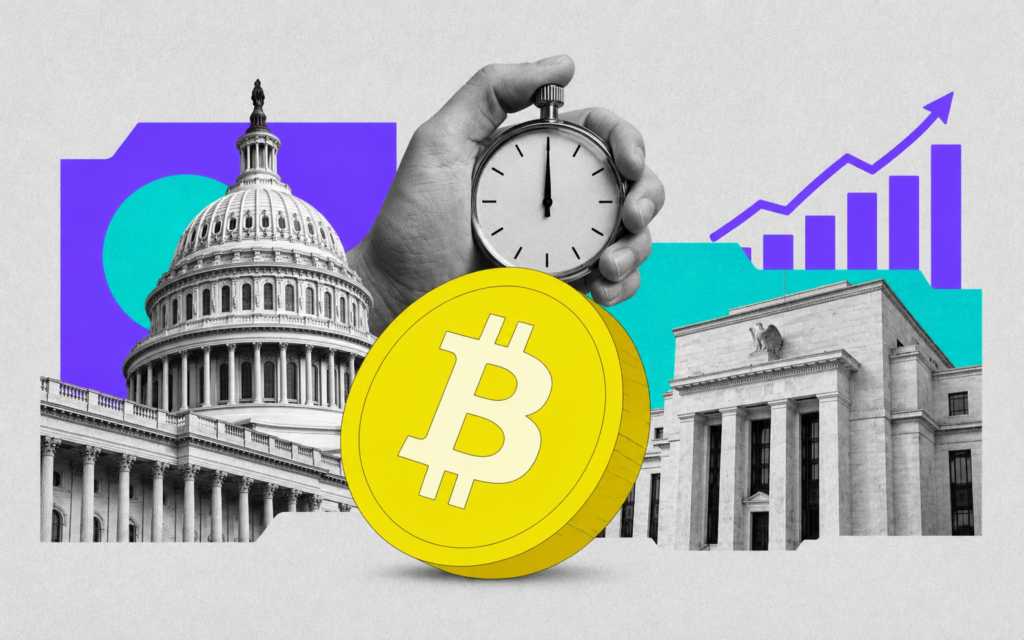
Bitcoin is heading toward what could be its most consequential 24 hours of 2026, with two major decisions that could determine its next move arriving almost back-to-back.
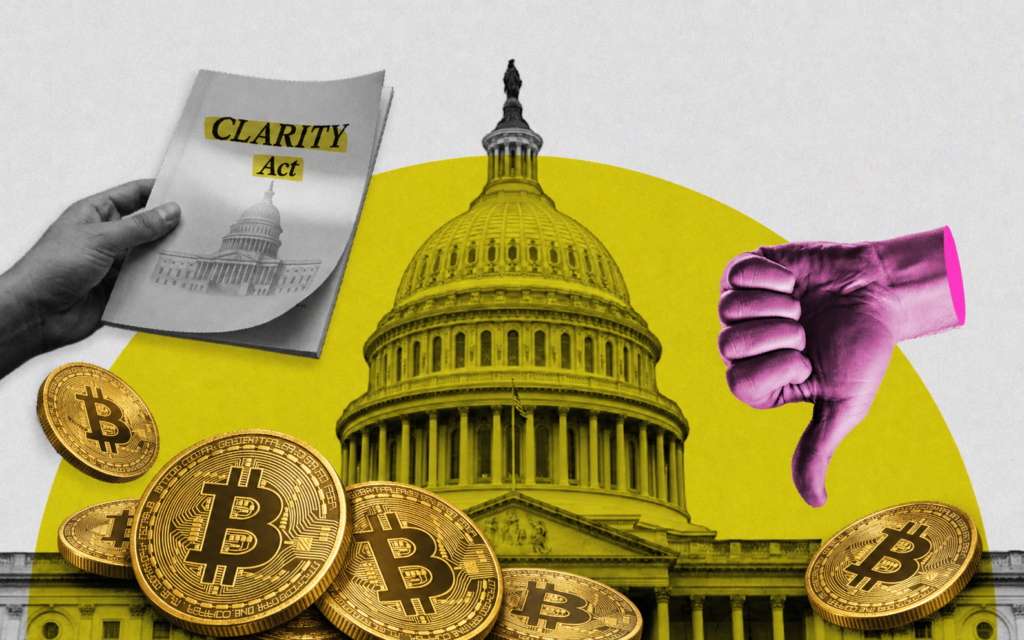
On Sept. 15, the US Senate is scheduled to hold a crucial vote on the CLARITY Act.
Just 23 hours and 45 minutes later, the Federal Reserve will announce whether it is raising interest rates or leaving them unchanged.
CCN asked ChatGPT, Gemini, Claude, and Grok to estimate what could happen to Bitcoin under the different combinations of outcomes.
Their forecasts ranged from a fall toward $55,000 if the CLARITY Act stalls to a rapid return above $100,000 if Washington delivers a double victory.
CLARITY Act Faces Crucial 60-Vote Test
The first decision will determine whether the Senate can move forward with consideration of the CLARITY Act.
Senate Majority Leader John Thune filed cloture on the motion to proceed before lawmakers left Washington for their August recess.
The motion is scheduled to ripen at 2:15 p.m. ET on Sept. 15 and will generally require 60 votes to pass.
Failure to secure enough support would deal a potentially serious blow to efforts to pass the legislation in 2026.
The Senate Banking Committee advanced the legislation by a bipartisan vote of 15-9 in May.
However, disagreements have continued over anti-money-laundering rules and ethical restrictions.
Treasury Secretary Scott Bessent recently warned that failure to move forward would send a “troubling signal” to US allies.
Federal Reserve Decision Follows the Next Day
Markets will have little time to process the result before attention turns to the Federal Reserve.
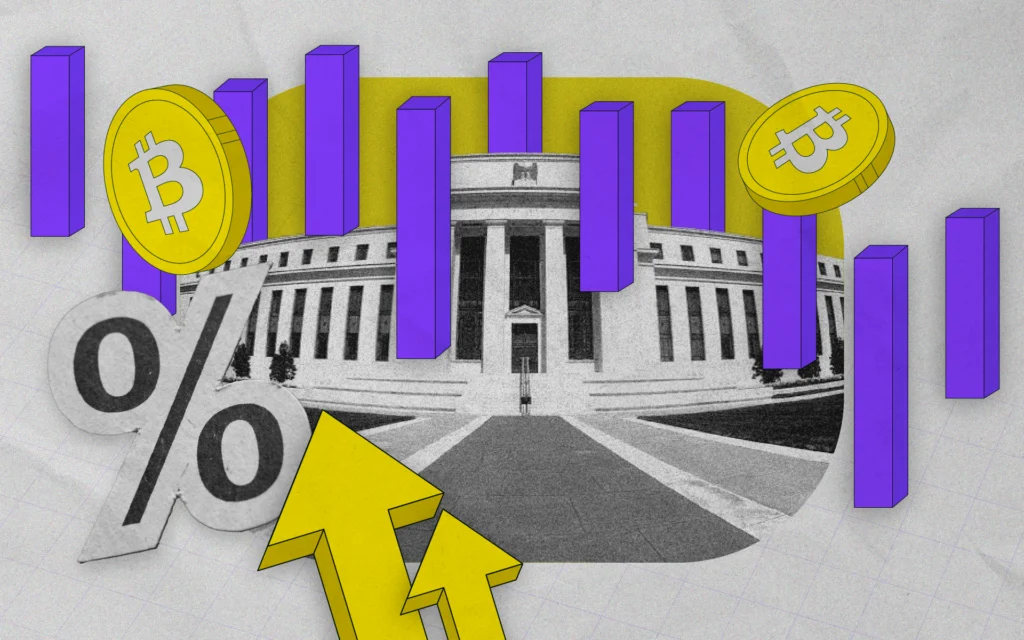
The Federal Open Market Committee is holding a two-day meeting on Sept. 15 and 16, with its policy announcement scheduled on Sept. 16, according to the Federal Reserve’s calendar.
A rate hike could place additional pressure on Bitcoin by strengthening the dollar.
Leaving rates unchanged could generate the opposite reaction, particularly because prediction markets currently view a hike as the more likely outcome.
Bitcoin’s $400,000 and $500,000 Forecasts Return to Focus
The two decisions arrive as several extremely long-term Bitcoin forecasts remain in circulation.
Coinbase CEO Brian Armstrong has said Bitcoin could eventually reach $400,000 if it captures a larger proportion of the global market for stores of value.
Meanwhile, Bernstein analyst Gautam Chhugani previously outlined a bull case in which Bitcoin reaches $500,000 by 2029, compared with a base-case target of $150,000 by mid-2027.
Cathie Wood’s ARK Invest has gone considerably further, placing Bitcoin at approximately $1.5 million by 2030 under its most optimistic scenario.
From a price of roughly $77,300, Bitcoin would need to increase more than fivefold to reach $400,000 and nearly 19-fold to reach $1.5 million.
At $500,000, its circulating market capitalization would approach $10 trillion.
Reaching ARK’s $1.5 million target would place Bitcoin close to a $30 trillion valuation, requiring it to capture an extraordinary share of the global market.
While the Sept. 15 and 16 decisions will not determine whether those targets are reached, they could significantly affect the regulatory and monetary conditions underpinning the predictions.
What the Four AI Models Were Asked
Each model was given Bitcoin’s approximate price of $77,300 and the same two central scenarios.
The bullish scenario assumed the CLARITY Act cleared its hurdle on Sept. 15 before the Federal Reserve held interest rates unchanged the following day.
The bearish scenario assumed the Senate failed to advance the legislation and the Fed raised rates by 25 basis points.
All models were asked to estimate Bitcoin’s immediate 7-day reaction before providing base and bullish ranges for the ends of 2026 and 2030.
ChatGPT: Double Victory Could Send Bitcoin Toward $92,000
ChatGPT treated a successful CLARITY vote and unchanged interest rates as an extremely bullish catalyst for Bitcoin.
It predicted that Bitcoin would climb to $92,000 during the week following the decisions.
Under the opposite scenario, in which CLARITY stalls and the Fed raises rates, ChatGPT said Bitcoin could fall back to $62,000.
Its end-of-2026 outlook was much more bullish, stating that Bitcoin would reach $150,000 and surge to $700,000 by 2030.
Gemini: Relief Could Push BTC Near $100,000
Gemini produced a more bullish immediate reaction.
The model estimated that Bitcoin could rise to $98,000 if the Senate advanced CLARITY and the Federal Reserve held rates steady.
If both decisions went against Bitcoin, however, Gemini placed Bitcoin between $60,000 and $63,000.
By the end of 2026, Bitcoin is predicted to reach $140,000, with a bull case of $1.3 million by 2030.
However, the model stressed that targets above $1 million would require Bitcoin to become a major institutional reserve asset.
Claude: A Sell-the-News Reversal Could Follow
Claude delivered the most skeptical short-term forecast of the four models.
It suggested that a favorable CLARITY vote and Fed hold could initially lift Bitcoin toward $82,000 before traders began taking profits.
In its sell-the-news scenario, Bitcoin quickly fell back toward $72,000 as attention returned to economic growth and actual institutional demand.
Claude argued that investors may begin pricing in favorable decisions before Sept. 15, limiting the size of the eventual rally.
It also warned that advancing the CLARITY Act would not guarantee final passage.
Under the double-negative scenario, Claude said Bitcoin could fall back to $55,000.
Its end-of-2026 base-case range was similarly subdued, with Bitcoin projected to reach $78,000.
By 2030, Claude projected Bitcoin to be between $100,000 and $120,000.
Grok: Bitcoin Could Return Above $100,000
Grok produced the most aggressive immediate forecast.
It argued that advancing the CLARITY Act immediately before a surprise Fed hold could be interpreted as the beginning of a new institutional cycle.
Its scenario placed Bitcoin above $105,000 during the weeks following the decisions.
That would represent an increase of as much as 36% from Bitcoin’s current price.
Grok said the combination could revive expectations of a return to the October 2025 record and trigger renewed buying.
However, if the CLARITY stalled and the Fed raised rates, Grok placed BTC at around $68,000.
For the end of 2026, it said Bitcoin could hit $175,000.
Grok’s 2030 base case placed Bitcoin between $750,000 and $1.2 million.
In its most optimistic scenario, Bitcoin exceeded $1.5 million, matching the upper end of ARK’s forecast.
Two Decisions Will Not Eliminate Bitcoin’s Risks
The four forecasts diverged significantly in their assessments of the scale and durability of Bitcoin’s potential reaction.
However, all four models warned that neither decision would make any price target inevitable.
A successful CLARITY vote would only allow the Senate to move toward considering the Act.
Meanwhile, holding interest rates unchanged for one meeting would not guarantee that monetary policy will remain supportive.
Bitcoin’s path toward $400,000, $500,000, or $1.5 million still depends on continued institutional adoption and its ability to compete with other assets.
The information provided in this article is for informational purposes only. It is not intended to be, nor should it be construed as, financial advice. We do not make any warranties regarding the completeness, reliability, or accuracy of this information. All investments involve risk, and past performance does not guarantee future results. We recommend consulting a financial advisor before making any investment decisions.

Kurt Robson is a London-based reporter at CCN, specialising in the fast-moving worlds of crypto and emerging technology. He began his career covering local news in Cornwall after graduating from Falmouth University with First Class Honours in Journalism. There, he cut his teeth on everything from council meetings to missing swans.
He quickly rose through the ranks to become a frontline journalist at several of the UK’s leading national newspapers. Over the years, he has interviewed musicians and celebrities, reported from courtrooms and crime scenes, and secured multiple front-page exclusives.
Following the upheaval of the COVID-19 pandemic, Kurt shifted his focus to technology journalism—just ahead of the AI boom. With a natural curiosity and a trained eye for emerging trends, he has found a new rhythm in reporting on innovation.
At CCN, Kurt's work focuses on the cutting edge of crypto, blockchain, AI, and the evolving digital world. Drawing on his background in people-first reporting and his deep interest in disruptive tech, Kurt delivers stories that are insightful, entertaining, and human-centric.