Mike McGlone warns Bitcoin below $80,000 and copper below $6.40 could signal a broader year-end selloff as stocks slide. | Credit: CCN.com
Share
Key Takeaways
Roughly 233,000 BTC were left in long-term-holder wallets around the Coldcard exploit.
Casa CEO Nick Neuman said customer conversations showed that some holders moved from single-signature wallets to multisig setups.
Nansen CEO Alex Svanevik sees $60,000 as a permanent Bitcoin floor and $1 million as possible by 2030.
Nansen co-founder and CEO Alex Svanevik believes Bitcoin’s recent lows may prove permanent, arguing that the crypto will never trade below $60,000 again.
The claim comes as Bitcoin has recently been trading near $64,000, leaving relatively little distance between its current price and Svanevik’s proposed long-term floor. He also believes Bitcoin could reach $1 million by 2030.
It comes as other analysts predict signs of long-term “downside exhaustion” for Bitcoin’s price.
The predictions follow Bitcoin holders moving roughly 233,000 BTC, worth about $15 billion at recent prices, out of long-term-holder wallets in the days surrounding the Coldcard security breach.
Try Our Recommended Crypto Exchanges
Sponsored
Disclosure
We sometimes use affiliate links in our content, when clicking on those we might receive a commission at no extra cost to you. By using this website you agree to our terms and conditions and privacy policy.
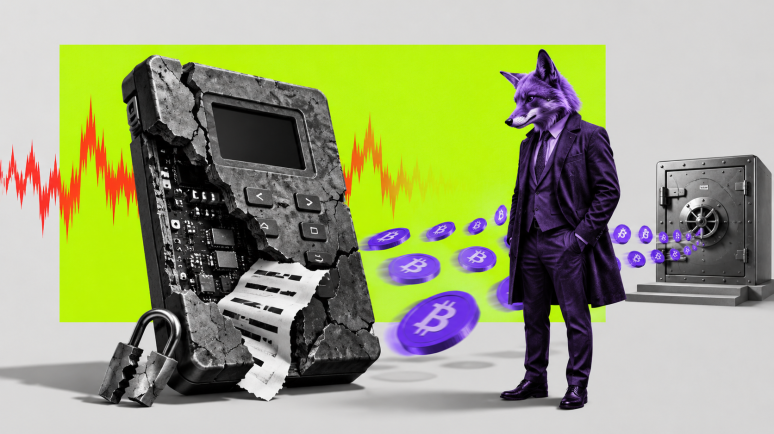
The Coldcard incident did not compromise the Bitcoin network itself.
Instead, it exposed a seed-generation flaw in firmware produced by Coinkite, the company behind the hardware wallet.
According to Coinkite’s security advisory, the affected firmware generated some wallet seeds with far less randomness than intended.
That made it easier for sophisticated attackers to guess vulnerable private keys.
The onchain metrics around the Coldcard incident reinforce how important self custody is to the resilience of Bitcoin as an asset class.
In the couple of days around the hack: – 2.1k BTC was stolen – 22k moved to exchanges – 233k moved out of long term holder wallets in on… pic.twitter.com/iewr5RvG9c
Around 233,000 BTC left long-term-holder wallets in on-chain transactions.
At a Bitcoin price near $64,000, the final figure is worth just under $15 billion.
Estimates of the total stolen vary by methodology: separate tracking cited by Decrypt identified approximately 1,596 BTC across more than 5,200 addresses, while the figures shared by Neuman put the loss closer to 2,100 BTC.
Did All 233,000 BTC Move to Safety?
Blockchain data can show that coins moved, but it cannot, by itself, prove who controlled each wallet or where the funds ultimately went.
However, Casa had direct evidence that some of the activity represented defensive migrations.
Neuman said customer conversations showed that some users moved funds from non-Coldcard single-signature devices into multisig arrangements after deciding that a single-signature device no longer met their security needs.
Other users already employing multisig moved funds into new multisig wallets after removing a Coldcard device from their keyset.
On that basis, Neuman estimated that between 10 and 100 times as much Bitcoin was moved to safety as was stolen.
“Self-custody is not just good for Bitcoiners, it is good for Bitcoin,” Neuman said.
Nansen CEO Calls $60,000 a Permanent Bitcoin Floor
The security scare unfolded with Bitcoin trading only modestly above $60,000, making Svanevik’s price-floor call especially bold.
“My personal view is that I don’t think Bitcoin is ever going to go back below $60,000. I think forever,” the Nansen CEO said.
Svanevik’s thesis rests on Bitcoin establishing progressively higher lows across market cycles.
He also views the asset as a counterweight to the expansion of government debt and the long-term growth of the money supply.
In that framework, Bitcoin’s capped supply competes with currencies whose supplies can continue to expand.
But his wording of “forever” leaves no room for any risk events.
Bitcoin’s price briefly traded below $60,000 in February 2026 and returned close to that level in June.
With BTC recently near $64,000, a drop below Svanevik’s proposed floor would require only a single-digit percentage decline.
Could Bitcoin Reach $1 Million by 2030?
Svanevik also said that $1 million per Bitcoin is possible by 2030, even if the target seems extreme compared to today’s price.
He compared the forecast to how a $100,000 target sounded to investors in 2018.
At roughly $64,000, Bitcoin would need to rise more than fifteenfold to reach $1 million.
The target would imply a market value of about $20 trillion.
Svanevik is not alone in making a seven-figure call.
ARK Invest’s official 2030 model sets a bull case of approximately $1.5 million, a base case of $ 710,000, and a bear case of $300,000.
Block co-founder Jack Dorsey has also said Bitcoin could exceed $1 million by 2030, while Strategy Executive Chairman Michael Saylor has repeatedly argued that crypto was heading to $1 million.
Katie Stockton Sees Signs of a Bottom
The long-term bullish forecasts come as Fairlead Strategies founder Katie Stockton sees early technical evidence that Bitcoin may be forming a lasting low.
“We are seeing those signs of long-term downside exhaustion already,” Stockton told Coinage in a recent interview.
Stockton said two of Fairlead’s indicators showed Bitcoin in a long-term oversold condition.
More importantly, long-term momentum had begun to turn upward after previously accelerating to the downside around the initial move toward $60,000.
Compared with gold, Stockton said Bitcoin had a better chance of establishing a major, lasting low because it had already reached oversold territory on its monthly chart.
Disclaimer:
The information provided in this article is for informational purposes only. It is not intended to be, nor should it be construed as, financial advice. We do not make any warranties regarding the completeness, reliability, or accuracy of this information. All investments involve risk, and past performance does not guarantee future results. We recommend consulting a financial advisor before making any investment decisions.
Kurt Robson is a London-based reporter at CCN, specialising in the fast-moving worlds of crypto and emerging technology. He began his career covering local news in Cornwall after graduating from Falmouth University with First Class Honours in Journalism. There, he cut his teeth on everything from council meetings to missing swans.
He quickly rose through the ranks to become a frontline journalist at several of the UK’s leading national newspapers. Over the years, he has interviewed musicians and celebrities, reported from courtrooms and crime scenes, and secured multiple front-page exclusives.
Following the upheaval of the COVID-19 pandemic, Kurt shifted his focus to technology journalism—just ahead of the AI boom. With a natural curiosity and a trained eye for emerging trends, he has found a new rhythm in reporting on innovation.
At CCN, Kurt's work focuses on the cutting edge of crypto, blockchain, AI, and the evolving digital world. Drawing on his background in people-first reporting and his deep interest in disruptive tech, Kurt delivers stories that are insightful, entertaining, and human-centric.












 Bitcoin Price to $1M, Says Arthur Hayes, as AI Bubble Triggers ‘Massive Money Printing’