Key Takeaways
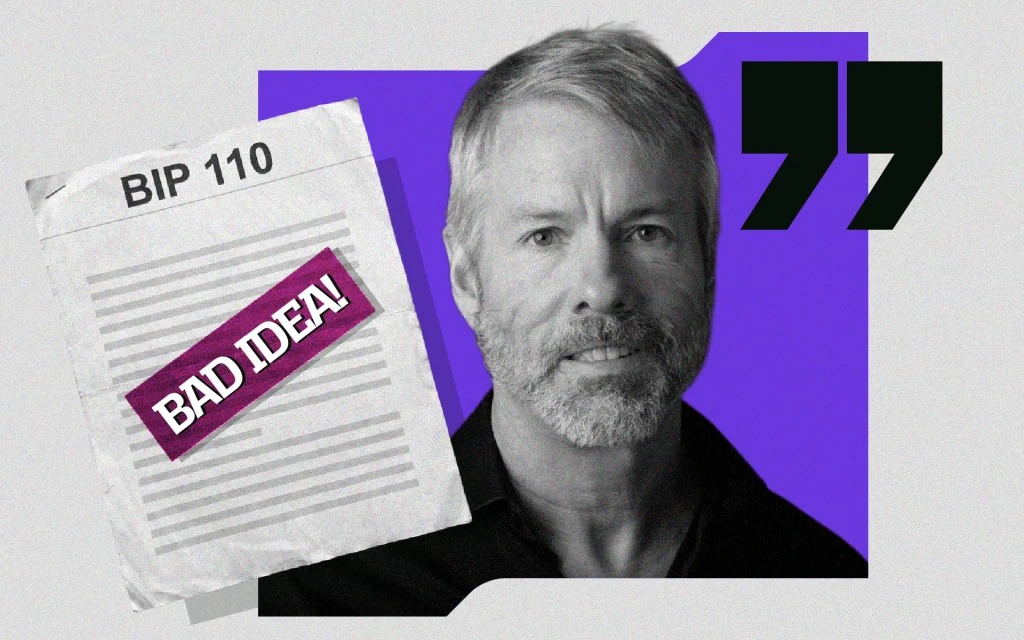
- Michael Saylor has published 110 reasons for opposing BIP 110.
- Bitcoin bulls have celebrated ‘Doctor Profit’ closing his crypto shorts and buying Bitcoin at $64,000.
- Despite recent price pressure, many figureheads believe Bitcoin is on way to new heights.
Strategy Executive Chairman Michael Saylor has escalated his opposition to Bitcoin Improvement Proposal 110 (BIP 110), publishing a lengthy essay setting out 110 reasons why the proposed soft fork should be rejected.
It comes as Bitcoin’s prospects of returning to $125,000 have come back into focus after a widely followed crypto analyst said he had closed all of his bearish positions and started buying the crypto again at $64,000.
Michael Saylor Calls BIP 110 ‘More Dangerous’ Than the Problem
On Sunday, Saylor published an extensive rebuttal titled “110 Reasons BIP 110 Is a Bad Idea.”
The Bitcoin bull argued that the proposal could undermine Bitcoin’s neutrality by turning a disagreement over blockchain data into a change to the network’s consensus rules.
“Many Bitcoiners I respect support BIP 110,” Saylor wrote on X.
“I understand and share their desire to protect Bitcoin, but believe the proposed cure is more dangerous than the condition.”
BIP 110, known as the Reduced Data Temporary Softfork, would introduce seven additional restrictions for approximately one year.
The proposal is designed to discourage arbitrary data storage on Bitcoin by limiting the size of certain outputs, data payloads and witness items.
Supporters argue that storing images and other non-payment data on Bitcoin imposes costs on node operators and moves the network away from its primary function as permissionless money.
Saylor acknowledged those concerns but argued that they did not justify making previously valid transactions invalid under a new set of consensus rules.
“The question is narrower: should a disputed use of currently valid, fee-paying transactions be addressed by changing consensus?” he wrote.
Saylor argued that fees and individual mining policies already provide mechanisms for managing competition for Bitcoin’s limited block space.
“Disapproval is not invalidity,” he wrote.
“A transaction can be trivial, speculative, offensive, or wasteful and still follow the rules and pay the fee required for inclusion.”
The BIP 110 document proposes a 55% miner-signaling threshold, substantially below the 95% threshold specified under the conventional BIP 9 activation process.
“The proposed cure is more dangerous than the condition,” he said.
“Bitcoin does not need guardians of purity. It needs guardians of neutrality.”
Saylor’s Warning Follows Adam Back’s BIP 110 Pushback
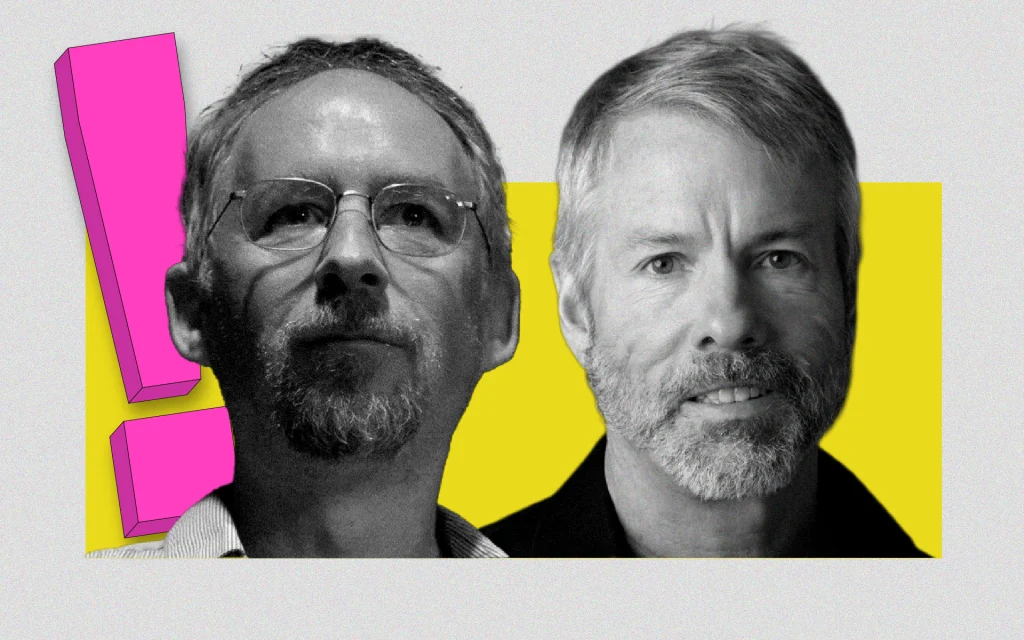
Saylor’s essay followed similar criticism from Blockstream co-founder Adam Back, who argued that BIP 110 conflicts with Bitcoin’s decentralized architecture.
Back said the network’s design prevented any individual group from imposing its preferred transaction policies on everybody else.
“The decentralization needed to create cypherpunk money has implications,” Back wrote on X.
“A side effect of decentralization is that you can’t impose your views on others.”
Back acknowledged frustration over blockchain spam but argued that consensus rules should not be used to police how other users interact with the network.
He also defended Bitcoin’s conservative development process, arguing that major changes require broad technical agreement.
Back warned that supporters attempting to enforce BIP 110 without wider backing risked creating a separate blockchain.
“If you won’t listen to reason… your permissionless recourse is to club together and create a fork,” he wrote.
“But Bitcoin won’t be joining it.”
Bitcoin Bulls Celebrate as Analyst Reverses Bearish Prediction
The governance dispute comes as Bitcoin price bulls have seized on Doctor Profit’s announcement that he had closed all of his crypto short positions and begun accumulating.
Doctor Profit said he had closed a Bitcoin short built between $115,000 and $125,000, another position established between $79,000 and $82,000 and more than 100 altcoin shorts.
“For the first time since September 2025, I am buying Bitcoin spot again,” he wrote.
“Today, I entered at $64,000 for the absolute long term.”
Rather than investing all of his allocated capital immediately, Doctor Profit said he would build his position gradually while Bitcoin remained between $54,000 and $64,000.
“Every day Bitcoin remains between $54,000 and $64,000, I will buy 5% of my allocated capital in spot Bitcoin,” he said.
The strategy would continue for a maximum of 20 days, with the analyst planning to increase his purchases if Bitcoin moved closer to $54,000.
Bitcoin Bottom Earlier Than September?
Doctor Profit argued that retail sentiment had become excessively bearish, with a growing number of traders expecting Bitcoin to fall to $50,000, $45,000 or $40,000.
He said the popularity of those targets had made him less confident that the market would deliver the lower entry points traders were waiting for.
“I am not going to stand behind the herd and beg the market for the same price as everyone else,” he wrote.
Adding: “I am front-running them.”
The analyst also rejected the widespread expectation that Bitcoin’s historical four-year cycle would produce a bottom in September or October.
“I am betting against the four-year-cycle bottom,” he said. “It is not happening. The bottom comes earlier.”
However, the primary reason for the change was structural rather than technical, Doctor Profit said.
He cited the prospect of greater US regulatory clarity and increased participation by large financial institutions as sources of growth.
“I now believe we will not see $40,000–$50,000 at all this cycle,” he wrote.
“Changing my view when the facts change is what a good trader should do.”
What Would Bitcoin Price Need to Reach $125,000?
Bitcoin was trading at approximately $64,184 at the time of writing, remaining nearly 49% below the $125,000 level referenced in Doctor Profit’s previous strategy.
Reaching $125,000 would require Bitcoin to increase by $60,816.
That would represent an increase of approximately 94.8%, taking the crypto to almost 1.95 times its current value.
Bitcoin would first need to move approximately 25% higher to reclaim $80,500, the level around which Doctor Profit said he established another short position.
It would then need to rise roughly 56% from its current price to reach $100,000 before overcoming potential selling pressure between $115,000 and $125,000.
That upper range could prove particularly difficult because investors who bought near the previous peak may use a recovery to exit their positions.
Doctor Profit’s decision to buy at $64,000 does not confirm that the market has reached a bottom.
Bitcoin could still fall below his accumulation range, especially if institutional demand weakens amid a lack of regulatory clarity.
However, his reversal indicates that at least one previously prominent bear believes the balance has changed.
Bitcoin Price Predictions: Michael Saylor, Cathie Wood, and Other Bulls
Despite the prolonged downturn, several institutional investors continue to predict that Bitcoin’s price is heading towards new record highs.
Standard Chartered’s head of digital assets research, Geoff Kendrick, expects Bitcoin to recover to $100,000 by the end of 2026.
Meanwhile, Bernstein remains more bullish, maintaining a $150,000 forecast for end-2026.
ARK Invest founder Cathie Wood has retained a bull-case forecast of $1.25 million by 2030, alongside a base-case projection of approximately $730,000.
“It seems to be in a bottoming process,” Wood said during a recent appearance on ARK Invest’s podcast.
Saylor sits at the furthest end of the bullish spectrum.
During an April interview with Bankless, the Strategy executive chairman said Bitcoin could eventually reach $21 million.

Kurt Robson is a London-based reporter at CCN, specialising in the fast-moving worlds of crypto and emerging technology. He began his career covering local news in Cornwall after graduating from Falmouth University with First Class Honours in Journalism. There, he cut his teeth on everything from council meetings to missing swans.
He quickly rose through the ranks to become a frontline journalist at several of the UK’s leading national newspapers. Over the years, he has interviewed musicians and celebrities, reported from courtrooms and crime scenes, and secured multiple front-page exclusives.
Following the upheaval of the COVID-19 pandemic, Kurt shifted his focus to technology journalism—just ahead of the AI boom. With a natural curiosity and a trained eye for emerging trends, he has found a new rhythm in reporting on innovation.
At CCN, Kurt's work focuses on the cutting edge of crypto, blockchain, AI, and the evolving digital world. Drawing on his background in people-first reporting and his deep interest in disruptive tech, Kurt delivers stories that are insightful, entertaining, and human-centric.