Key Takeaways
- Binance’s hack drained wallets backing customer assets, potentially leaving ETH reserves approximately 6% short before replenishment.
- The estimated deficit is based on October’s reserve snapshot; it does not reflect Binance’s current backing.
- Approximately $3 billion in frozen assets could support recovery, but freezes do not immediately restore missing ETH.
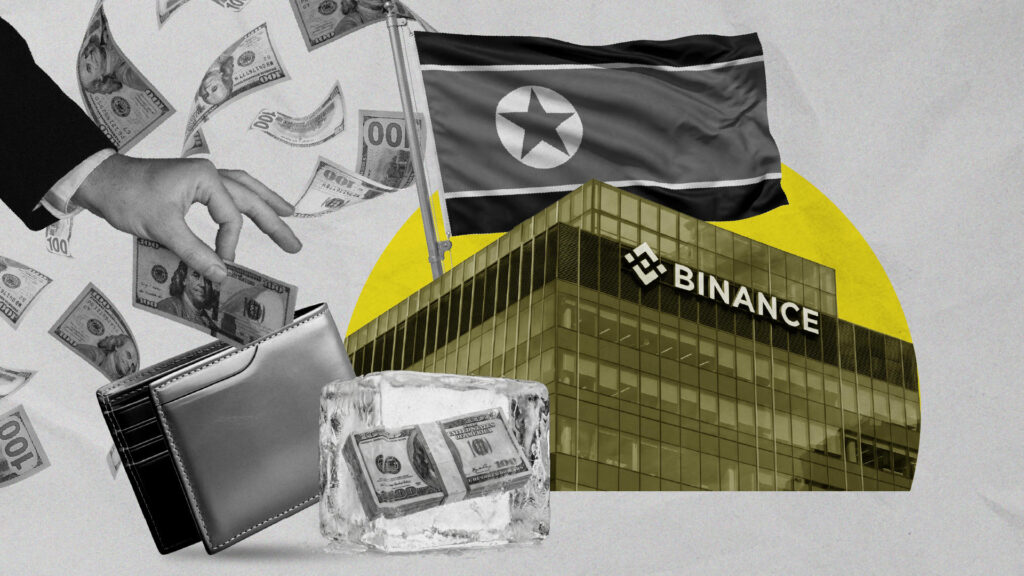
Binance’s $6.3 billion hack has raised a question beyond the size of the theft: how much cryptocurrency still backs customer balances?
The attack drained wallets included in the exchange’s October reserve disclosures, potentially leaving its ether backing approximately 6% below customer holdings unless Binance has already replenished the missing assets.
The next reserve snapshot, expected on Nov. 1, could provide evidence of that replacement.
Binance has promised to cover all losses and publish updated proof of reserves after remediation, but its reimbursement pledge alone does not establish current backing.
Why the Hack Could Push ETH Backing Below 100%
Binance’s October reserve disclosure included Binance 14, a hot wallet central to the attack. At that snapshot, the wallet held 89,475 ETH and approximately 1.26 billion USDT, alongside other assets.
Those holdings formed part of the cryptocurrency supporting customer balances. Binance describes its proof-of-reserves system as evidence that it holds enough custodial assets to cover users’ holdings on a one-to-one basis.
The October report showed an ETH reserve ratio of approximately 100%, leaving virtually no surplus within that disclosed pool.
An estimated 204,500 ETH subsequently taken from Binance wallets would remove roughly 5%-6% of the earlier reserve base, potentially pushing backing toward 94%-95% before replenishment.
That calculation remains an estimate rather than a verified post-hack reserve ratio. It compares stolen assets with an earlier snapshot and cannot capture subsequent transfers, changes in customer balances or replacement funds.
The distinction matters: a historical reserve calculation can identify a potential gap, but only updated asset and liability figures can establish its current size.
Binance Pledges Corporate Funds as Investigators Trace the Breach
Binance’s preliminary investigation suggests a compromised DevOps engineer’s laptop allowed an attacker to access a service container and submit unauthorized withdrawals.
The exchange said investigators had found no evidence of leaked wallet private keys. It revoked the authorization for the affected address and engaged law enforcement and blockchain intelligence partners.
Binance estimated the incident’s impact at $6.3 billion and said partners had frozen approximately $3 billion onchain. It pledged to cover losses through its SAFU emergency reserve and company funds.
However, frozen assets do not automatically become available to satisfy withdrawals. Recovery still requires coordination among the exchange, investigators and relevant token issuers.
Stablecoin freezes also do not directly replenish missing ether. Restoring ETH backing requires Binance to recover ETH, allocate existing corporate holdings, or acquire replacement coins.
SAFU provides a financial resource, but its dollar value alone cannot demonstrate that every affected cryptocurrency has returned to full backing.
Binance initially suspended deposits and withdrawals during security checks. A subsequent update said deposits were operating normally and that withdrawal restoration was targeted within 48 hours.
What November’s Proof of Reserves Can Actually Show
November’s snapshot cannot, by itself, close a funding gap. It can show whether Binance has closed one by comparing assets under its control with customer balances at a specified time.
For ETH, the central question will be whether that comparison returns to at least 100%. Readers should also examine the underlying coin totals, because a ratio can change when either reserves or customer liabilities move.
https://twittercom/lookonchain/status/2115938836757037428
Binance’s verification system lets customers check whether the reported liabilities include their account balances. The exchange also describes checks covering ownership of both hot and cold reserve wallets.
The timing warrants attention. A Nov. 1 snapshot does not guarantee publication that day; Binance has tied its updated disclosure to completion of remediation.
Until updated figures appear, the estimated ETH deficit remains conditional. The decisive evidence will be replacement assets, matching customer liabilities, and functioning withdrawals.
The information provided in this article is for informational purposes only. It is not intended to be, nor should it be construed as, financial advice. We do not make any warranties regarding the completeness, reliability, or accuracy of this information. All investments involve risk, and past performance does not guarantee future results. We recommend consulting a financial advisor before making any investment decisions.

Giuseppe Ciccomascolo began his career as an investigative journalist in Italy, where he contributed to both local and national newspapers, focusing on various financial sectors.
Upon relocating to London, he worked as an analyst for Fitch's CapitalStructure and later as a Senior Reporter for Alliance News. In 2017, Giuseppe transitioned to covering cryptocurrency-related news, producing documentaries and articles on Bitcoin and other emerging digital currencies. He also played a pivotal role in establishing the academy for a cryptocurrency exchange website. Crypto remained his primary area of interest throughout his tenure as a writer for ThirdFloor.