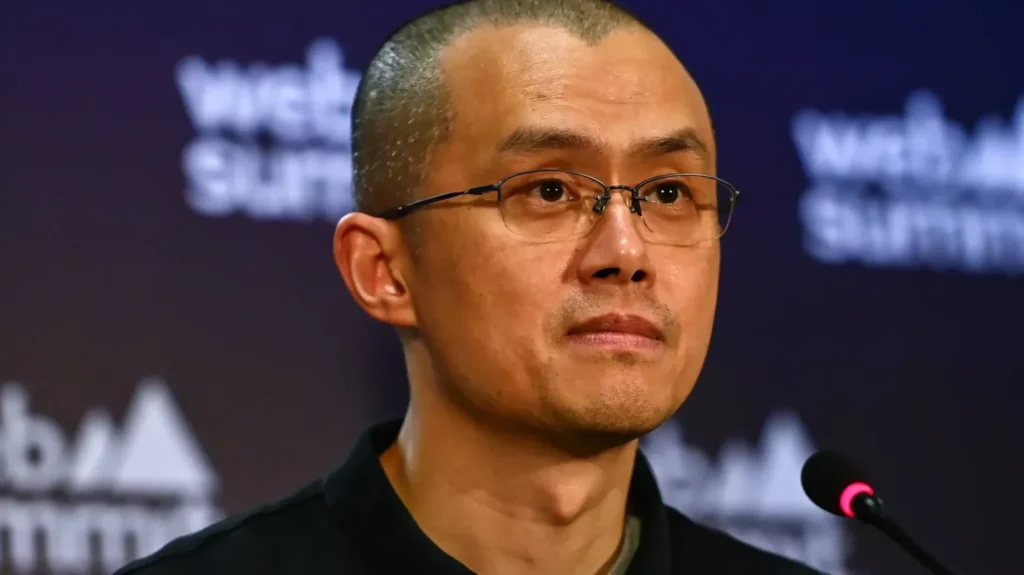
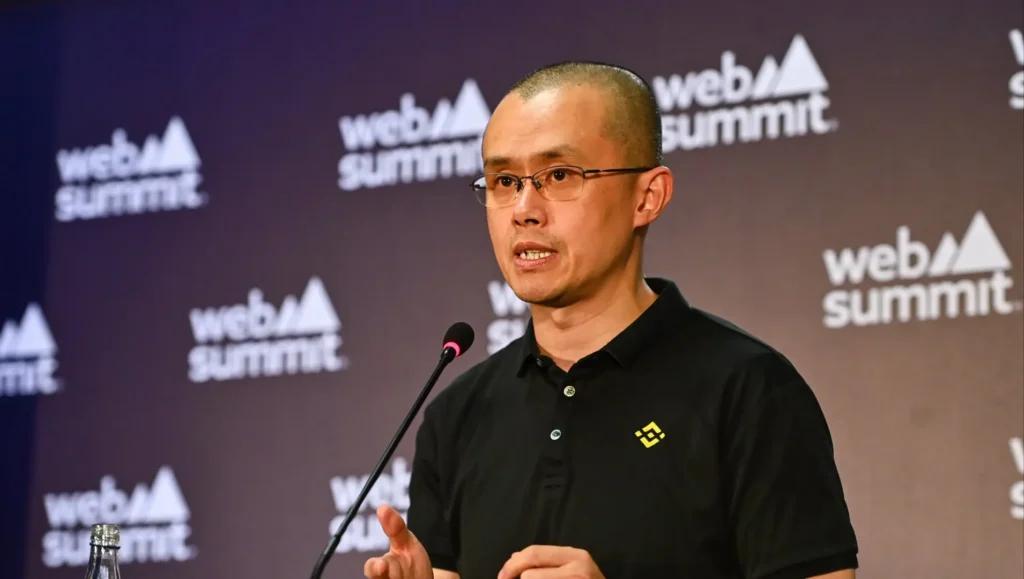
A global investigation reveals illicit funds still flowing through Binance. | Credit: CCN.
Share
Key Takeaways
Binance continued receiving hundreds of millions in illicit crypto flows from scam networks, according to a new investigation.
President Donald Trump’s regulatory pullbacks, combined with his business ties to the crypto industry, have raised questions among investigators about their impact on exchange oversight.
Binance has said it is “categorically false” that it “turns a blind eye’ to criminal activity.”
A cross-border investigation has concluded that millions of dollars in criminal proceeds continued to flow through Binance, the world’s largest crypto exchange, even after the company pledged to tighten its compliance controls following a U.S. guilty plea.
The findings, reported by the International Consortium of Investigative Journalists (ICIJ) and further explored by The New York Times, have renewed scrutiny of how major trading platforms handle illicit deposits and how Donald Trump’s U.S. regulatory policy may be influencing their behavior.
Try Our Recommended Crypto Exchanges
Sponsored
Disclosure
We sometimes use affiliate links in our content, when clicking on those we might receive a commission at no extra cost to you. By using this website you agree to our terms and conditions and privacy policy.
Illicit Money Still Moving Through Major Exchanges
According to the ICIJ’s year-long examination, wallet addresses linked to scams, cyber-heists, and organized crime funneled substantial sums into Binance accounts across 2024 and 2025.
The ICIJ’s review of blockchain records showed that wallets connected to Huione Group, a Cambodian financial institution designated by U.S. authorities as a “primary money laundering concern,” moved over $408 million into Binance customer accounts over 12 months.
The New York Times, drawing on its own analysis and work with the ICIJ, similarly reported that Huione-linked wallets sent over $400 million into Binance since 2023.
The Times also found that an additional $900 million in crypto arrived this year from a swapping service that North Korean hackers had used after a record-setting theft.
According to the publication, after hackers stole roughly $1.5 billion in cryptocurrency from the Bybit exchange, the group began converting the stolen Ether through a swapping service.
During the same period, five Binance deposit accounts received an abrupt surge of about $900 million in Ether from that service, the Times said, citing the blockchain-tracking firm ChainArgos.
Jonathan Reiter, the CEO of ChainArgos, told the Times that the timing suggested the inflows were linked to the hacked funds and should have triggered alerts.
Both outlets stressed that the data reflects deposits into Binance, not proof of wrongdoing by the exchange.
Heloiza Canassa, a Binance spokeswoman, told the Times in a statement that the platform cannot block incoming blockchain transfers but said it takes “appropriate” steps once suspicious activity is identified.
“The true measures of compliance for a crypto exchange are the steps it takes to identify and react to suspicious deposits,” she said.
“It is in these areas that Binance is an industry leader,” she added.
Canassa did not respond directly to the flow of Ether on the exchange.
Compliance Promises
The continued movement of illicit funds reportedly occurred despite Binance’s 2023 plea agreement with U.S. authorities.
Binance agreed to pay $4.3 billion and operate under the supervision of two court-appointed monitors.
OKX, another major exchange cited in the investigations, also received hundreds of millions of dollars from Huione-linked wallets, even after its own settlement with the U.S. government, according to the ICIJ and The Times.
OKX’s Chief Legal Officer, Linda Lacewell, also said the company worked with law enforcement “to help stop fraud and other illicit activity.”
As the fallout from the settlements continues, Binance founder Changpeng Zhao has reignited public debate over the penalty imposed on him.
On Monday, Zhao responded on X to a question about whether his presidential pardon might allow him to reclaim the billions forfeited under the plea deal.
CZ has floated the idea of returning a refund of his fine to the U.S. | Source: X
The disgraced founder stated that if any refund were granted, he intended to invest the money in the U.S., although he noted that he had made no formal request.
Zhao added that he appreciated the pardon and was weighing what would be “fair” to ask for.
Legal experts quoted by Al Jazeera emphasized that pardons do not typically unwind criminal fines or settlement payments that have already been transferred to the U.S. Treasury.
Binance Pushes Back
In response to the investigation, a Binance spokesperson issued an extensive statement to CCN rejecting the notion that the company ignores criminal activity:
“Binance’s core mission is to stop bad actors who seek to abuse the system. It is categorically false that Binance ‘turns a blind eye’ to criminal activity.”
The spokesperson emphasized that Binance operates “one of the largest and most advanced compliance and investigations programs in the digital asset industry,” with major investments in people and governance.
“We have invested heavily in people, technology and governance, and we continue to strengthen those controls every year,” the firm added.
Citing third-party data from Chainalysis and TRM Labs, Binance said that illicit activity in crypto has declined sharply between early 2023 and mid-2025, with the top seven centralized exchanges now seeing only “a few hundredths of one percent” of total volume linked to criminal sources.
According to Binance: “Both data firms confirm that Binance’s exposure to illicit funds is markedly lower than industry averages and has dropped by 96–98% since early 2023.”
“Binance maintains strict compliance controls and a zero-tolerance approach to illicit activity on our platform,” the firm added.
Trump Administration’s Pullback in Focus
The Times reported that Trump has reversed several federal efforts targeting crypto platforms, including dismantling a Justice Department unit responsible for policing digital-asset crime.
The administration has also emphasized pursuing criminals directly rather than the exchanges they use, the publication said.
At the same time, the publication noted Trump’s growing business ties to the industry, including a $2 billion deal between Binance and the Trump family’s crypto firm, World Liberty Financial.
While the investigations did not assert that Trump intentionally enabled illicit flows, they raise concerns over how reduced enforcement could make oversight more difficult.
Even when exchanges receive funds linked to criminal activity, they may still be operating within the law if they maintain adequate compliance programs.
However, as the Times reported, U.S. regulators have brought cases under the Bank Secrecy Act when companies failed to build or enforce effective anti-money-laundering controls.
Kurt Robson is a London-based reporter at CCN, specialising in the fast-moving worlds of crypto and emerging technology. He began his career covering local news in Cornwall after graduating from Falmouth University with First Class Honours in Journalism. There, he cut his teeth on everything from council meetings to missing swans.
He quickly rose through the ranks to become a frontline journalist at several of the UK’s leading national newspapers. Over the years, he has interviewed musicians and celebrities, reported from courtrooms and crime scenes, and secured multiple front-page exclusives.
Following the upheaval of the COVID-19 pandemic, Kurt shifted his focus to technology journalism—just ahead of the AI boom. With a natural curiosity and a trained eye for emerging trends, he has found a new rhythm in reporting on innovation.
At CCN, Kurt's work focuses on the cutting edge of crypto, blockchain, AI, and the evolving digital world. Drawing on his background in people-first reporting and his deep interest in disruptive tech, Kurt delivers stories that are insightful, entertaining, and human-centric.