Key Takeaways
- Major banks, including JPMorgan, Bank of America, Citigroup, and Wells Fargo, are in early talks to develop a joint stablecoin.
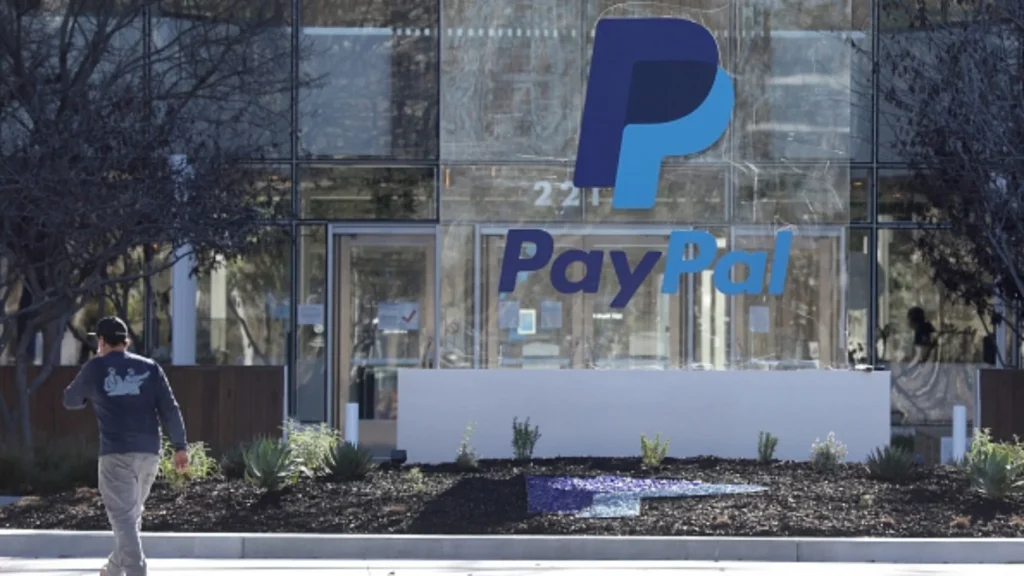
- PayPal’s José Fernandez da Ponte stressed that banks are essential to scale stablecoins beyond crypto.
- Big banks around the World are already backing blockchain projects.
As crypto debates rage in Congress, the real revolution may be happening far from the spotlight—in the boardrooms of America’s biggest banks.
While headlines focus on volatility and regulation, financial giants are quietly laying the rails for a new era of money movement, blending blockchain tech with traditional banking infrastructure.
Their target is stablecoins, which they believe will be the foundation for a future where Wall Street doesn’t just coexist with crypto but powers it.
Wall Street Banks Eye Joint Stablecoin Project
According to The Wall Street Journal, major U.S. banks, including JPMorgan Chase, Bank of America, Citigroup, and Wells Fargo, are in preliminary talks to develop a joint stablecoin.
Still in its early stages, the effort could eventually grow to include additional institutions.
Stablecoins are already essential in crypto markets for transferring funds and parking value between trades.
Now, traditional banks want a piece of the infrastructure that underpins those flows.
Some regional banks are also rumored to be working on separate projects, though none of the banks involved have publicly commented.
The push from America’s largest banks comes as lawmakers advance the GENIUS Act, a bill that would regulate stablecoin collateral and enforce AML compliance.
The bill, which recently passed a key vote in the Senate, is expected to gain bipartisan support, though some Democrats want to include provisions banning political figures like Donald Trump from profiting off stablecoins.
The Trump family-affiliated USD1 stablecoin has sparked concerns over conflicts of interest.
Big Banks Are Already Deep in Blockchain
The stablecoin push isn’t happening in isolation. Many of the world’s largest banks have been quietly experimenting with blockchain technology to streamline operations and reduce friction in legacy systems.
Take Fnality International, for example—a platform backed by Santander, HSBC, Barclays, and UBS—which is using tokenized central bank money to make cross-border payments faster and more efficient.
Then there’s JPMorgan, whose Liink network connects more than 400 banks to streamline interbank data sharing. Its Onyx division, meanwhile, is pushing into tokenized deposits and stablecoin settlement via JPM Coin.
HSBC and BNP Paribas are leading a separate effort called Project Agora, which is aimed at digitizing and simplifying trade finance by tokenizing assets like invoices.
The Canton Network, developed by SIX, Deutsche Börse, and Goldman Sachs, is tackling the challenge of interoperability and privacy across capital markets.
In the massive $4 trillion syndicated loan market, Versana is introducing blockchain for real-time data transparency and error reduction.
Backed by an all-star lineup—including JPMorgan, Citi, Bank of America, Morgan Stanley, Wells Fargo, and others—the platform is designed to modernize an area of finance that has long relied on slow, manual processes.

Giuseppe Ciccomascolo began his career as an investigative journalist in Italy, where he contributed to both local and national newspapers, focusing on various financial sectors.
Upon relocating to London, he worked as an analyst for Fitch's CapitalStructure and later as a Senior Reporter for Alliance News. In 2017, Giuseppe transitioned to covering cryptocurrency-related news, producing documentaries and articles on Bitcoin and other emerging digital currencies. He also played a pivotal role in establishing the academy for a cryptocurrency exchange website. Crypto remained his primary area of interest throughout his tenure as a writer for ThirdFloor.