The Era of Nation-State Bitcoin Adoption: Governments and Corporations Embracing Digital Gold
Share
Key Takeaways
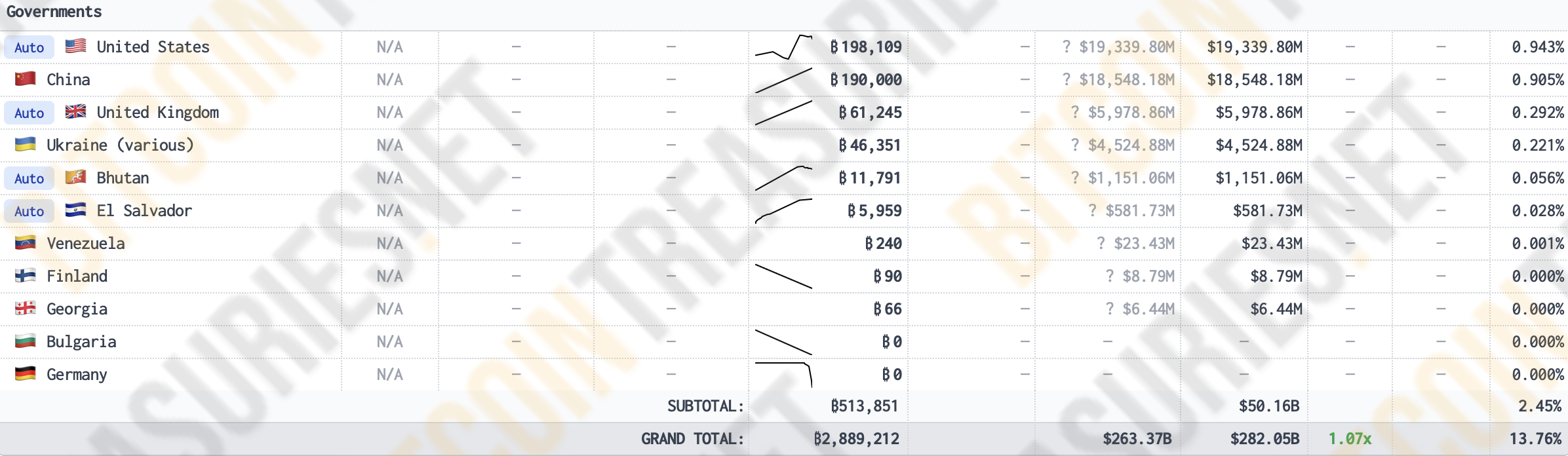
The United States leads nation-state holdings with 198,109 BTC, leading the largest Bitcoin-holding government.
Smaller nations making strategic moves include Bhutan and El Salvador who are leveraging Bitcoin to boost economic resilience and financial inclusion.
Corporations dominate Bitcoin accumulation with MicroStrategy holding 423,650 BTC, followed by Marathon Digital Holding and Riot.
Scarcity drives competition and governments and corporations are seemingly determined to secure Bitcoin before the supply diminishes further.
Bitcoin, once a niche digital currency, is now at the centre of geopolitical and corporate strategies. Nation-states and major corporations are racing to secure a share of the world’s first decentralized asset. This move could reshape global financial power structures into a century of prosperity.
While some governments and companies embrace Bitcoin as a strategic reserve, others remain skeptical, underscoring the divide in how the world perceives Bitcoin’s long-term value.
This article examines the evolving landscape of Bitcoin adoption, highlighting how governments and corporations are vying for a slice of this finite resource.
Why Is Bitcoin Seen as a Reserve Asset: Nation-State Bitcoin Reserves To Watch For
Bitcoin is increasingly viewed as more than just a volatile digital currency. Its finite supply of 21 million coins makes it an attractive asset for nations aiming to diversify reserves, hedge against inflation, and position themselves for a digital future.
Government Owning Bitcoin Publicly
The Leaders: United States and China
The United States is currently the largest known government holder of Bitcoin, with 198,109 BTC, valued at over $19.34 billion. This substantial reserve is believed to include seized assets from law enforcement operations, underscoring Bitcoin’s dual nature as both a strategic asset and a regulatory challenge.
China, the second-largest holder with 190,000 BTC valued at $18.54 billion, highlights another interesting dynamic. Despite its public crackdown on cryptocurrency trading and mining, China’s government appears to see value in holding Bitcoin as part of its national reserves.
These two economic superpowers exemplify the growing realization that Bitcoin is not just a speculative asset but a savings technology with profound implications for global wealth distribution.
Smaller Nations Make Bold Moves
While the superpowers dominate in sheer volume, smaller nations like El Salvador and Bhutan are making waves with their proactive Bitcoin strategies.
El Salvador: El Salvador was the first country to adopt Bitcoin as legal tender, holding 5,959 BTC, worth approximately $581 million. The move is part of a broader economic strategy to attract foreign investment, boost tourism, and provide financial inclusion to its unbanked population.
Bhutan: Bhutan known for its focus on Gross National Happiness, holds 11,791 BTC ($1.15 billion) in a lesser-known but calculated move. The country’s focus on green Bitcoin mining aligns with its commitment to environmental sustainability while securing a financial foothold in the digital economy.
The Skeptics: Germany and Others
Not all governments are bullish on Bitcoin. Germany, which reportedly held Bitcoin reserves in the past, has divested its holdings, reflecting a cautious approach. This decision, likely driven by concerns about volatility and regulatory uncertainty, contrasts sharply with nations like El Salvador and Bhutan. Since Germany’s sale in mid-2024, Bitcoin has gone from $50,000 to $100,000.
This divergence highlights a key theme: while some governments see Bitcoin as a strategic asset, others remain wary of its price volatility and speculative nature.
Bitcoin’s Scarcity & The Geopolitical Game Theory
Bitcoin’s capped supply ensures that only 21 million coins will exist, making early accumulation a strategic priority.
Governments currently hold 513,851 BTC, a relatively small percentage of Bitcoin’s total supply.
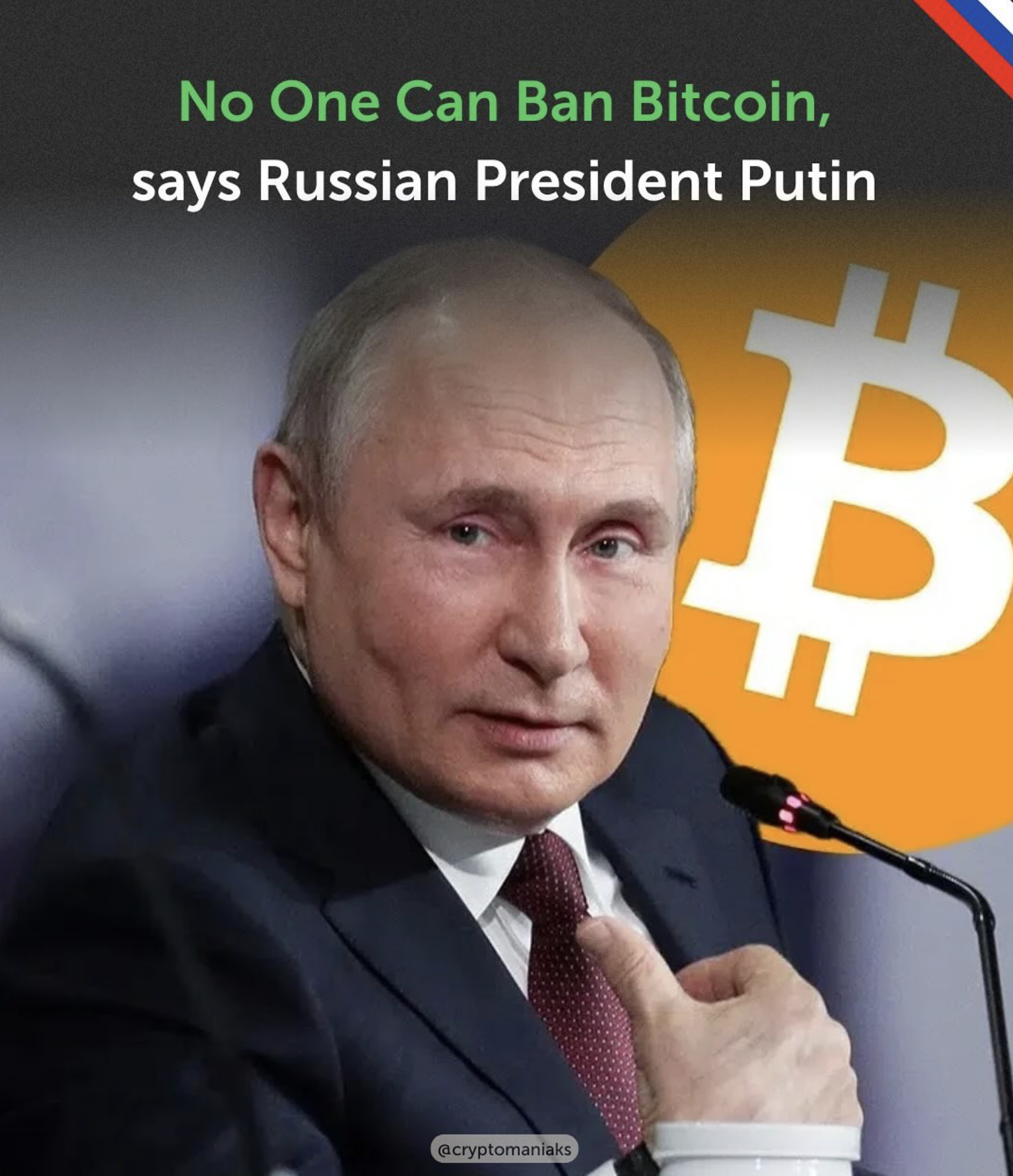
Even Putin explained how Bitcoin is unstoppable. Game theory, specifically a ‘pure coordination’ strategy plays an important role in the race for Bitcoin. In game theory, a pure coordination strategy refers to a scenario where players (in this case, governments) achieve the best outcome by cooperating or aligning their actions to a common goal.
Source Cryptomaniaks
However, this strategy also involves the implicit risk of competition: if one player acts first to gain an advantage, others may lose out or be forced to pay a higher price for entry.
Early adopters stand to benefit as supply diminishes and demand increases. The competition among nations to secure Bitcoin could lead to a supply squeeze, driving up prices and making it more expensive for latecomers to acquire meaningful reserves.
What Major Companies Have Invested in Bitcoin?
Beyond governments, corporations are major players in Bitcoin accumulation. These entities are reshaping how Bitcoin is perceived in the business world with their financial muscle.
Top Companies Holding Bitcoin
MicroStrategy: The Undisputed Leader
As at 10 December 2024, MicroStrategy leads the corporate Bitcoin race with 423,650 BTC, valued at over $19 billion. Under Chairman Michael Saylor, the company has made Bitcoin a core part of its treasury strategy, viewing it as digital gold and a hedge against inflation.
This aggressive accumulation has positioned MicroStrategy not only as a business intelligence software firm but also as a Bitcoin pioneer. Its approach has inspired other companies to explore similar strategies.
Other Key Players
Tesla: Tesla holds 9,720 BTC, worth over $948 million, reflecting its belief in Bitcoin’s potential as a reserve asset. While the company briefly accepted Bitcoin as payment for vehicles, its primary strategy now centers on holding the asset for long-term appreciation.
Block, Inc.: Block formerly Square, holds 8,363 BTC, highlighting its broader commitment to Bitcoin through products like Cash App and Bitcoin-focused services.
Smaller firms: These include Bitcoin Group SE and BitFarms have leveraged Bitcoin to punch above their weight, gaining significant value relative to their market caps.
How Corporate Bitcoin Holdings Could Make Companies Millionaires: Key Strategies Revealed
Analyzing corporate Bitcoin holdings reveals a range of strategies, with companies varying significantly in the size of their reserves. Here’s a breakdown based on available data:
More than 10,000 BTC: Companies like MicroStrategy dominate this category, accounting for 2% of corporate holders but owning a substantial share of total holdings.
Between 1,000 and 10,000 BTC: Approximately 15% of companies fall into this range, including Tesla, Block, Inc. These firms adopt a mid-sized yet impactful approach to Bitcoin accumulation.
Between 100 and 1,000 BTC: The majority, or about 60% of corporate holders, belong here. These companies are accumulating Bitcoin cautiously, balancing risk and reward.
Less than 100 BTC: Around 23% of companies are in this category, often representing smaller firms or those just beginning to experiment with Bitcoin as a reserve asset.
This distribution highlights that while a few giants dominate in sheer Bitcoin volume, most corporations are adopting a more conservative, measured approach with a huge upside potential that could potentially render the company massively wealthy as Bitcoin trends to a 1 million plus valuation.
As institutional confidence grows, more companies may increase their Bitcoin holdings to secure their place in the digital economy.
Corporations now collectively hold thousands of Bitcoin, adding further pressure to the limited supply. This trend reflects growing institutional confidence in Bitcoin as a long-term asset. It also underscores how companies are using Bitcoin not just to diversify their treasuries but as a competitive advantage in the digital age.
Bitcoin’s Role in Reshaping Global Finance
The combined efforts of governments and corporations to accumulate Bitcoin are reshaping the global financial system. Whether as a reserve asset, a hedge against inflation, or a tool for economic sovereignty, Bitcoin’s role is expanding.
Governments that fail to adopt Bitcoin risk falling behind in the digital economy, while corporations embracing Bitcoin are positioning themselves for future growth. The interplay between public and private sector adoption could determine Bitcoin’s trajectory as a global asset.
Conclusion
Bitcoin’s adoption by governments and corporations signals a new era in global finance. As a finite, decentralized, and increasingly scarce asset, Bitcoin is becoming a cornerstone of economic strategy for those who recognize its potential.
While some nations and businesses remain skeptical, the growing list of adopters indicates that Bitcoin’s role in the global financial system is far from speculative. The race to accumulate Bitcoin is on, and its implications will shape economies and industries for decades to come.
FAQs
Why are governments holding Bitcoin?
Governments use Bitcoin as a hedge against inflation, a diversification tool, and a step toward digital economic strategies.
Which country holds the most Bitcoin?
The United States leads with 198,109 BTC, followed closely by China with 190,000 BTC.
Why do corporations invest in Bitcoin?
Corporations view Bitcoin as a long-term store of value, a hedge against currency devaluation, and a competitive differentiator.
What is the total Bitcoin supply cap?
Bitcoin’s supply is capped at 21 million coins, creating a scarcity that drives its long-term value.
Andrew Kamsky is a chart analyst and writer with a background in economics and ACCA certification. He has held roles at a Big Four firm, a fintech bank, and a listed bank specializing in currency hedging. His work explores Bitcoin, macro trends, and market structure. Outside finance, he's passionate about music, travel, and neon design.


 Easy
Easy