Venezuela’s Currency Collapse: Why Citizens Are Turning to Crypto for Survival
Share
Key Takeaways
Venezuela’s Bolívar has lost about 70% of its value since early 2025, amid more than 229% inflation.
Citizens use Bitcoin, USDT (also called Binance Dollars), and P2P platforms to store value and buy goods.
Petro, the state-backed crypto, was discontinued in 2024 after limited success.
Crypto adoption is likely to grow until a stable monetary solution is found.
Venezuela’s economic crisis has lasted for years, and it is defined by runaway hyperinflation and the near-total collapse of the bolívar, the local currency.
Venezuelans have turned to survival strategies that bypass the failing financial system. Unsurprisingly, cryptocurrencies are becoming a crucial tool.
With the Bolívar losing up to 70% of its value (and the inflation hitting 229%) since the beginning of 2025, digital assets help Venezuelans preserve their savings, send and receive money, and purchase daily necessities despite the economic instability.
This article explains the causes of Venezuela’s economic collapse, the rise of cryptocurrencies as an alternative, and how this shift is reshaping the country’s financial landscape.
Try Our Recommended Crypto Exchanges
Sponsored
Disclosure
We sometimes use affiliate links in our content, when clicking on those we might receive a commission at no extra cost to you. By using this website you agree to our terms and conditions and privacy policy.
From Bolívar Collapse to Crypto Adoption: Venezuela’s Economic Journey
Venezuela’s modern economic crisis and policy shifts have deep roots.
Oil boom and spending: In the 2000s, an oil-export boom fueled massive public spending under President Hugo Chávez. Government revenues soared, but overspending and heavy state intervention set the stage for instability.
Currency controls: Chávez fixed exchange rates and imposed price controls on basic goods starting in 2003, aiming to make essentials affordable.
Missed savings opportunity: Lavish social programs and little savings of oil profits created fiscal imbalances once oil prices fell.
Oil crash impact: After the 2014 oil crash, Venezuela’s oil-dependent economy was hit hard. Oil is roughly 50% of government revenue and 80% of exports.
Money printing and inflation: Instead of cutting expenditure, the government printed money to cover deficits, triggering an inflationary spiral.
Bolívar collapse: By the mid-2010s, the Bolívar steadily lost value. Strict currency controls made dollars scarce, driving a thriving black market where exchange rates soared far above the official peg.
Sanctions and falling production: On August 5, 2019, U.S. sanctions increased and blocked dealings with President Nicolás Maduro’s government and its oil exports. At the same time, oil production collapsed due to mismanagement and underinvestment, leaving the country pumping barely a quarter of the oil it once produced a decade earlier.
Venezuela’s prolonged economic turmoil set the stage for new approaches to money and trade. As hyperinflation eroded the Bolívar and sanctions limited access to global markets, the government sought alternatives to stabilize the economy and keep transactions flowing. One of them had been its own digital cryptocurrency.
Crypto and the Petro Experiment in Venezuela
In 2018, the government unveiled Petro, a state-backed cryptocurrency tied to the nation’s oil reserves. President Nicolás Maduro promoted it as a way to raise funds and bypass U.S. sanctions, which began in 2015 under President Barack Obama after Washington accused Venezuelan officials of human rights abuses and intensified in the following years.
Limited adoption: The Petro was briefly used to pay pensions and price some services, but public distrust and lack of infrastructure kept adoption low.
Phase-out: By January 2024, Petro had quietly been discontinued. The remaining holdings were converted to bolívars, ending the state-backed crypto experiment.
Shift to real crypto: As of 2025, Venezuelans increasingly rely on Bitcoin (BTC), stablecoins like USDT (called “Binance Dollars”) and peer-to-peer crypto platforms to protect their savings, make transactions, and bypass currency shortages.
Hyperinflation and Social Costs
Venezuela’s hyperinflation has devastated the economy and reshaped daily life. The bolívar’s collapse turned a monetary crisis into a humanitarian one.
According to the Venezuelan Finance Observatory (OVF):
Inflation at alarming levels: Annual inflation reached 229% in May 2025, with monthly inflation at 26%, showing that price pressures remain severe.
Rising cost of essentials: The steepest increases were seen in food (31%), health (35%), clothing, footwear, and education, making basic needs increasingly inaccessible.
Additionally, the human impact has been severe:
Collapsed wages: Many public-sector workers earn only a few U.S. dollars per month at black-market rates, leaving even bread, eggs, and transport fares beyond reach.
Purchasing power destroyed: Families skip meals, rely on nutritionally poor diets, barter goods, and depend heavily on remittances to survive.
Mass migration as an escape: Between 7 and 8 million Venezuelans live abroad, in one of the world’s largest displacement crises. Remittances exceeded $5.4 billion in 2023, becoming a critical lifeline for households.
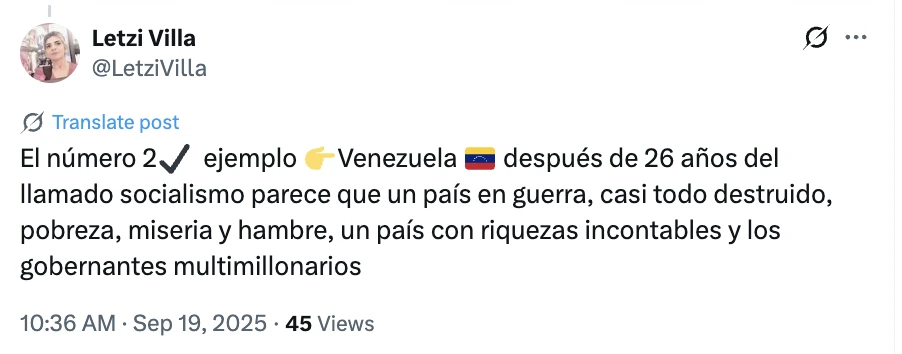
Venezuelans have expressed their dissatisfaction on social media platforms like X, with one user writing that after 26 years of so-called socialism, the country “looks like a country at war, almost everything destroyed, with poverty, misery, and hunger in a land of endless wealth while its rulers are multimillionaires.
This prolonged collapse has not only wiped out savings and incomes but also intensified political tensions at home and abroad, setting the stage for greater confrontation.
Political Tensions and International Pressure
Venezuela’s economic implosion has been matched by escalating political conflict. The Maduro government faces growing isolation and sanctions from abroad, alongside unrest at home.
Coordinated sanctions: In January 2025, the U.S., EU, UK, and Canada sanctioned eight senior Venezuelan officials tied to economic and security agencies, citing repression and democratic backsliding.
Bounty on Maduro: Washington raised the reward for information leading to President Maduro’s arrest to $50 million, intensifying international pressure on the regime.
Oil embargo impact: The U.S. oil sanctions cut off Venezuela from its largest buyer, worsening currency shortages and slashing foreign exchange reserves.
Partial dollarization: To calm discontent, the government informally allowed widespread use of U.S. dollars for purchases, which Maduro himself called an “escape valve” that helped keep markets functioning.
Information control: Independent economists and black-market rate trackers have faced growing censorship and harassment, signaling a tightening grip over economic data.
With living costs crushing wages and sanctions cutting off traditional revenue streams, Venezuelans are turning to new ways of saving and trading and crypto is becoming a central part of that survival toolkit.
Venezuela’s Crypto Adoption: From Government Tool to Citizens’ Survival Amid Economic Collapse
As Venezuela’s economy collapsed, crypto adoption became a government tool and a citizen response. Authorities created the National Superintendency of Cryptoassets and Related Activities of Venezuela (SUNACRIP) to oversee the sector and even permitted state oil company Petroleum of Venezuela (PDVSA) to settle some export transactions in digital assets to avoid sanctions.
In 2023, a corruption probe into missing oil revenues uncovered that more than $20 billion in payments had been diverted using cryptocurrencies. This led to the arrest of the chief of the Superintendencia Nacional de Criptoactivos (SUNACRIP), Venezuela’s national cryptocurrency regulator, and the suspension of licensed exchanges. Mining farms were raided, and regulatory uncertainty deepened. Despite the crackdown, crypto activity shifted to informal peer-to-peer markets and global platforms, keeping usage alive.
Drivers of Crypto Adoption in Venezuela
Years of crisis have turned cryptocurrencies from a niche interest into a practical necessity. What began as an experiment for a few early adopters is now a widespread tool for survival.
Preserving savings: Many convert earnings into USDT to shield money from hyperinflation, using stablecoins as digital dollars.
Daily payments: Businesses in major cities accept Bitcoin and USDT for goods and services, allowing people to avoid price shocks.
Remittances: Around 9% of the $5.4 billion sent home in 2023 arrived via crypto, cutting costs and delays.
Income and salaries: Freelancers, teachers, and non-governmental organizations (NGOs) are paid partly in crypto, helping them manage expenses gradually.
Crypto has become woven into daily survival, a way to save, get paid, and support families.
Inside Venezuela’s Parallel Crypto Economy: P2P Markets, AirTM and the Rise of Digital Dollars
Venezuelans have built a parallel financial network that bypasses failing banks and capital controls.
Binance P2P: The leading marketplace where users swap bolívars for USDT or Bitcoin through local transfers. By mid-2021, trading volumes had risen 75%, making Venezuela a regional leader.
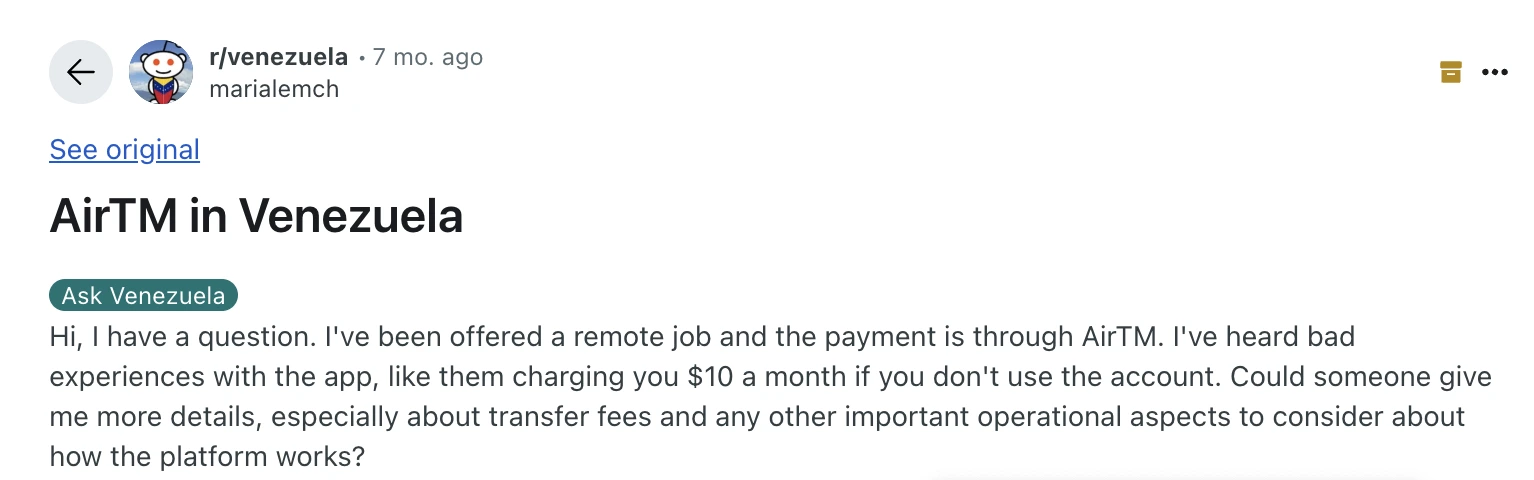
AirTM: A bridge to “digital dollars” that became a lifeline when other dollar channels were blocked, despite government attempts to restrict access.
Informal markets: From early LocalBitcoins trades to today’s WhatsApp and Telegram brokers, peer-to-peer (P2P) swaps keep crypto circulating even during official shutdowns.
Crypto point-of-sale tools: Retailers and some restaurant chains use apps to accept crypto and convert it instantly, making digital currency spendable on food and medicine.
University programs: Universities across Venezuela are adding blockchain programs and seminars. In late 2024, Universidad Católica Andrés Bello (UCAB) launched a Blockchain and Cryptocurrency Academy with diplomas in blockchain development and crypto finance, while student crypto clubs are also on the rise.
These platforms and institutions have created an alternative system where value moves freely between bolívars, stablecoins, and goods, keeping economic activity alive when traditional banking cannot.
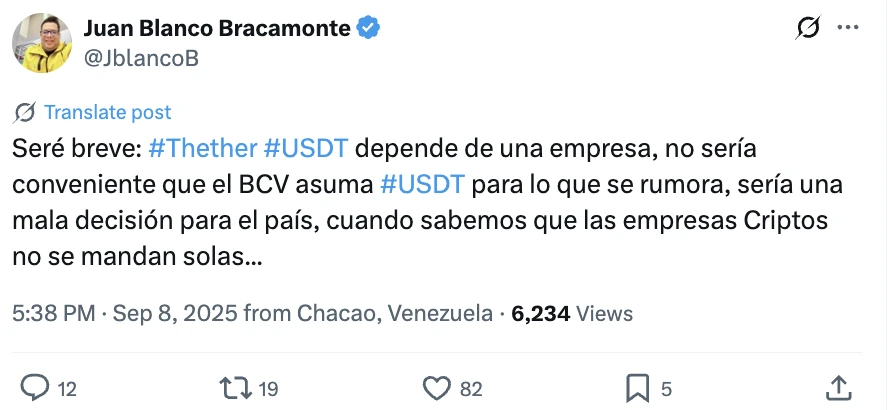
Crypto adoption has grown so entrenched that even policymakers are rumored to be considering it as part of the solution.
According to social media posts, there is speculation that the Central Bank of Venezuela (BCV) could adopt USDAccording to social media posts, there is speculation that the Central Bank of Venezuela (BCV) could adopt USDT (Tether) as part of a broader effort to stabilize the economy.
While some see this as a potential step toward monetary relief, others fear it would deepen dependence on a currency the government cannot control.
What Lies Ahead for Venezuela’s Crypto Revolution?
Despite the economy’s faltering foundation, cryptocurrencies are poised to remain vital unless a sweeping monetary reform occurs. Venezuela briefly slowed money printing and expanded foreign-currency operations, which lowered inflation for a short time, but prices are rising once again.
Experts warn that these gains were fragile and that sustained recovery is unlikely without deeper structural changes.
Speculation of stablecoin integration: Some economists have floated a “crypto-bolívar” pegged to USDT or partial reserve holdings in stablecoins. However, international bodies like the International Monetary Fund (IMF) and World Bank remain cautious of such approaches.
Sanctions and diaspora influence: Progress on easing sanctions could restore oil revenues and relax dollar shortages. If not, remittances and digital asset inflows from abroad, driven by Venezuela’s diaspora, may continue to bolster crypto’s role.
Risk of confiscation and corruption: Mining has been legalized at times, but remains a tool for state control. Officials have been accused of operating illegal mining farms and seizing equipment from private citizens, as the SUNACRIP case shows. This leaves miners operating in a legal gray area, with constant risk of confiscation.
Power grid challenges:Venezuela’s cheap electricity makes mining appealing, but chronic underinvestment in infrastructure has left the power grid and internet services unstable. Miners face frequent blackouts and slow or unreliable connections, making keeping equipment running and earning consistent profits difficult.
Venezuela’s next chapter will depend on political will, global conditions, and the population’s ability to adapt. Until the Bolívar becomes a reliable store of value, crypto adoption and use will keep on growing as a daily lifeline, shaping how Venezuelans save, trade, and survive.
Venezuela’s economic collapse has reshaped how citizens save, trade, and survive. Hyperinflation, sanctions, and mismanagement destroyed the bolívar, forcing families to seek alternatives outside the official financial system. Digital assets emerged as a practical solution, not just a speculative investment.
Bitcoin, stablecoins, and P2P platforms have created a parallel economy that bypasses broken banks and capital controls. Businesses, freelancers, and even NGOs rely on crypto to make payments and preserve purchasing power. Despite government crackdowns, crypto activity remains resilient, showing that this shift is rooted in necessity.
Unless Venezuela carries out deep monetary reforms, cryptocurrencies will remain a lifeline. The population’s growing dependence on Bitcoin and stablecoins signals that digital assets are no longer an experiment but an essential part of daily survival.
The Bolívar collapsed due to overspending, money printing, and oil revenue losses.
Is the Petro cryptocurrency still used in Venezuela?
No. The Petro was discontinued in January 2024, and holdings were converted to Bolívars.
Which crypto is most used in Venezuela?
USDT (Tether) is the most common choice, followed by Bitcoin for payments.
Do Venezuelan businesses accept crypto?
Yes. Many shops, restaurants, and freelancers accept Bitcoin or stablecoins.
Disclaimer:
The information provided in this article is for informational purposes only. It is not intended to be, nor should it be construed as, financial advice. We do not make any warranties regarding the completeness, reliability, or accuracy of this information. All investments involve risk, and past performance does not guarantee future results. We recommend consulting a financial advisor before making any investment decisions.
Dr. Lorena Nessi is an award-winning journalist and media technology expert with 15 years of experience in digital culture and communication. Based in Oxfordshire, UK, she combines academic insight with hands-on media practice.
She holds a PhD in Communication, Sociology, and Digital Cultures, and an MA in Globalization, Identity, and Technology.
Lorena has taught at Fairleigh Dickinson University, Nottingham Trent University, and the University of Oxford. She is a former producer for the BBC in London, with additional experience creating television content in Mexico and Japan.
Her research focuses on digital cultures, social media, technology, capitalism, and the societal impact of blockchain innovation.
She has written extensively on digital media and emerging technologies, with her work featured in both academic and media platforms. Her Web3 expertise explores how blockchain technologies shape culture, economics, and decentralized systems.
Outside of work, Lorena enjoys reading science fiction, playing strategic board games, traveling, and chasing adventures that get her heart racing. A perfect day ends with a relaxing spa and a good family meal.


 Easy
Easy