Pudgy World Turns Pudgy Penguins Into a Mainstream Web3 Game — Here’s How
Share
Key Takeaways
Pudgy World is a free-to-play browser game that lets players explore The Berg, complete quests, customize characters, and jump into mini-games without downloading an app.
The game gives Pudgy Penguins a softer entry point into blockchain by leading with play and familiarity instead of wallets and jargon.
Pudgy already had a head start thanks to its Walmart toy rollout, QR-linked NFT claims, and growing consumer brand recognition.
The next real test is retention, because easy access can win first clicks, but long-term success depends on repeat play.
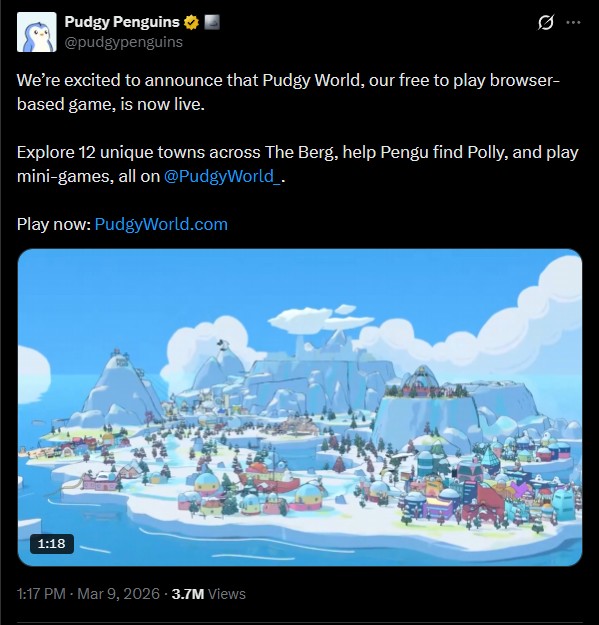
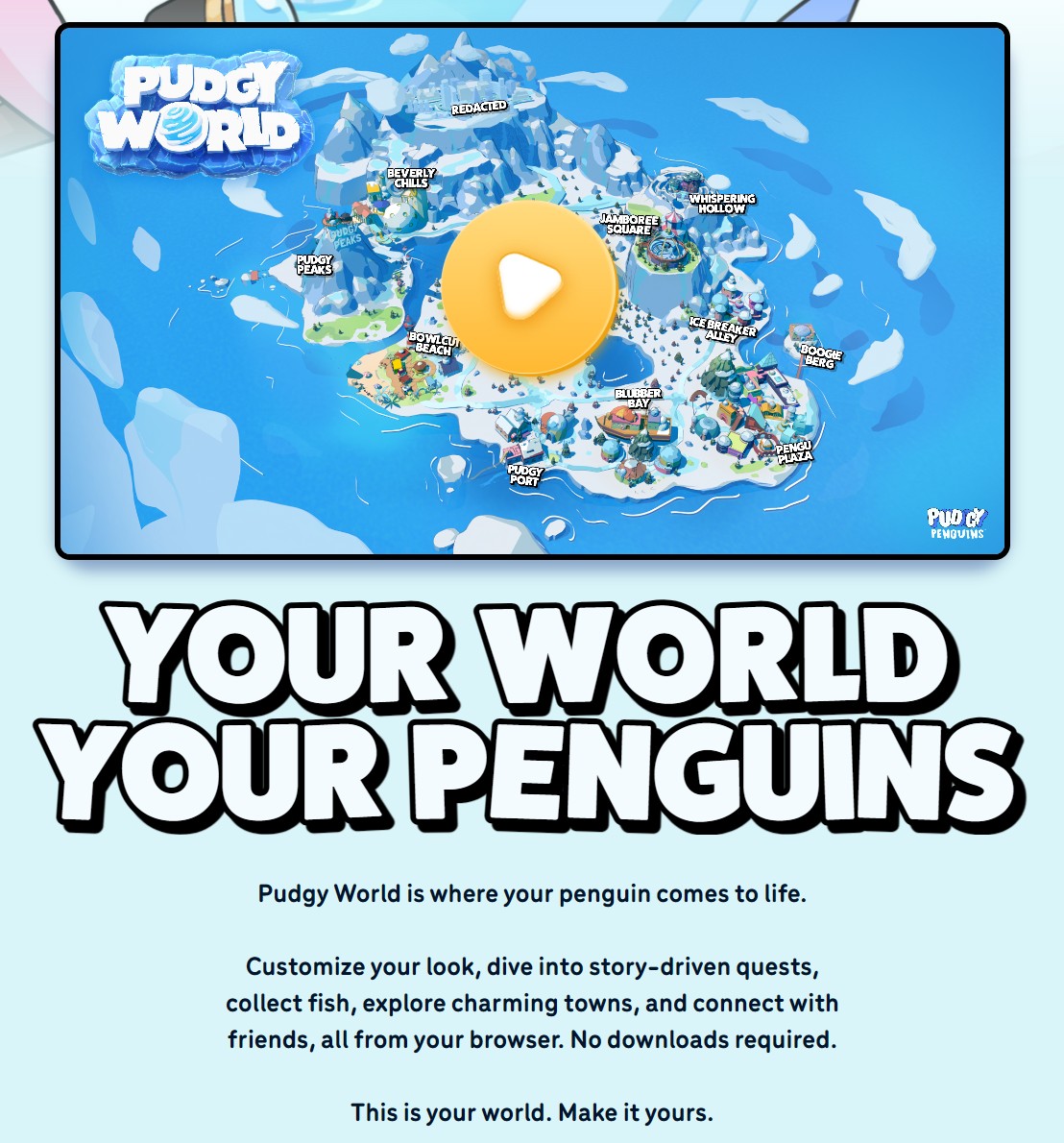
The massively successful Pudgy Penguins IP has launched Pudgy World, a free-to-play browser-based game not unlike Club Penguin from so long ago. Pudgy World includes story-driven quests, character customization, mini-games, and far more, no downloads required.
While this launch has led to “one of the most technically advanced browser-based games ever created,” it also serves another purpose: a clean entry into blockchain technology.
Source: @pudgypenguins on X
Our Top Crypto Sports Betting Partners:
Sponsored
Disclosure
We sometimes use affiliate links in our content, when clicking on those we might receive a commission at no extra cost to you. By using this website you agree to our terms and conditions and privacy policy.
Why Pudgy World Matters as A Blockchain Entry Point
A lot of blockchain products ask too much too early. They often expect users to understand the tech before they enjoy the product. Pudgy World moves in a softer direction. Not only is Pudgy Penguins a big brand that users will recognize, but they simply click on the game to start playing. Such accessibility builds player comfort long before they must engage with any crypto technology.
Pudgy World created a low-pressure environment for anyone to learn.
Web3, especially when it comes to gaming, often works best when crypto features appear like an optional extra or background function that won’t interfere with a decentralized app’s (dApp) functionality. Experience first. Complexities later.
Source: Pudgy World
The game’s launch also tracks with a report from May 2025, which stated many firms were moving away from potentially off-putting terms like crypto, decentralized finance (DeFi), decentralized autonomous organization (DAO), and non-fungible token (NFT). At least when it comes to public branding. Browsing the Pudgy World website, you’ll find no mention of these terms, only what the game offers. Like any other game.
Pudgy’s Reach Already Had a Head Start
Pudgy World’s likely success is due in part to Pudgy Penguins’ last few years of effort. In 2023, Pudgy plush toys hit 2,000 Walmart stores in the United States, and its daily NFT trading volume jumped 315% after its launch week.
Each real-world toy came with a QR code that could be scanned to claim an NFT, which showed that Pudgy could already connect a simple consumer product to a blockchain-based experience without too many technicalities. Pudgy World presents a similar approach, only digital, with the brand offering multiple pathways into the Pudgy funnel. Accessibility is something most NFT projects never manage to build. Real-world recognition away from X, Discord, and crypto-native circles.
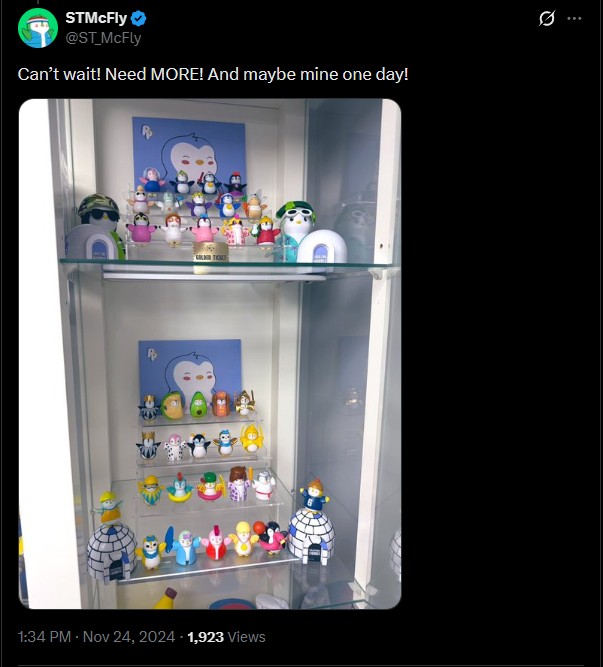
One user might see a toy on a shelf, while another may see a Pudgy clip on social media. The browser game becomes an easy next move from there. All of these avenues keep the brand active in places where people already spend time, and offer something more than a simple product to purchase. That kind of repeated exposure is how mainstream brands grow, and it is also how one normalizes new technology.
Source: @ST_McFly on X
Pudgy Penguins CEO Luca Netz has stated his intent to make the penguins “the face of crypto.” A browser game fits that strategy well, and gives the IP a living space where characters, story, and identity can grow from. It’s a product that’s useful even for people who don’t consider themselves blockchain users.
Why the Game Format Matters
Pudgy World launching as a game is important because blockchain gaming still has a trust and reputation problem. The sector needs better game experiences over better tech.
Games are a great way to teach concepts to people of all ages. It’s much easier to pitch “come play this game” than it is “read this documentation and engage with our technology,” when it comes to learning new technology. Users must still engage with crypto mechanics to play the game, only simplified. And simple gameplay paired with one of the strongest consumer-facing brands to come out of the NFT boom makes for a strong classroom.
Yet, Pudgy World isn’t even the first gaming experience tied to the penguins. May 2025 saw the launch of LOL Land, a monopoly-style, crypto-native game by Yield Guild Games (YGG). Built on the Abstract Chain, a network from Pudgy Penguins’ parent company, Igloo Inc., LOL Land saw 116,000 pre-registrations due in part to including the penguins as playable characters.
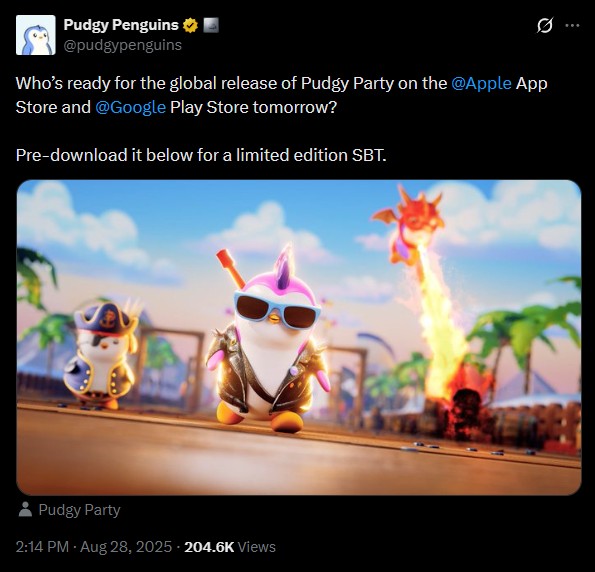
Pudgy Penguins also launched Pudgy Party in August 2025, a mobile app similar to the popular game Fall Guys. It is still live on iOS, Android, and Google Play Games for PC, with store pages showing recent February 2026 updates. It currently sports over 500k downloads on the Google Play store with a 4.2 star average rating.
Source: @pudgypenguins on X
If a third-party game tied tangentially to the players can draw such attention, with a mobile game building on that experience, imagine the power of a first-party browser game that eliminates all barriers, even a download.
Of course, nothing stated here means success is guaranteed. Easy access can win first clicks, but it does not mean people will stick around for the long term.
Free-to-play gaming is a crowded market, and Web3 gaming still carries baggage from past overpromises and weak retention. Pudgy World may solve the first-step problem better than perhaps any blockchain-based game before it, but it still needs charm, progression, and reasons to return if it wants to become a lasting gateway into the ecosystem. In short, it should act like any game you’d find on the Web2 market.
Will Pudgy World become part of a player’s routine a week from now, a month from now, and long after the first wave of curiosity fades? If so, Pudgy World will stand as one of the clearest examples yet of how blockchain can reach the mainstream. A framework for others to follow, and one that could lead to adoption unlike anything seen before.
FAQs
What is Pudgy World?
Pudgy World is a free-to-play browser game from Pudgy Penguins. Players can customize their penguin, complete story-driven quests, collect fish, explore towns, and connect with friends without downloading a client.
Why is Pudgy World a better mainstream entry point than many blockchain games?
Because it leads with familiar game design instead of heavy crypto language. Users can click in and play first, while the blockchain layer stays in the background rather than becoming the whole pitch.
How does Pudgy World fit Pudgy Penguins’ larger strategy?
It extends a wider funnel that already includes retail toys, QR-linked NFT claims, social content, and earlier games like LOL Land and Pudgy Party. In simple terms, it gives the brand another place to meet users where they already are.
What is the biggest risk for Pudgy World?
Retention. Browser access makes the first click easier, but long-term success still depends on whether players keep coming back in a crowded free-to-play market.
Disclaimer:
The information provided in this article is for informational purposes only. It is not intended to be, nor should it be construed as, financial advice. We do not make any warranties regarding the completeness, reliability, or accuracy of this information. All investments involve risk, and past performance does not guarantee future results. We recommend consulting a financial advisor before making any investment decisions.
Max Moeller is a Chicago‑based writer and video editor passionate about games, tech, and crypto. Whether it’s crafting clear, insightful articles or piecing together engaging video retrospectives, he’s driven by curiosity and takes pride in keeping things human. Since 2017, Max has been published in a variety of notable crypto magazines.


 Easy
Easy