2.5 BTC Transfer to Bitcoin Creator’s Wallet Reignites ‘Satoshi Is Back and Active’ Theories — Here’s Why It Matters
Share
Key Takeaways
Satoshi Nakamoto mined about 1.1 million BTC during Bitcoin’s first year.
The coins have remained untouched since 2010, reinforcing Bitcoin’s decentralization ethos.
At current prices, the fortune equals around $138 billion in value.
Analysts predict Bitcoin could reach $200K–$1M, potentially making Satoshi the world’s first trillionaire.
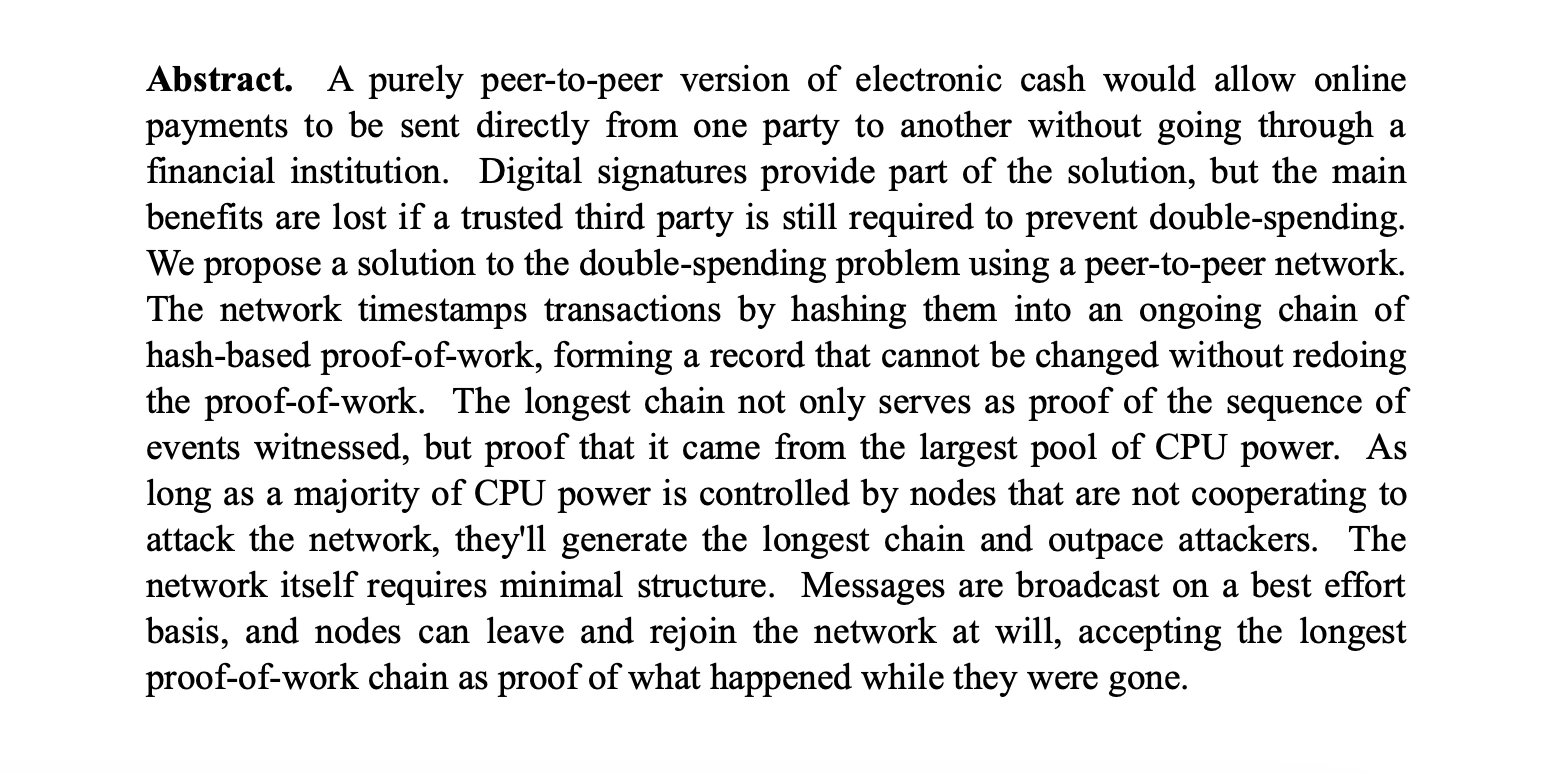
The global cryptocurrency ecosystem originated from a mysterious and anonymous figure known as Satoshi Nakamoto: the creator of Bitcoin and the author of its whitepaper, who inspired communities, developers, and innovators, sparking a financial revolution.
Bitcoin was envisioned as the first decentralized cryptocurrency, but it represented more than a technical breakthrough. It carried a political message rooted in free-market ideals and the challenge to traditional financial systems.
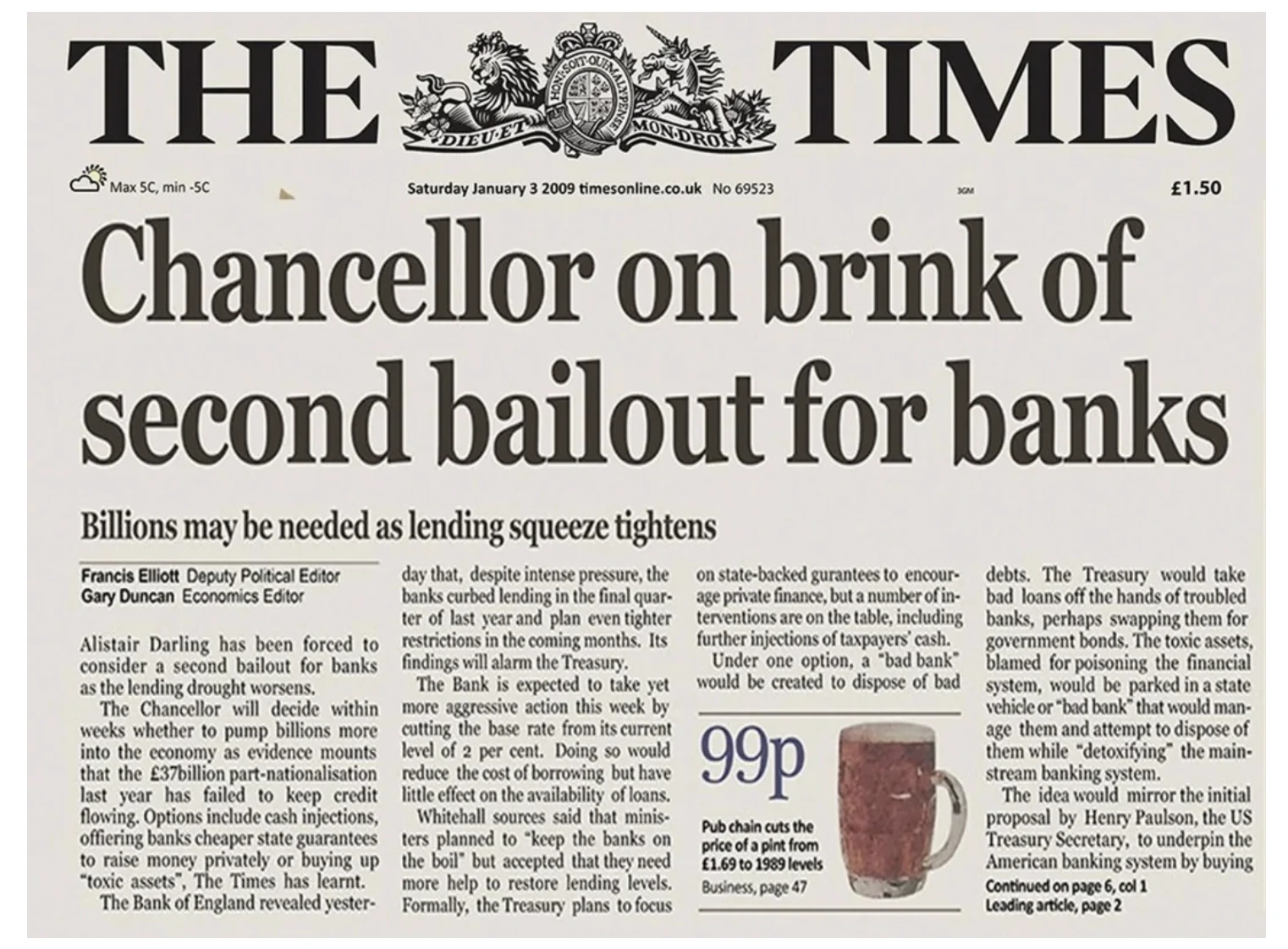
Bitcoin’s whitepaper was published on October 31, 2008. In January 2009, the open-source version went live, and the genesis block included a message copied from a real newspaper headline:
“The Times 03/Jan/2009 Chancellor on brink of second bailout for banks.”
The Times headline included in the genesis block| Source: Reddit
The headline referred to the UK government preparing another rescue for struggling banks. That message symbolized Bitcoin’s purpose, centered on creating a financial system that did not rely on banks or governments for trust.
But who is Satoshi Nakamoto? What happened to this mysterious creator? And how much is Satoshi’s Bitcoin fortune worth today?
According to researchers Humayun and Satoshi, deliberate anonymity has become a defining element of Bitcoin’s identity, reinforcing its decentralized philosophy and transforming the person behind it into a mythic figure within the crypto world.
This article uncovers the mystery through blockchain forensics, analyzing the Patoshi Pattern, the method used to estimate Satoshi’s holdings, and explaining why this billion-dollar fortune has remained untouched for over a decade.
Estimating Satoshi Nakamoto’s $120 Billion Bitcoin Fortune via the Patoshi Pattern
While Satoshi Nakamoto’s true identity remains unknown, advanced blockchain analysis has allowed experts to estimate the scale of their holdings. Most institutional analysts and data platforms agree that Satoshi mined between 1.0 million and 1.1 million BTC, forming one of the largest single Bitcoin reserves.
These coins were mined during Bitcoin’s early years between 2009 and 2010, when each block reward was 50 BTC. What defines this large holding and gives it value is its complete dormancy. The coins have remained unspent and untouched since 2010.
The estimate of Satoshi’s holdings comes from a detailed study of early Bitcoin mining, first conducted by cryptographer Sergio Lerner. The method, known as the Patoshi Pattern, tracks unique mining patterns in Bitcoin’s first blocks to identify the coins most likely mined by Satoshi.
This mining pattern links to about 22,000 blocks. With a reward of 50 BTC per block, that equals around 1.1 million BTC. Nearly all of these coins, about 99.9%, have never been moved, while most other coins from that time have. This clear difference suggests that the Patoshi blocks belong to Bitcoin’s creator, who has remained silent since.
To understand the scale of this dormant fortune, the table below compares Satoshi’s estimated holdings with Bitcoin’s broader metrics and global wealth figures as of October 2025.
Metric
Value (October 2025)
Satoshi’s 1.1M BTC as a percentage of metric
Total supply cap
21,000,000 BTC
5.2%
Circulating supply
19,934,271 BTC
5.5%
Current market cap ($112.3k)
$2.23 Trillion
5.5%
Estimated daily trading volume (Average)
50,000 – 100,000 BTC
1,100% – 2,200% (equivalent to 11–22 days of volume)
World’s richest person (Elon Musk, Sept 2025)
$490 Billion
25%
The size of these holdings shows both early skill and intentional restraint. The fortune reflects Satoshi’s belief in decentralization and the choice to step away from control. This quiet balance between creation and absence leads to what the value of this wealth means in today’s market.
How Satoshi’s Fortune Has Grown with Bitcoin’s Market Cycles
Satoshi’s Bitcoin holdings have reflected the evolution of the market since 2009, growing in value with each major cycle. The latest rise began in early 2024, as renewed institutional activity and the reduced supply after the halving pushed prices higher.
By the third quarter of 2025, Bitcoin reached new highs, trading around $126,000 per coin in August and September. At that point, Satoshi’s estimated 1.1 million BTC was valued at about $138.6 billion. In mid-October 2025, prices eased slightly after months of gains, showing how Satoshi’s silent fortune fluctuates with Bitcoin’s ongoing story.
The following table shows how the value of Satoshi’s holdings has changed alongside Bitcoin’s price history.
Year
BTC Price (peak)
Net Worth Estimate (USD)
Primary market context
2014 (Jan)
$1,000
$1.1 billion
First major bubble peak.
2017 (Dec)
$20,000
$22 billion
Global mainstream awareness surged.
2021 (Nov)
$69,000
$75.9
Post-halving liquidity injection and institutional adoption.
Oct 2025
$112,300
$123.5 billion
Continued institutional ETF demand post-2024 halving.
The consistent rise in Satoshi’s fortune mirrors Bitcoin’s maturing market and expanding global influence. Each cycle adds new layers to its story, showing how technological innovation and financial adoption continue to shape its value.
As Bitcoin’s role in global finance grows, analysts now turn their attention to what the next stage of this journey could mean for Satoshi’s wealth.
Satoshi Nakamoto’s Future Net Worth: Analyst Projections and Rising Valuations
Satoshi Nakamoto’s Bitcoin fortune continues to gain value as institutional interest grows and supply tightens after the 2024 halving. Major financial institutions and research firms expect the next market phase to drive Bitcoin’s price to new record levels, with the following projections:
Standard Chartered forecast: Bitcoin could reach $200,000 by late 2025 or early 2026, supported by steady institutional inflows through U.S. spot ETFs.
Intelligence outlook: Analysts tracking mid-term technical indicators project a price near $260,000 by 2026, reflecting long-term investor confidence and reduced market liquidity.
Potential value of Satoshi’s holdings: At $200,000 per BTC, the 1.1 million BTC would be worth about $220 billion. At $260,000 per BTC, the value could rise to nearly $286 billion, rivaling the fortunes listed in the Forbes Billionaires Index.
Long-term projection: Based on Metcalfe’s Law and network growth models, research from ARK Invest suggests Bitcoin could reach $1 million per coin between 2038 and 2040. At that level, Satoshi’s wealth would exceed $1.1 trillion, marking a theoretical first in financial history.
The following table compares analyst forecasts and how Satoshi’s estimated net worth could evolve across future Bitcoin price milestones.
Projected BTC price
Satoshi’s net worth (1.1M BTC)
Global wealth ranking implications
$200,000
$220 Billion
Likely Top 5 Wealthiest
$260,000
$286 Billion
Potentially World’s Richest Person (surpassing current second richest)
$500,000
$550 Billion
Unquestionably the World’s Richest Person
$909,091
$1.00 Trillion
World’s First Trillionaire
However, as Bitcoin’s value rises, the stillness of Satoshi’s wallet becomes even more symbolic. The fortune grows untouched, reflecting a belief that the true power of Bitcoin lies not in ownership, but in absence.
Theories Behind the 15-Year Dormancy of Satoshi’s Bitcoin
One of the greatest mysteries in crypto remains Satoshi Nakamoto’s 1.1 million BTC’s dormancy for more than 15 years.
Despite the temptation of multi-billion-dollar valuations, Satoshi Nakamoto’s Bitcoin has never moved. Theories explaining this restraint usually fall into three main ideas, each reflecting a different part of Bitcoin’s philosophy.
Theory 1: Irrecoverable Loss or Demise
Many researchers believe that the private keys may no longer be accessible. This could be due to the difficulty of managing cryptographic keys in 2009 or because the creator, or those close to them, may no longer be alive.
The 1.1 million BTC effectively disappear from circulation if the keys are permanently lost. This “invisible burn” reduces Bitcoin’s liquid supply and is a natural deflationary force. The lost coins make every remaining Bitcoin slightly scarcer, reinforcing the currency’s fixed cap of 21 million coins.
Theory 2: A Philosophical Statement of Principle
Others view the untouched coins as a deliberate act rooted in principle, in the ideology behind the blockchain. In this view, Satoshi’s decision reflects a belief that Bitcoin’s success depends on its independence from any single person.
By never spending the coins, Satoshi demonstrated that the network could exist without human control or intervention.
If the creator had moved the funds, it could have damaged trust by showing that one person still held power over the system. Keeping the wealth untouched turned Satoshi into an “anti-celebrity,” strengthening the idea that Bitcoin belongs to no one.
The silence around the wallet adds to the mythology, reinforcing Bitcoin’s identity as a truly decentralized system.
Theory 3: Security and Anonymity Deterrent
Spending even a fraction of the coins could expose the holder’s identity. Every transaction on the blockchain is public, meaning that analysts, governments, and intelligence agencies would immediately track the movement.
Possessing such a large fortune would attract unwanted attention from regulators, taxation authorities, and potential security threats.
Maintaining complete silence might be the safest choice in a world of scarce privacy. Staying hidden ensures physical and financial protection and proves that the most extraordinary power in Bitcoin may lie in choosing not to use it.
It is important to note that while Bitcoin would continue to function even if Satoshi’s coins moved, the real impact would unfold in perception, not technology. The network would still verify blocks and process transactions, but confidence could fracture instantly.
Bitcoin’s strength largely lies not only in code but in collective belief, the trust that no single person holds power over it. If Satoshi’s dormant coins were suddenly active, the event would challenge that belief, shaking the social foundation that has kept Bitcoin stable for over a decade.
New Trending Crypto Wallet Offers
Sponsored
Disclosure
We sometimes use affiliate links in our content, when clicking on those we might receive a commission at no extra cost to you. By using this website you agree to our terms and conditions and privacy policy.
Satoshi Nakamoto’s fortune represents far more than wealth. It captures the spirit of Bitcoin itself, a system built on independence, scarcity, and trust without intermediaries.
The estimated 1.1 million BTC has never moved, yet it continues to influence how the world perceives digital ownership and value. Each market cycle renews the same question: how can such immense power remain silent?
Satoshi’s decision to disappear turned absence into influence. The untouched coins remain both a symbol of restraint and the foundation of Bitcoin’s decentralized identity. Their stillness reminds the world that Bitcoin’s strength lies not in the creator but in the code and the collective belief behind it.
FAQs
Could Satoshi’s coins still be accessed today?
Yes, but only with the original private keys. Without them, the coins remain permanently locked.
What would make Satoshi a trillionaire?
Bitcoin would need to reach roughly $909,000 per coin, giving the 1.1M BTC a value of $1 trillion.
Why does Satoshi’s anonymity matter?
It strengthens Bitcoin’s principle that no single person controls the network, preserving trust in its decentralized model.
What impact would moving Satoshi’s coins have on the market?
It could cause panic, trigger price drops, and raise doubts about Bitcoin’s independence.
Disclaimer:
The information provided in this article is for informational purposes only. It is not intended to be, nor should it be construed as, financial advice. We do not make any warranties regarding the completeness, reliability, or accuracy of this information. All investments involve risk, and past performance does not guarantee future results. We recommend consulting a financial advisor before making any investment decisions.
Dr. Lorena Nessi is an award-winning journalist and media technology expert with 15 years of experience in digital culture and communication. Based in Oxfordshire, UK, she combines academic insight with hands-on media practice.
She holds a PhD in Communication, Sociology, and Digital Cultures, and an MA in Globalization, Identity, and Technology.
Lorena has taught at Fairleigh Dickinson University, Nottingham Trent University, and the University of Oxford. She is a former producer for the BBC in London, with additional experience creating television content in Mexico and Japan.
Her research focuses on digital cultures, social media, technology, capitalism, and the societal impact of blockchain innovation.
She has written extensively on digital media and emerging technologies, with her work featured in both academic and media platforms. Her Web3 expertise explores how blockchain technologies shape culture, economics, and decentralized systems.
Outside of work, Lorena enjoys reading science fiction, playing strategic board games, traveling, and chasing adventures that get her heart racing. A perfect day ends with a relaxing spa and a good family meal.


 Easy
Easy