Data from the past decade shows 300+ reported physical attacks on crypto holders across 15 countries during major Bitcoin bull runs. | Credit: CCN.com
Share
Key Takeaways
14 people, including police officers and a politician, received life sentences in India’s largest crypto extortion case.
Shailesh Bhatt was both a victim of kidnapping and a perpetrator of earlier crypto-related extortion.
The case exposed deep corruption in Gujarat’s law enforcement and political circles.
It accelerated India’s push for tighter crypto regulations and user protection measures.
On February 11, 2018, the city of Surat, Gujarat, India, became the stage of a shocking crime that exposed the dark intersections of cryptocurrency, crime, and politics in India.
At the center of the case was Shailesh Bhatt, a local businessman deeply involved in crypto trading.
The Surat kidnapping case, centered around cryptocurrency, reportedly involved a staggering 2,256 Bitcoin in illicit transactions, highlighting the high stakes of digital assets in crime.
Behind the plot were corrupt police officials and a former politician, showing how quickly digital wealth could draw people into dangerous schemes.
As of September 2025, a Gujarat court handed life sentences to 14 people, one of the largest convictions in crypto crime history.
The case broke trust in law enforcement and reminded many of the risks tied to India’s fast-growing crypto and technology sector.
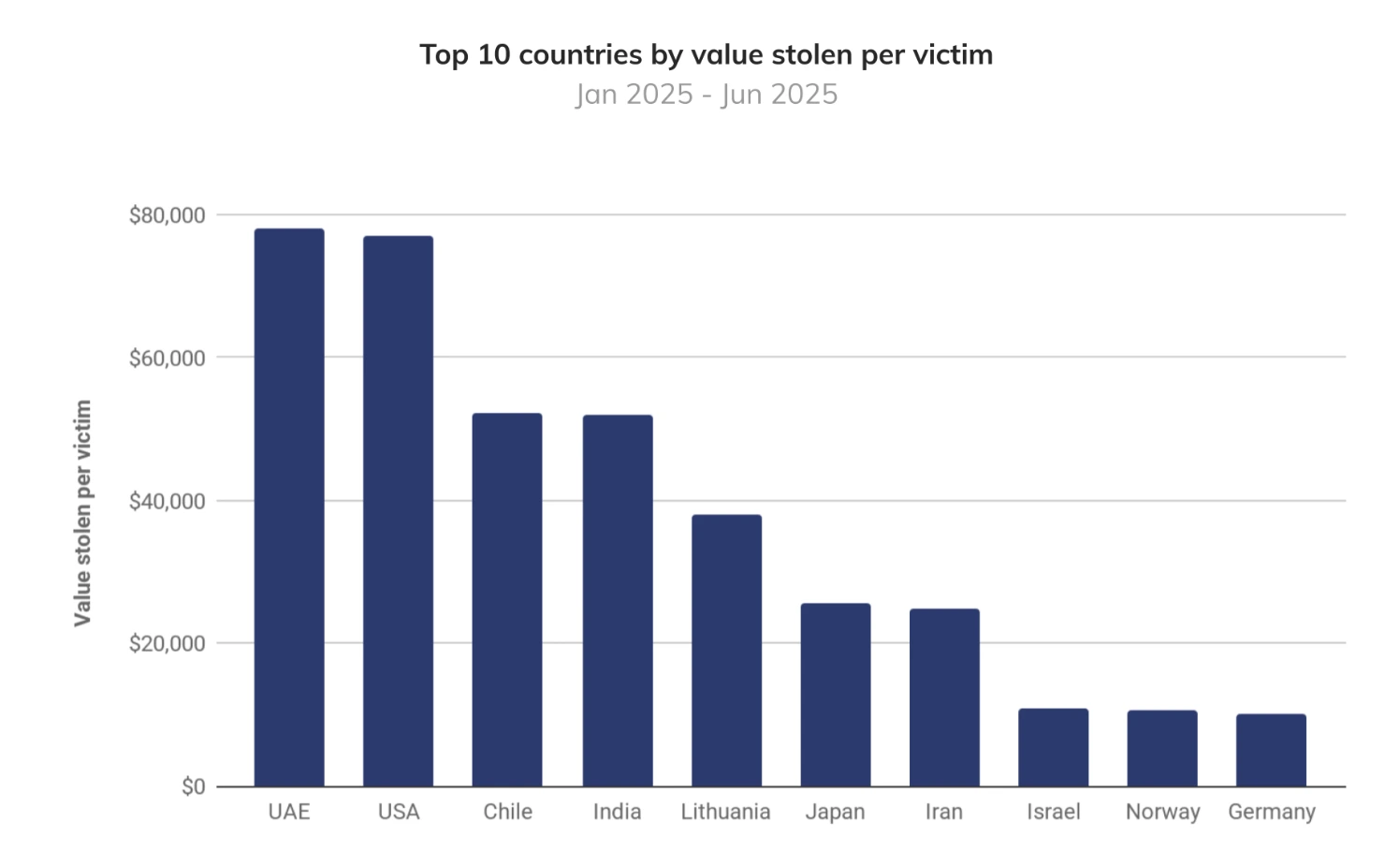
According to Chainalysis’s 2025 study on crypto crime, India ranked among the top ten countries worldwide by value stolen per victim between January and June 2025, with average losses exceeding $50,000.
Total crypto losses | Source: Chainalysis
This article explores the kidnapping, the extortion that followed, the investigation, the final verdict, and the impact it left behind.
Try Our Recommended Crypto Exchanges
Sponsored
Disclosure
We sometimes use affiliate links in our content, when clicking on those we might receive a commission at no extra cost to you. By using this website you agree to our terms and conditions and privacy policy.
The Bitcoin Kidnapping Scandal in Surat, Gujarat (India)
The Surat Bitcoin case was anything but simple. Victims became perpetrators, lawmen turned into criminals, and political power mixed with digital wealth. To untangle it, here is a quick breakdown of the key facts:
Victim: Shailesh Bhatt, a Surat-based businessman and crypto trader.
Accomplice kidnapped with him: His aide, Piyush Savaliya.
Kidnappers: Men using their police officers’ credentials, including ex-inspector Anant Patel, Superintendent Jagdish Patel, and former BJP MLA Nalin Kotadiya.
What was extorted from Bhatt: 176 Bitcoin and ₹32 crore ($3.6 million) in cash.
Bhatt’s own crimes: Weeks earlier, he had kidnapped trader Dhaval Mavani with Savaliya’s help, extorting 2,256 BTC, 11,000 LTC, and ₹14.5 crore ($1.64 million) to recover BitConnect losses.
Extra detail: Bhatt later turned on Savaliya in a separate extortion attempt.
Total scale: Investigators traced over ₹155 ($17.6 million) crore in crypto and cash linked to Bhatt’s schemes.
Verdict (August 29, 2025): 14 people convicted and sentenced to life, including Kotadiya and Jagdish Patel; one acquitted.
With the stage set, the story unfolds like a crime thriller, a crypto crime thriller to be precise:
On that February evening, Shailesh Bhatt and his aide, Piyush Savaliya, opened the door to men in uniform carrying what appeared to be an arrest warrant. They were accused of running an illegal betting operation, a charge that seemed plausible enough to follow without resistance.
But instead of a police station, they were taken to a farmhouse outside Surat where the trap awaited.
Inside the isolated property, the businessmen were stripped of their belongings, beaten, and forced at gunpoint to hand over access to their cryptocurrency wallets.
What looked like a lawful arrest was, in fact, an extortion scheme orchestrated by men who had once sworn to uphold the law.
The Conspirators: Police, a Politician and India’s Crypto Crime Ring
At the center of the conspiracy was former police inspector Anant Patel, supported by Superintendent Jagdish Patel and former Bharatiya Janata Party (BJP) Member of Legislative Assembly (MLA) Nalin Kotadiya.
The trio and their accomplices used their influence and authority to blur the line between law enforcement and criminality.
Their involvement made the case sensational because of the amount of money and because it revealed how political power and police protection could be weaponized for profit.
The Twist: A Captive Businessman’s Hidden Role in a Prior Extortion
Investigators soon learned that Shailesh Bhatt was not the powerless businessman he appeared to be. Just weeks before his abduction, he had orchestrated the kidnapping of Dhaval Mavani, another crypto trader, with the help of his aide Piyush Savaliya.
The plan was Bhatt’s attempt to recover losses from the BitConnect Ponzi scheme, where he had invested ₹2 crore before the platform collapsed.
But his method was anything but legal. Mavani was abducted, threatened, and forced to surrender a staggering 2,256 Bitcoin (BTC), 11,000 Litecoin (LTC), and ₹14.5 ($1.64 million) crore in cash.
This revelation changed the tone of the case. Bhatt was not only a victim of the farmhouse ordeal, where he was stripped of 176 Bitcoin and ₹32 crore ($3.63 million) in cash, but also a perpetrator of an earlier, even larger extortion scheme.
His story blurred the line between predator and prey in India’s crypto underworld, where scams, violence, and digital fortunes collided.
The cycle did not stop there. In the days leading up to his own kidnapping, Bhatt even turned on his closest aide, Savaliya, targeting him in a separate extortion plot.
Crypto Amount
What It Represents
Perpetrator / Actor
2,256 BTC & 11,000 LTC
Extorted from a crypto trader
Shailesh Bhatt
752 BTC
Amount confessed to police
Shailesh Bhatt
176 BTC
Extorted from Bhatt by police
Corrupt police officials
The Verdict: Life Sentences and a Warning in India’s Crypto Legal History
The revelations triggered a high-profile trial that lasted for years. Witness testimonies, digital records, and the accused’s political connections kept the case in national headlines.
When the judgment finally came on August 29, 2025, the Ahmedabad City Sessions Court convicted 14 individuals to life sentences, including former BJP MLA Nalin Kotadiya and former Superintendent of Police Jagdish Patel.
The convicted group also included nine police constables, highlighting the deep-rooted corruption within the force.
One accused, Bipin Patel, was acquitted.
The verdict marked a historic moment, signaling a judicial effort to restore confidence in the system and send a strong message against corruption at the highest levels.
Broader Impact on India’s Crypto Scene
The conviction in Surat was not just a court judgment. It was a signal to India’s crypto community that even those with political connections and police backing could face justice.
The case unfolded as India was emerging as the world leader in adoption, making the timing all the more striking.
India ranked first for the third consecutive year in global adoption.
The Asia-Pacific region recorded $2.36 trillion in crypto transaction volume in the 12 months ending June 2025.
This growth underscored opportunity, but also heightened risks. Scandals like the Surat extortion forced regulators to act. Instead of a full-fledged crypto bill, the government opted for a two-track approach: allow trading while tightening the rules around taxation and compliance.
18% GST on all crypto-related services for Indian users.
Mandatory registration of exchanges with the Financial Intelligence Unit (FIU-IND).
Strictly know your customer (KYC) and anti-money laundering (AML) procedures to monitor suspicious activity.
The case also brought attention to victim support and cyber readiness. The Indian Cyber Crime Coordination Centre (I4C) has played a crucial role since 2020 by:
Operating the 1930 helpline for citizens to report cyber fraud.
Acting as a coordination hub for law enforcement agencies.
Supporting investigations into financial cybercrime.
Looking forward, India’s crypto economy shows no sign of slowing down. Projections suggest:
A market size of $11.07 billion by 2031.
Growth at a CAGR of 18.65%.
The Surat case became a turning point. It highlighted the dangers of unchecked digital wealth but also showcased India’s determination to build a safer and more transparent crypto landscape.
The Surat Bitcoin extortion case stands as one of the most complex criminal episodes in India’s digital history. What began as a kidnapping complaint quickly unraveled into a web of police corruption, political involvement, and cycles of fraud tied to cryptocurrency.
The convictions of 14 people, including a former legislator and multiple police officers, show that even those with authority can face the law when digital wealth is at stake. It also exposed the dual role of Shailesh Bhatt, both as a victim of extortion and as a perpetrator of an earlier crime driven by his BitConnect losses.
The scandal left a lasting mark on India’s crypto community. It underlined the dangers of unchecked adoption, influenced regulatory decisions on taxation and compliance, and highlighted the importance of victim support systems. The verdict now serves as a milestone in India’s effort to secure its digital economy against crime and corruption.
Which court delivered the 2025 Bitcoin extortion judgment?
The Ahmedabad City Sessions Court handed down the life sentences.
How many police constables were convicted in the Surat crypto case?
Nine constables were convicted, showing how deep the conspiracy ran inside the force.
Was anyone acquitted in the 2025 Bitcoin extortion trial?
Yes. One accused, Bipin Patel, was acquitted due to a lack of evidence.
How much of the extorted digital assets did Shailesh Bhatt keep?
Investigators found that Bhatt had extorted 2,256 Bitcoin and other assets. His personal share of the gains was reportedly far more than just 700 BTC.
Disclaimer:
The information provided in this article is for informational purposes only. It is not intended to be, nor should it be construed as, financial advice. We do not make any warranties regarding the completeness, reliability, or accuracy of this information. All investments involve risk, and past performance does not guarantee future results. We recommend consulting a financial advisor before making any investment decisions.
Dr. Lorena Nessi is an award-winning journalist and media technology expert with 15 years of experience in digital culture and communication. Based in Oxfordshire, UK, she combines academic insight with hands-on media practice.
She holds a PhD in Communication, Sociology, and Digital Cultures, and an MA in Globalization, Identity, and Technology.
Lorena has taught at Fairleigh Dickinson University, Nottingham Trent University, and the University of Oxford. She is a former producer for the BBC in London, with additional experience creating television content in Mexico and Japan.
Her research focuses on digital cultures, social media, technology, capitalism, and the societal impact of blockchain innovation.
She has written extensively on digital media and emerging technologies, with her work featured in both academic and media platforms. Her Web3 expertise explores how blockchain technologies shape culture, economics, and decentralized systems.
Outside of work, Lorena enjoys reading science fiction, playing strategic board games, traveling, and chasing adventures that get her heart racing. A perfect day ends with a relaxing spa and a good family meal.


 Easy
Easy