Emphasize Bitcoin’s value. It lets people send value online without a bank in the middle.
Use analogies. “It’s a public ledger anyone can verify,” then stop and see if they have additional questions.
Separate the tech and the investment sides. The network can be interesting even if the asset stays volatile and risky.
Reiterate safety. No matter how cool Bitcoin may sound, securing one’s assets is paramount.
Feelings about Christmas dinner vary from person to person. Some want to keep conversations light, while others want to get involved in politics and other topics that might make one uncomfortable. If you’re reading this, you might be one who wants to talk about Bitcoin.
Thing is, Bitcoin conversation becomes unproductive when you have to over-explain yourself, almost as if you’re holding a sales pitch. This article details a simple, repeatable way to explain Bitcoin that keeps the conversation family friendly.
New Trending Crypto Wallet Offers
Sponsored
Disclosure
We sometimes use affiliate links in our content, when clicking on those we might receive a commission at no extra cost to you. By using this website you agree to our terms and conditions and privacy policy.
The Bitcoin whitepaper describes the world’s first cryptocurrency as “a kind of digital money that runs on a public network instead of a bank. People can send value to each other directly, and the network records the transfers on a shared ledger so nobody can spend the same coin twice.”
That’s honestly not a terrible explanation on its own, but it’s sure to bring questions. If your family is confused, say something like “think of Bitcoin as a shared Google Sheet that nobody owns.”
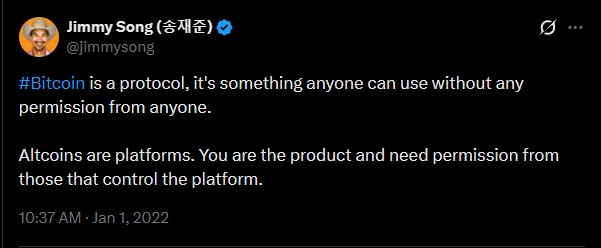
Source: @jimmysong on X
The Google Sheet analogy works because:
Everyone can see the transaction ledger, just as everyone can see the edit history of a Google Sheet.
Once confirmed, no one can alter a transaction. It’s as if you can lock previous Google Sheet rows, making the Sheet a non-tamperable source of truth.
Of course, someone might ask how you the network resists tampering. You don’t have to go too in-depth here, and say Bitcoin uses industry-standard encryption methods (SHA-256) as part of its protection.
How to Elaborate on Bitcoin
There are three points you can elaborate on if your family keeps asking.
Bitcoin is Scarce by Design
Bitcoin’s supply is capped at 21 million coins, and its issuance schedule is programmed into the protocol. Unlike dollars, the system’s hard limit helps create supply and demand.
It’s Not Backed by Anything, But Neither is Fiat
If anyone says, “but what’s Bitcoin backed by?” You can say the power it takes to validate transactions. Should they continue, state that most modern money isn’t backed by anything either. The US dollar only exists because we agree upon it.
Everyone’s Aware of the Risk
Be honest about the risk and volatility. All Bitcoin enthusiasts are aware of the risk, no matter how much we like the idea.
Questions on Bitcoin You Might Face
Should the conversation continue, here are some questions you’re sure to face.
Is Bitcoin’s Value Even Real? Isn’t it Just Digital Numbers?
Your bank account is made up of digital numbers, too. Bank deposits are just ledger entries. Bitcoin is also made up of ledger entries, but it’s a public, global, decentralized system.
If they want you to elaborate, talk about how miners validate blocks and how mining difficulty adjusts to keep block production steady.
Say something like, “scams are real, but they don’t invalidate Bitcoin’s use case. Just like with fiat money, as long as you’re careful and properly manage your wallet, you should be okay.”
Surely, someone in your family pays enough attention to the finance world, and understands that Wall Street has adopted Bitcoin in some way or another.
You can frame Wall Street’s ETF adoption as a form of endorsement, as ETFs allow traditional investors to gain exposure through their regular investment avenues. However, note that a Wall Street endorsement does not excuse Bitcoin’s volatility.
What Not to Do – Avoid Price, Jargon and Bitcoin Hype
If you want to keep people listening, avoid the following:
Do not lead with the price: Mentioning price makes it sound like you’re running a sales pitch. Emphasize Bitcoin’s use case as a reason for that value.
Don’t use technical terms: Terms like UXTO, hashrate, mempool, etc. will probably turn your listener off.
Don’t argue identity politics via Bitcoin: Don’t say things like “Bitcoin will take down the Fed!” and stuff like that. You’ll not convert anyone by claiming a good vs. evil battle.
Do not demand that anyone buy: Let your family make their own purchasing decisions. Do not try to force anyone into Bitcoin.
The easiest thing to remember: don’t try to convince anyone, per se. Be honest about your interest in Bitcoin, and let the conversation flow naturally.
If someone does want to invest and asks how, inform them the following:
Start small: Have them start with a small investment, one they’d be okay losing, due to Bitcoin’s volatility.
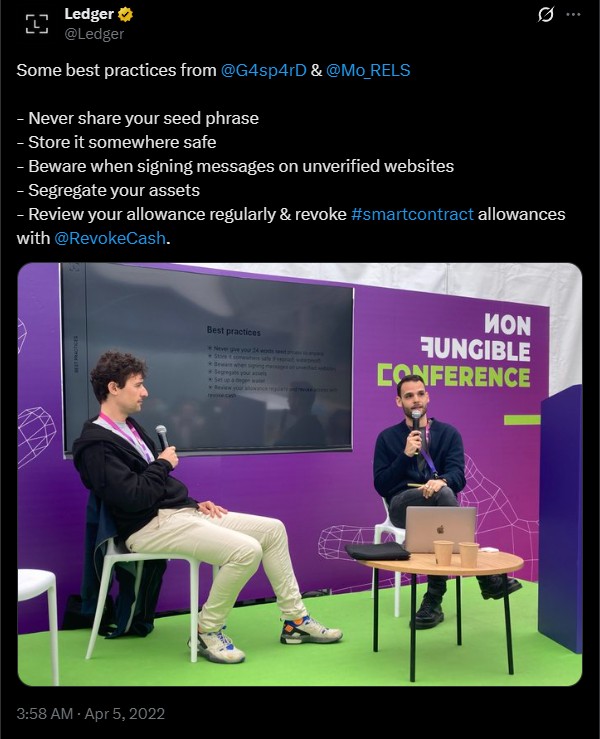
Learn security basics: Tell them how private and public keys actually work. What a recovery phrase is and how to keep it safe.
Know taxes exist: Educate them on crypto taxation, and how it’s an ever-evolving framework that doesn’t necessarily align with typical fiat tax.
The whole idea is to keep things simple, elaborating if they show interest, as well as being honest. You’re not trying to hide crypto’s downsides. In fact, discussing them will only make you sound more honest, and probably bring more understanding to your well-rounded perspective.
It can act like money (people use it to store and transfer value), but it behaves more like a volatile asset than a stable day-to-day currency.
Who controls Bitcoin?
No single company owns it. Rules are enforced via their programming into the network, and transactions settle on a public ledger.
What’s the biggest beginner mistake?
Getting scammed or leaking a seed phrase. Legitimate companies will never ask for your recovery details.
What should I say if someone asks “Should I buy?”
“I’m not here to give investment advice. If you ever try it, start with a small investment, and learn wallet safety first.”
Disclaimer:
The information provided in this article is for informational purposes only. It is not intended to be, nor should it be construed as, financial advice. We do not make any warranties regarding the completeness, reliability, or accuracy of this information. All investments involve risk, and past performance does not guarantee future results. We recommend consulting a financial advisor before making any investment decisions.
Max Moeller is a Chicago‑based writer and video editor passionate about games, tech, and crypto. Whether it’s crafting clear, insightful articles or piecing together engaging video retrospectives, he’s driven by curiosity and takes pride in keeping things human. Since 2017, Max has been published in a variety of notable crypto magazines.


 Easy
Easy