Aave is fighting to free $71M in court while its TVL, loans, and token bleed on-chain. Credit | CCN
Share
Key Takeaways
Aave’s TVL has fallen from $44 billion on April 17 to $27 billion, as depositors continue to withdraw from the platform following the April 18 Kelp DAO exploit.
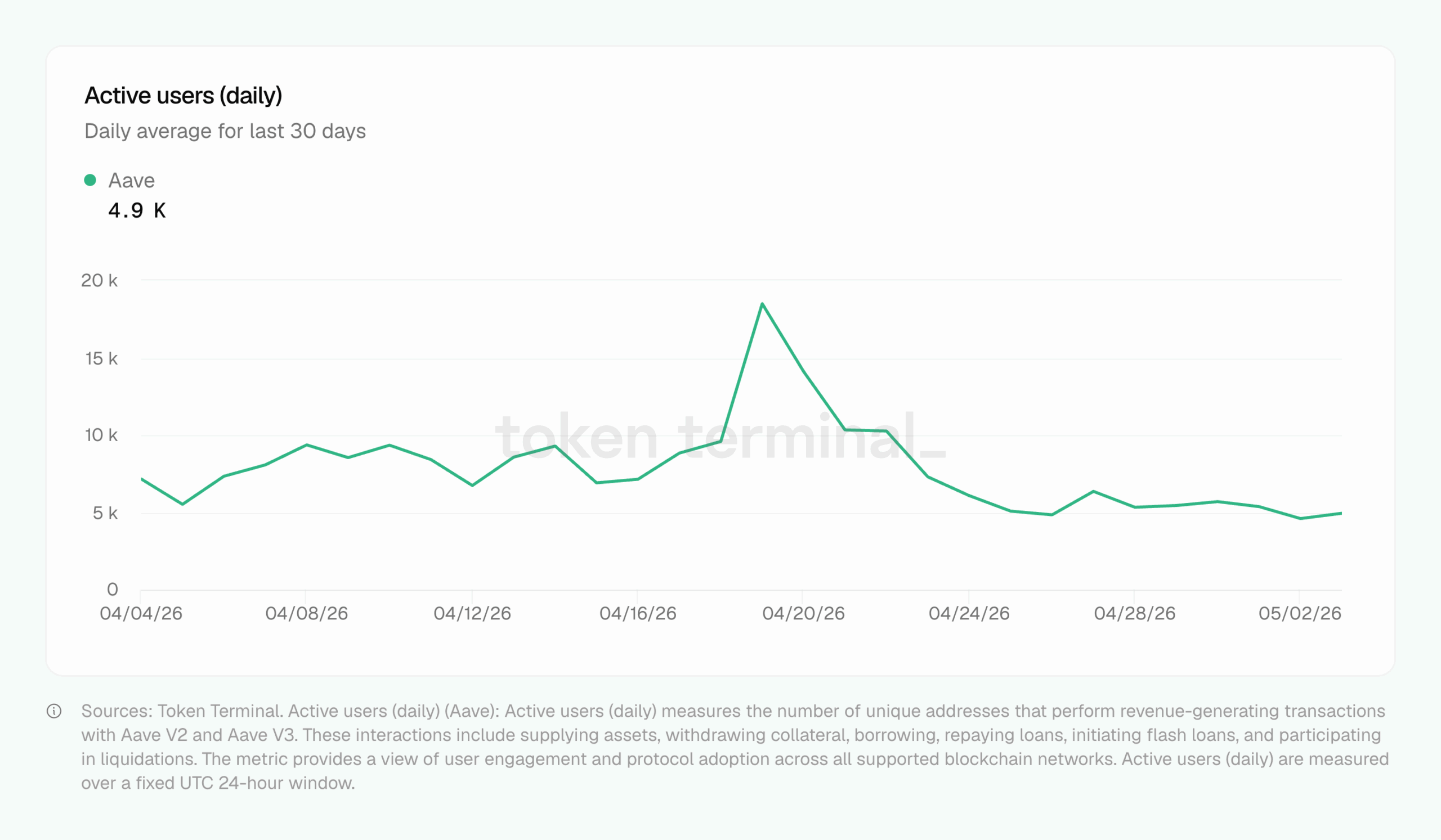
Active loans on Aave V2 and V3 have fallen 30% since the hack, while daily active users have collapsed from a post-hack peak of 18,500 to just 4,900.
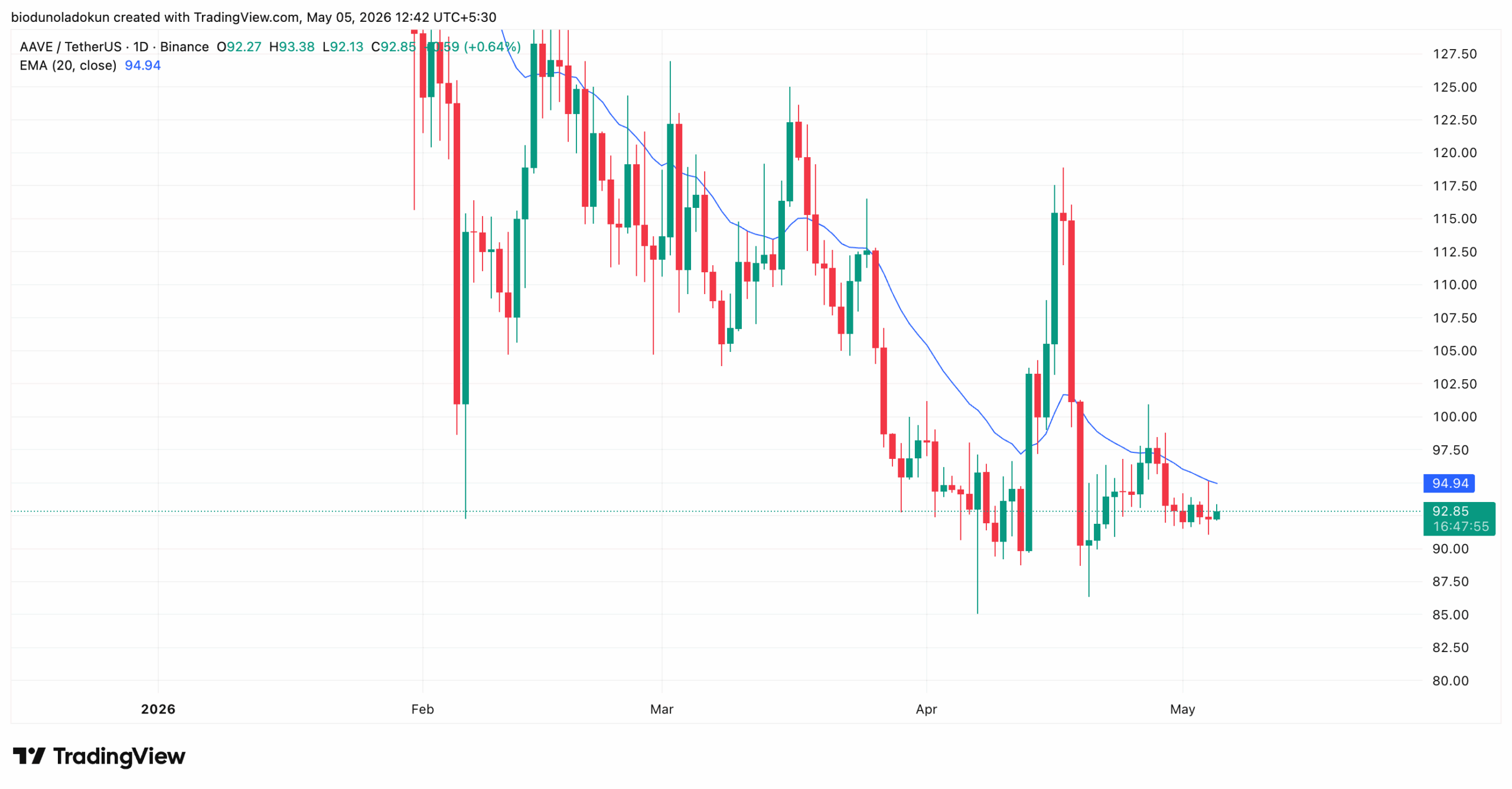
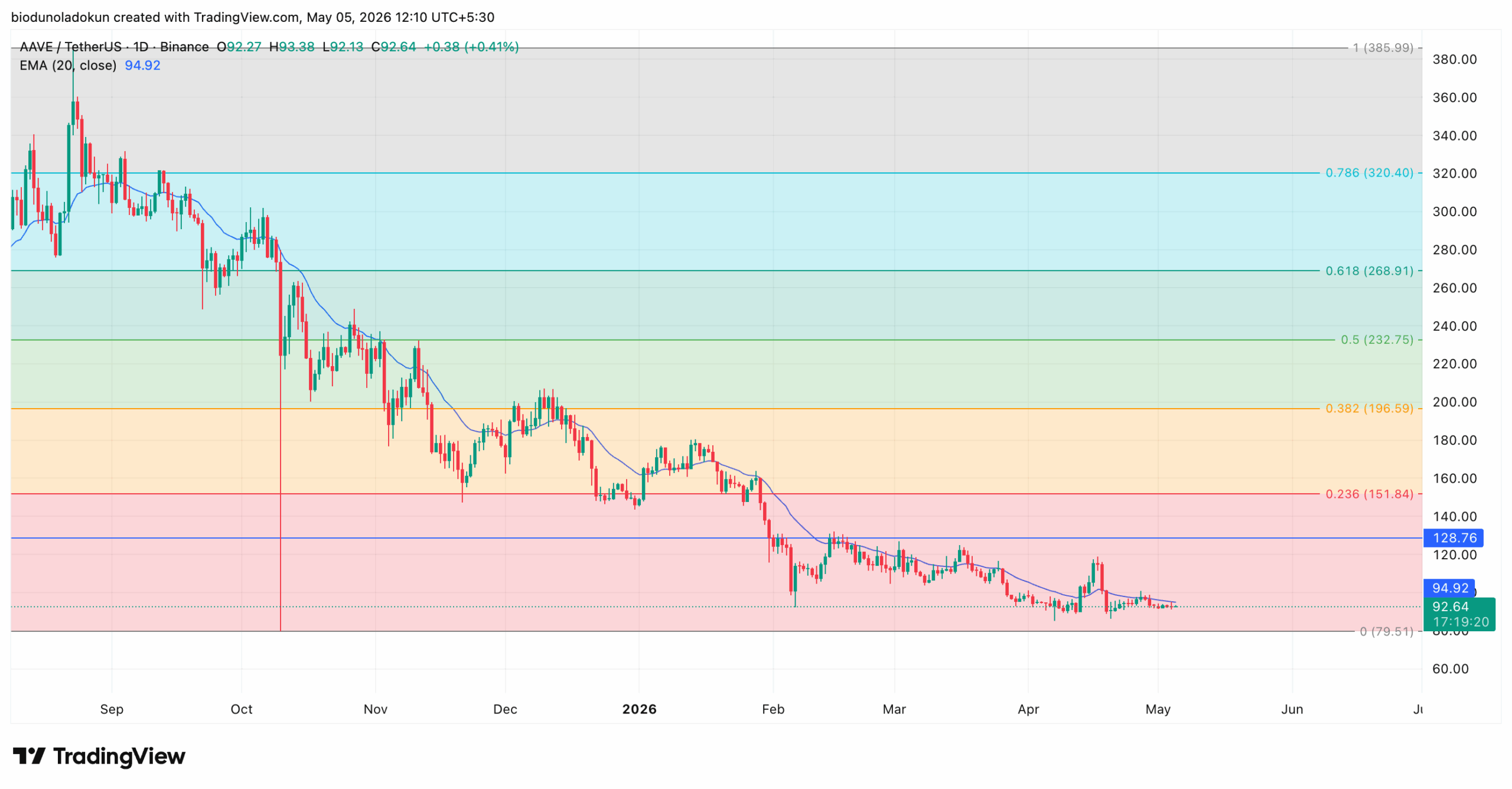
AAVE is trading below its 20-day EMA, with momentum indicators suggesting a potential drop toward the $80 demand zone.
Aave is fighting on two fronts.
On May 4, the decentralized finance lender filed an emergency motion in the US District Court for the Southern District of New York, asking the court to vacate a May 1 restraining order that has frozen 30,766 ETH — worth around $71 million — in an Arbitrum DAO–controlled wallet.
While Aave argues for its users in court, the protocol is losing ground on-chain.
Since the April 18Kelp DAO exploit, the protocol’s total value locked has cratered by almost half, active loans have thinned out, and AAVE’s price has dropped by almost 10%.
Try Our Recommended Crypto Exchanges
Sponsored
Disclosure
We sometimes use affiliate links in our content, when clicking on those we might receive a commission at no extra cost to you. By using this website you agree to our terms and conditions and privacy policy.
Aave Argues That A Thief Doesn’t Own What He Steals
In its memorandum filed Monday, Aave argued that the $71 million in crypto frozen on the Arbitrum network belongs to its users and not to DPRK-linked hackers that plaintiffs claim they have default judgments against.
Aave said:
“The disputed funds do not belong to North Korea or any affiliated entities. Instead, the immobilized assets belong to the users of the Aave protocol who were victimized when a third-party thief effectively stole their assets during a cyber exploit on April 18, 2026.”
The DeFi lender noted further in its memorandum that if the court upholds the restraining order, it could deter future recovery efforts for North Korea–related hacks.
Worse, Aave argued, it could actively incentivize bad actors to target more crypto protocols, since making restitution harder makes attacks more profitable.
Aave TVL and Active Loans: Down Since the Kelp DAO Hack
As the DeFi community awaits Judge Margaret M. Garnett’s ruling on Aave’s motion, which could set an important legal precedent, the lender continues to bleed on-chain.
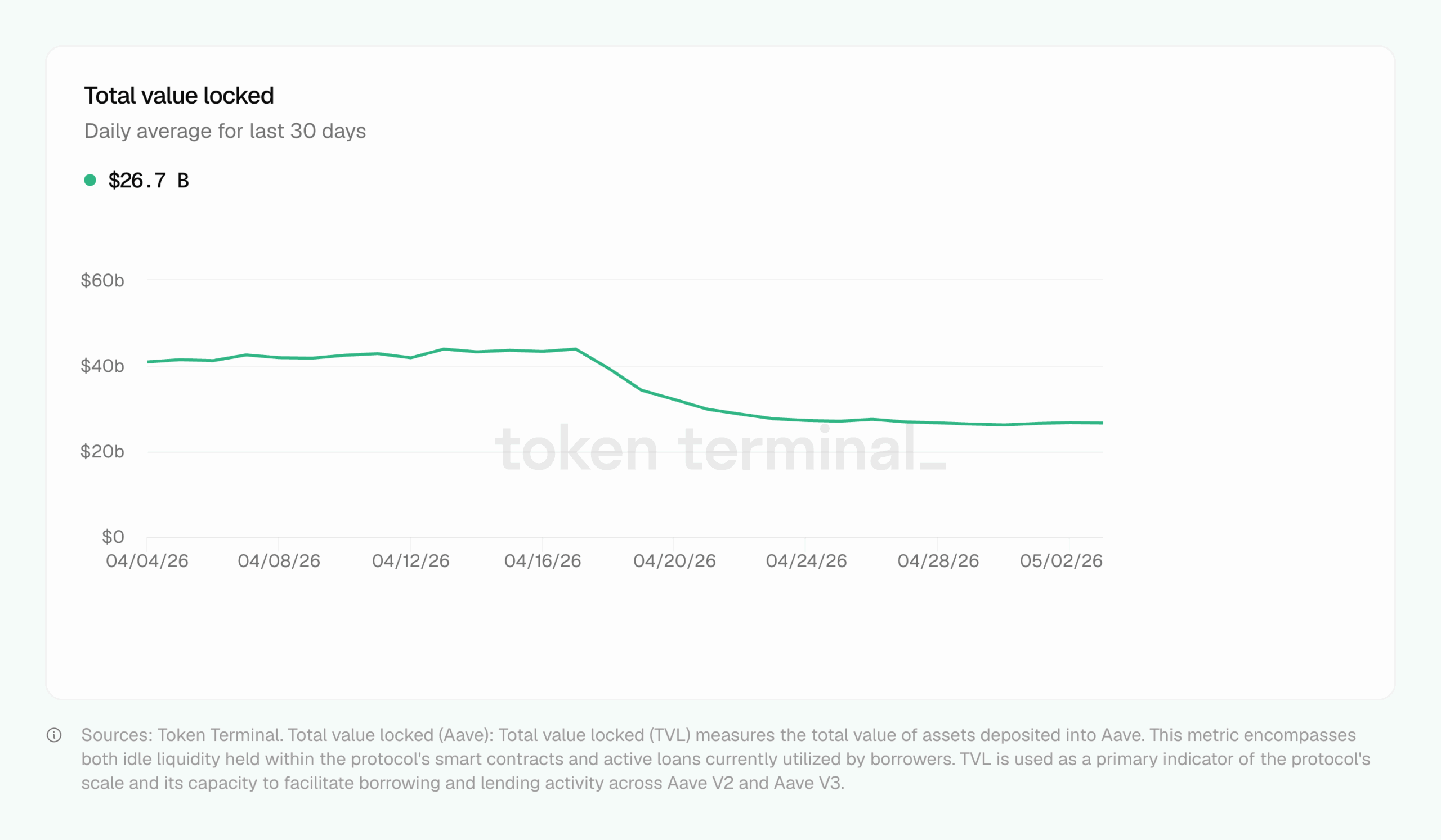
According to Token Terminal data, Aave’s total value locked (TVL) has maintained a downtrend since April 18, down 30% in just over two weeks.
For context, Aave’s TVL ranged between $41–$44 billion throughout the first half of April, peaking at $44 billion on April 17 — the day before the Kelp DAO bridge was exploited.
By April 20, that figure had fallen to $34 billion, and the slide has continued since. As of this writing, AAVE’s TVL is $27 billion.
For a lending protocol, TVL is a measure of collateral and liquidity available inside its smart contracts.
So when it plummets sharply like this, it tells us that depositors are removing their capital from the platform, often an indicator of poor confidence.
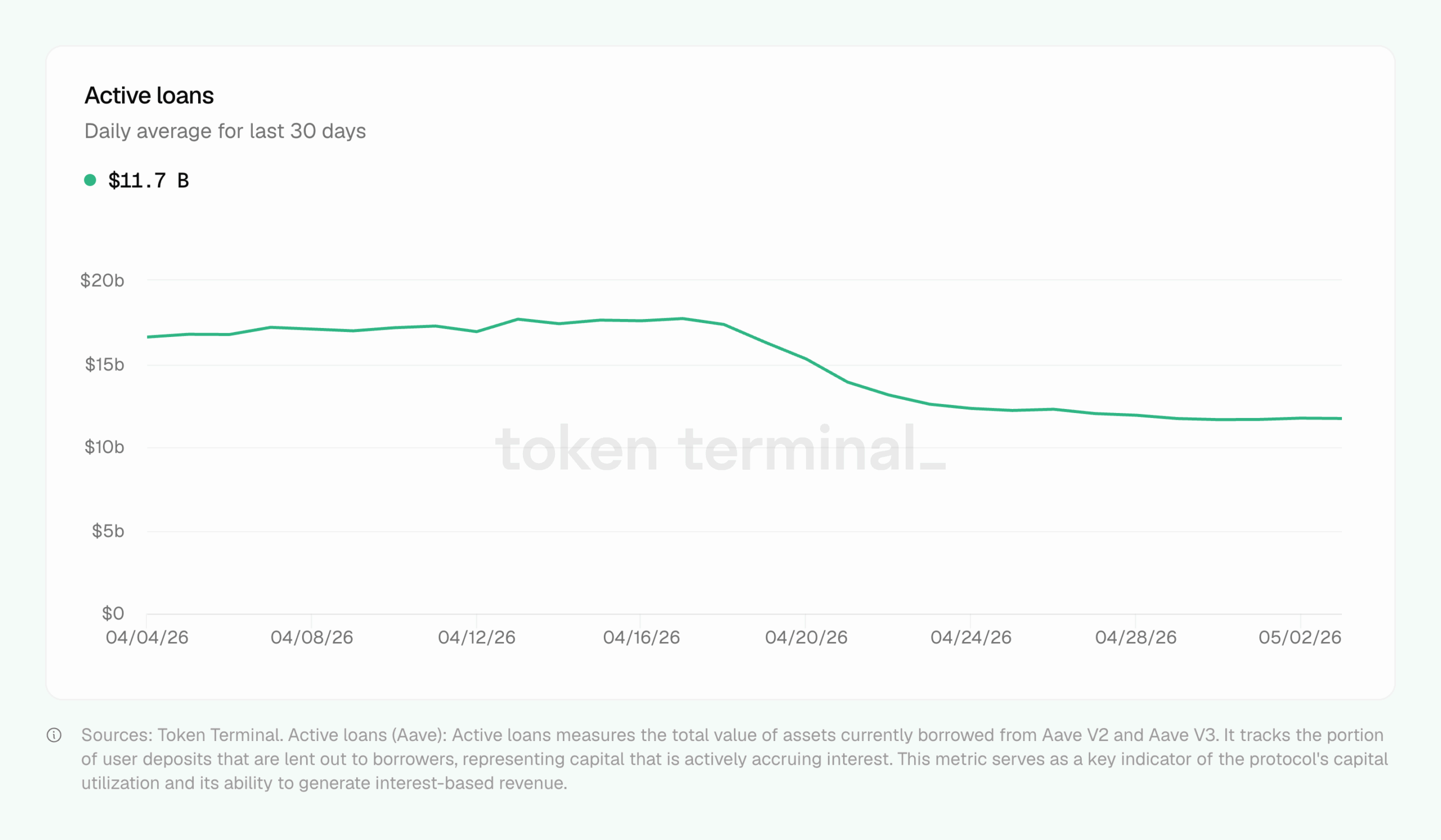
Further, the daily count of active loans on Aave has also suffered since the hack.
Per Token Terminal, between April 5 and April 18, Aave V2 and V3 carried an average daily active loan balance of $17 billion. However, since the exploit, this has dropped by 30%.
This decline reflects borrowers either repaying voluntarily to exit the platform or being unwilling to open fresh positions due to fear.
This moving average measures an asset’s average price over the past 20 trading sessions, giving more weight to recent prices.
When price moves above this line, it signals a bullish shift in short-term momentum, as the asset reclaims a key dynamic resistance level and attracts fresh buying interest.
On the other hand, when the price falls below the 20-day EMA, it signals weakening short-term momentum and sellers in control.
AAVE’s current position below the line suggests bulls have yet to gather the strength to test and push past it.
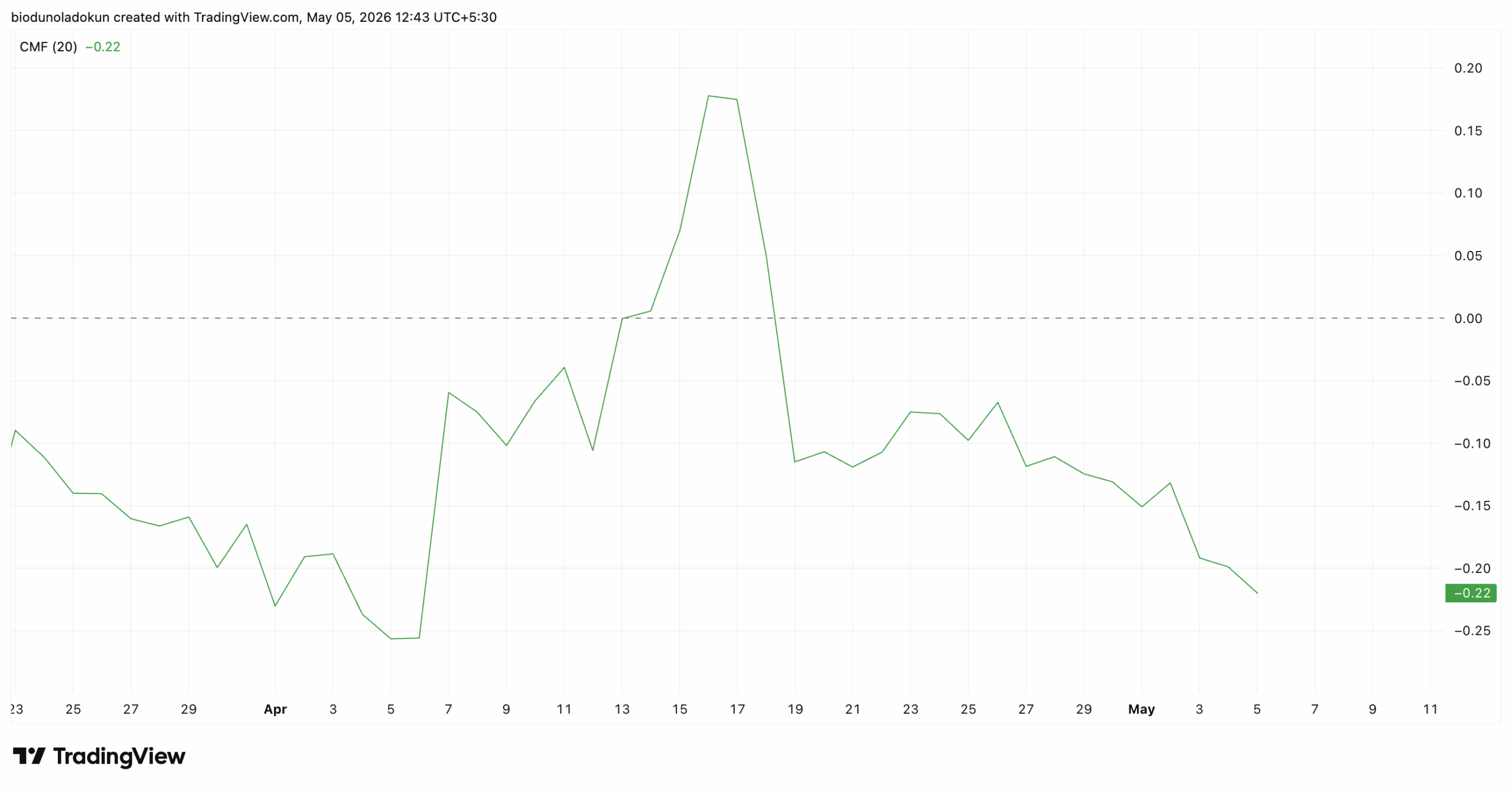
Moreover, AAVE’s Chaikin Money Flow (CMF) has trended lower since the hack and is now deep in negative territory at -0.22.
This momentum indicator measures the flow of money into and out of an asset over a given period.
When CMF falls below the zero neutral line during a period of price weakness like this, sellers are in firm control, and capital is exiting the asset.
Disclaimer:
The information provided in this article is for informational purposes only. It is not intended to be, nor should it be construed as, financial advice. We do not make any warranties regarding the completeness, reliability, or accuracy of this information. All investments involve risk, and past performance does not guarantee future results. We recommend consulting a financial advisor before making any investment decisions.
Abiodun Oladokun is a Research Analyst at CCN, where he covers cryptocurrency markets with a focus on on-chain analysis, technical assessments, and emerging trends across decentralized finance (DeFi), real-world assets (RWA), artificial intelligence (AI), decentralized physical infrastructure networks (DePIN), Layer 2s, and meme coins.
Prior to CCN, he served as a Senior On-Chain Analyst at BeInCrypto, producing market reports spanning diverse crypto sectors.
Before that, he conducted technical analysis and market assessments of various altcoins at AMBCrypto, where he also contributed long-form quarterly research papers on DeFi, NFTs, DAOs, and scaling architectures, leveraging on-chain platforms including Messari, Santiment, DefiLlama, and Dune Analytics.
He began his crypto career as a research analyst at SixthSense DAO, developing blockchain forensic tools to trace the history of stolen assets.
Abiodun is a lawyer called to the Nigerian Bar and the founder of Ilé Ijó, a Lagos-based electronic dance music collective.













 Everything Wrong With Aave Since KelpDAO’s Exploit: Price Down 12%, TVL Down $9 Billion