Tether Is Quietly Becoming One of the World’s Largest Private Gold Holders — Here’s Why It Matters for USDT Stability and Bitcoin
Share
Key Takeaways
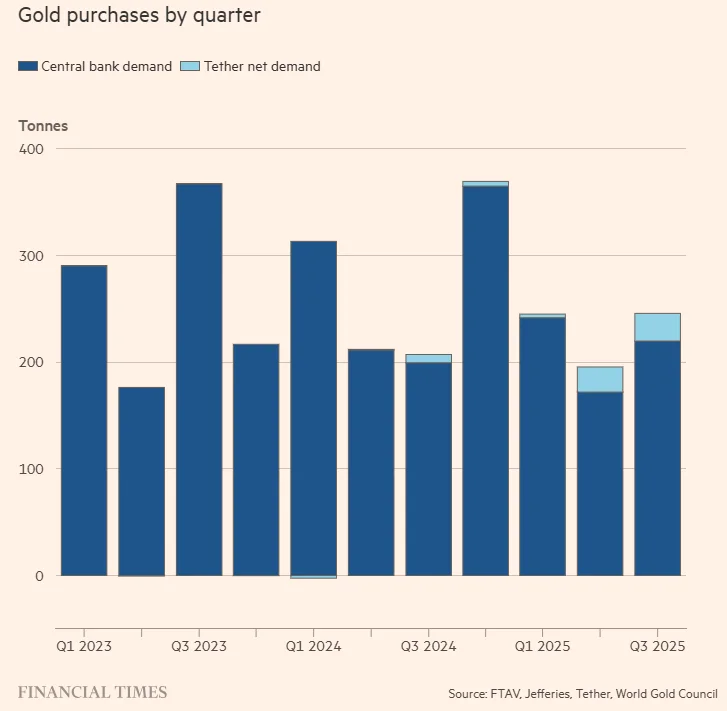
Tether is the largest non-central bank buyer of gold globally.
Its gold holdings now rival those of South Korea, Hungary, and Greece.
Why is Tether buying so much Gold even though it is a stablecoin issuer?
Tether’s aggressive gold accumulation has crossed a historic line.
The world’s biggest stablecoin issuer is now the largest non-central bank gold buyer on the planet.
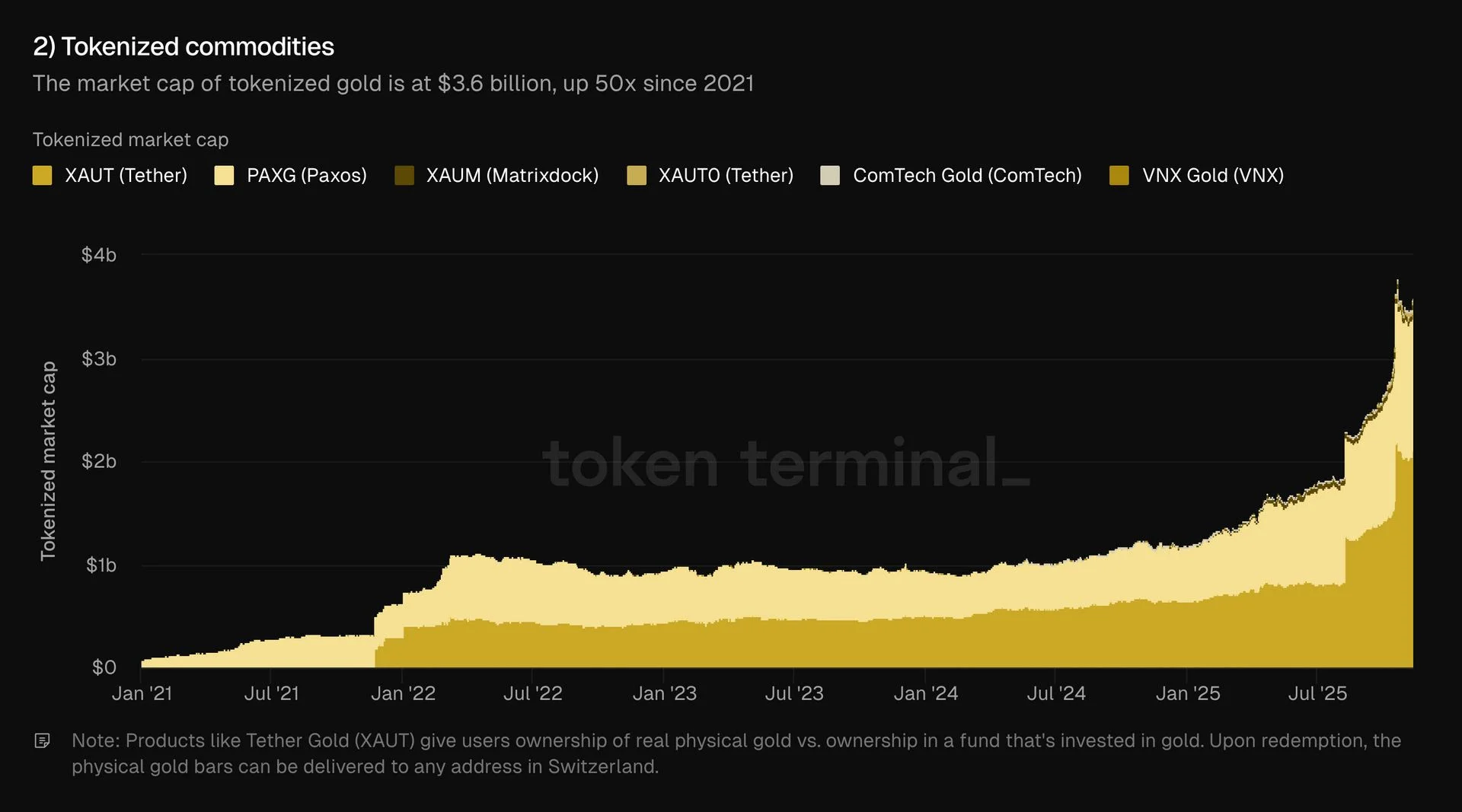
With more than 116 tonnes of gold, rising tokenized gold demand, and deepening ties to U.S. government officials, Tether is positioning itself at the center of a financial realignment.
Its buying spree has left investors asking the same question: Why is Tether buying gold at such an aggressive pace despite being a stablecoin issuer?
Howard Lutnick — whose sons now run Cantor and whose firm manages Tether’s treasuries — also chairs the White House Commerce Department, placing him at the intersection of U.S. policy, Tether, and major capital markets.
Tether’s gold accumulation is not happening in isolation. Behind the scenes, powerful institutions closely tied to U.S. policy are shaping this strategy.
Is the U.S. Selling Gold Reserves?
By refinancing old gold certificates or gradually selling U.S. gold, the government can acquire Bitcoin in a budget-neutral way.
Another possibility is to sell portions of US gold reserves quietly at first, then publicly, and use those proceeds to build a national Bitcoin position.
Get These Top Crypto Casino Offers Now!
Sponsored
Disclosure
We sometimes use affiliate links in our content, when clicking on those we might receive a commission at no extra cost to you. By using this website you agree to our terms and conditions and privacy policy.
Tether has become the world’s largest non-central bank gold buyer, while legacy banks are increasing their criticism.
The power balance between old finance and the emerging Bitcoin-stablecoin order is clearly beginning to tilt.
S&P Downgrades Tether
Tether is a stablecoin designed to maintain a value of $1. Still, its reserves now include volatile assets such as Bitcoin and gold.
This raises questions about the security of USDT, as its riskier assets exceed its safety buffer, and its disclosures remain limited.
Despite massive profits and becoming one of the world’s largest non-central-bank gold holders, S&P downgraded Tether to its weakest rating.
Tether, “The Stable Company” just saw S&P cut its assessment rating from 4 to 5 – the lowest rating possible – citing persistent gaps in disclosure and high risk assets being held in its reserves.
Only in crypto would the bedrock stablecoin of crypto trading be viewed as so… pic.twitter.com/fYIplOCMS6
The traditional finance propaganda machine is growing worried when any company tries to defy the force of gravity of the broken financial system. No company should dare to decouple itself from it.
Ardoino also stated that Tether is living proof that the financial system is so broken that “it’s becoming feared by the emperors with no clothes”.
Despite the criticism, Tether continues to expand its reserves and its role in global markets.
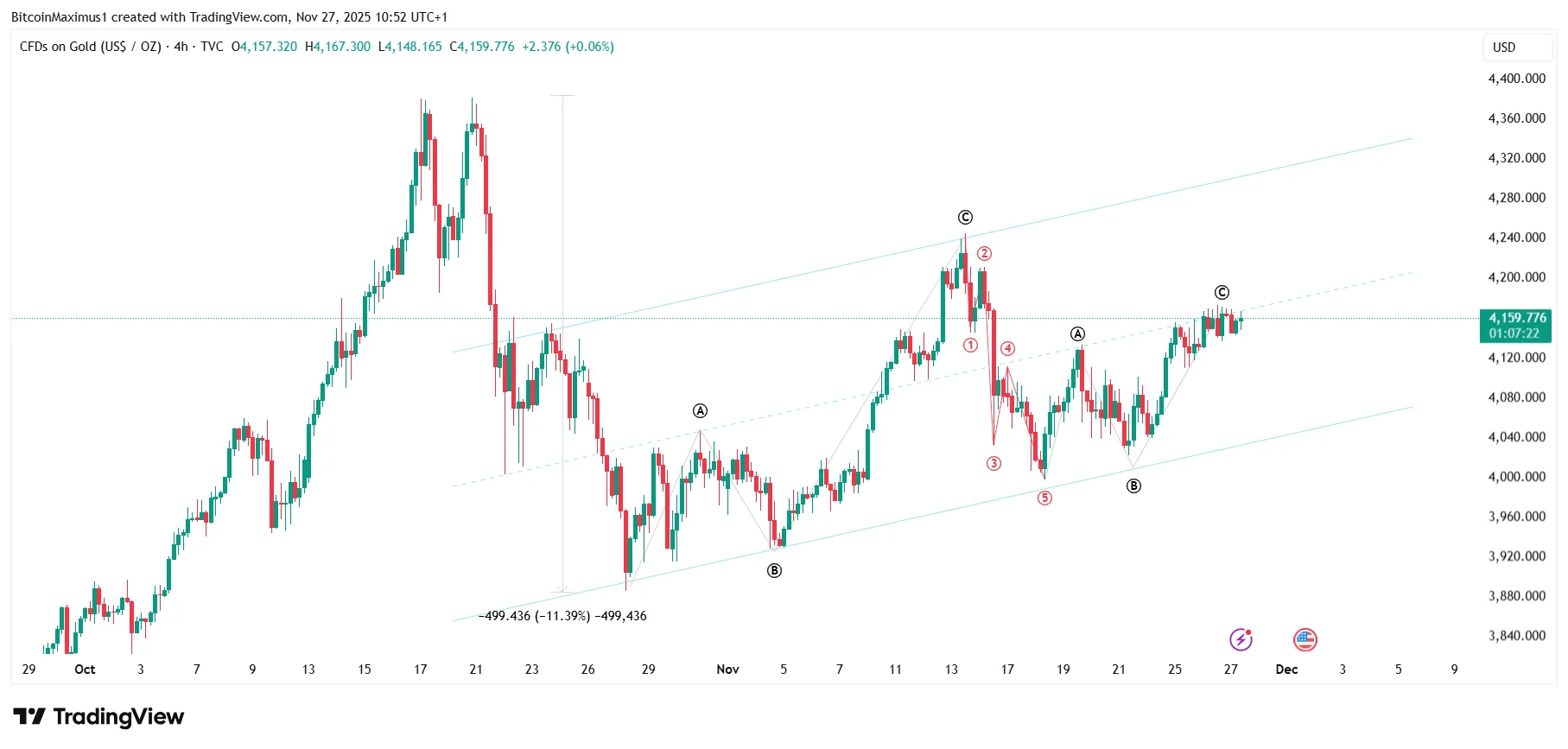
Adding to the bearish picture, the movement inside the channel shows A-B-C increases and five-wave decreases.
This means that the trend is bearish, and bounces are considered corrective.
As a result, traders are closely watching the channel’s midline to see if it might give a rejection.
What This Means Going Forward
Tether’s transformation into the largest non-central bank holder of gold signals a shift in how global reserves are built.
The explosive rise of tokenized gold, Cantor Fitzgerald’s role in managing Tether’s assets, and the growing overlap between US policy and crypto-backed financial rails all point toward a hybrid system where gold, Bitcoin, and stablecoins coexist as reserve pillars.
This entire shift explains why Tether is buying gold at a scale large enough to challenge nations and unsettle traditional finance.
Disclaimer:
The information provided in this article is for informational purposes only. It is not intended to be, nor should it be construed as, financial advice. We do not make any warranties regarding the completeness, reliability, or accuracy of this information. All investments involve risk, and past performance does not guarantee future results. We recommend consulting a financial advisor before making any investment decisions.
Valdrin Tahiri is a cryptocurrency analyst and reporter at CCN, specializing in technical analysis with a focus on Elliott Wave theory, on-chain metrics, and fundamental research. He brings over seven years of experience in the crypto space as both a trader and writer.
He discovered cryptocurrencies in 2017 while earning his MSc in Financial Markets at the Barcelona School of Economics, which sparked a deep interest in blockchain and market dynamics. Since then, he’s contributed to top crypto outlets like BeInCrypto and CoinGape.
Valdrin also served as Community Manager of BeInCrypto’s Telegram group for three years, helping grow it into one of the largest crypto communities worldwide. His expertise in market structure and price patterns allows him to break down complex trends into clear, actionable insights.
He’s published thousands of articles covering altcoins, Bitcoin cycles, and macro trends.