How Will the Stock Market React to End of Quantitative Tightening? | Credit: Veronica Cestari
Share
Key Takeaways
Japanese long-term bond yields continue to surge.
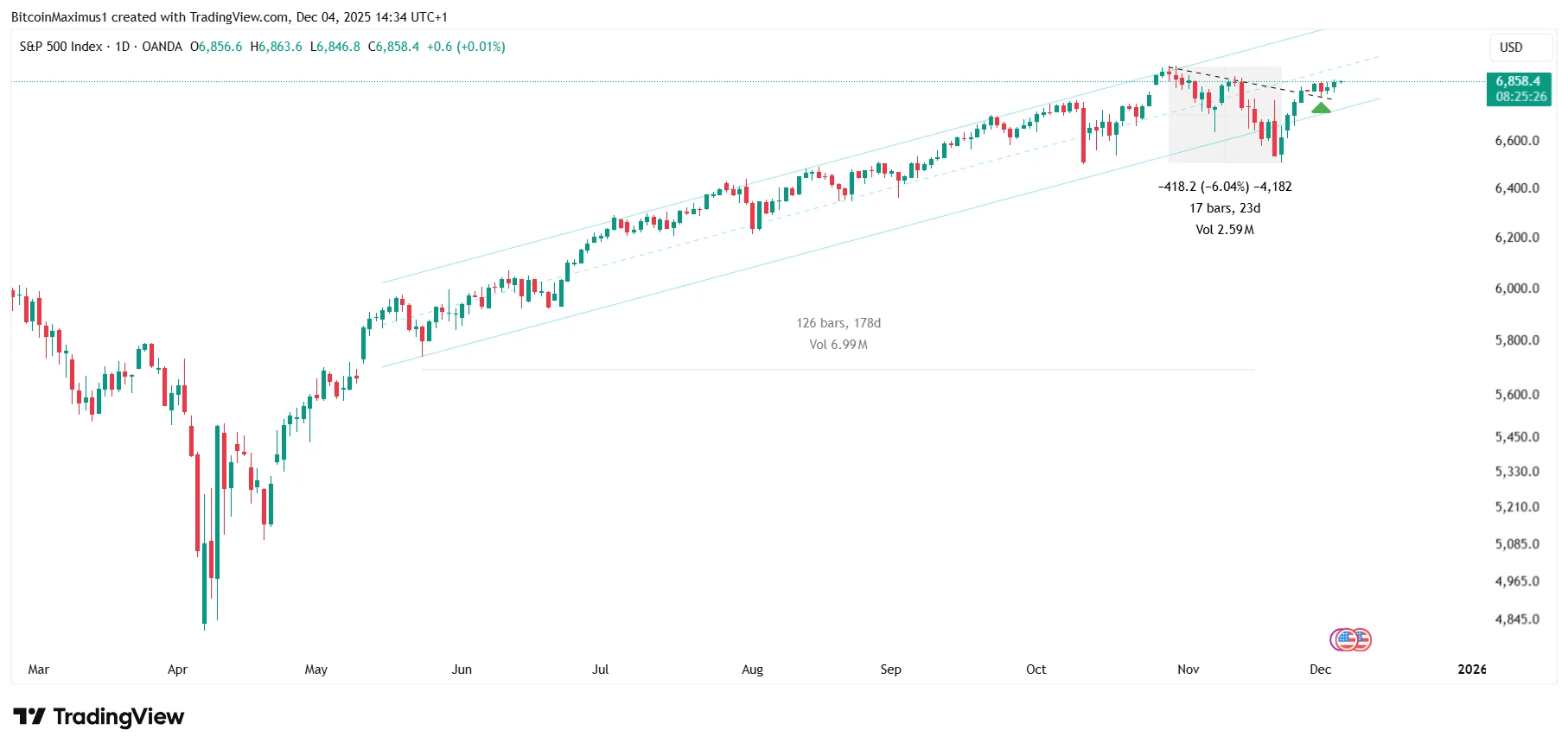
The S&P 500 trades only 1.3% below its all-time high price.
Japan could raise interest rates, destroying the yen carry trade.
Global markets are entering one of the most pivotal moments of the decade.
Japanese long-term bond yields are surging higher, the yen carry trade is showing signs of strain, and the S&P 500 is hovering just a breath below its all-time high.
At the same time, the Federal Reserve has officially ended its three-and-a-half-year quantitative tightening cycle, signaling a significant shift in global liquidity.
The shift has sparked a wave of interest from investors asking: What is quantitative tightening, and will its end suddenly boost risk assets?
If the yen carry trade unwinds while the Fed injects fresh liquidity, markets could face volatility.
Let’s break down what changed and what comes next.
What Is the Yen Carry Trade?
The yen carry trade is one of the most significant engines of global liquidity.
For decades Japan kept interest rates near zero, which meant investors could borrow yen cheaply, convert it into dollars or other currencies, and buy higher-yielding assets elsewhere.
Get These Top Crypto Casino Offers Now!
Sponsored
Disclosure
We sometimes use affiliate links in our content, when clicking on those we might receive a commission at no extra cost to you. By using this website you agree to our terms and conditions and privacy policy.
This spread created “free” profit as long as Japanese rates stayed pinned.
It became a foundation of global risk taking, leveraged strategies, and cross-border capital flows.
The danger is that when Japanese yields rise, the math breaks. Investors must unwind positions, buy back yen, and repay their loans.
🇯🇵 The Calm Before the Carry Trade Cracks
Japan’s 10 year yield pushing up means bond prices are slipping and lenders are basically saying, “If I’m going to lend to Japan, I want more interest.” Simple.
Japanese savers suddenly get paid more at home, reducing their need to invest abroad.
This reversal can unwind decades of cheap global funding, strengthen the yen, and inject volatility into markets that relied on Japan staying at zero.
Fed Begins Policy Shift
The U.S. Federal Reserve has officially ended its quantitative tightening policy after a three-and-a-half-year period.
This marks a key shift in liquidity conditions.
Analyst Wilberforce Theophilus outlined the benefits of ending QT for the markets:
During QT, the Fed was draining money from the system every month. They were reducing their balance sheet by tens of billions, pulling liquidity out of markets at the fastest pace in history. At the same time, they were raising interest rates. That combination created pressure everywhere. Risk assets weakened. Dollar funding became expensive. Even global markets felt the squeeze.
When combined with potential rate cuts on Dec. 9, users are speculating that this will be bullish for the markets.
Long-term borrowing costs are expected to decrease, thereby softening the yield curve.
The Federal Reserve moved from Quantitative Tightening to Quantitative Easing. Here is what you need to know and why everybody is excited about this development.
This isn’t a small policy change. It is one of the most important financial shifts of our time.
With rate cuts potentially arriving on December 9, many investors are already speculating that this combination could become a powerful bullish catalyst for markets.
Moreover, the Fed has just injected $13.5 billion into the banking system through overnight repos, the second-largest spike since the COVID-19 pandemic.
Well-known analyst Benjamin Cowen even highlighted how, during the previous cycle, ALT/BTC pairs bottomed near 0.25 right as QT ended.
He suggested the possibility that the same setup could be forming again.
While the crypto impact remains uncertain, the end of QT has historically been positive for stocks, as increased liquidity tends to support a stronger risk appetite.
Can S&P 500 Reach New Highs?
The U.S. stock market crashed on Oct. 29, falling by 6% over the next 23 days.
Adding to the severity of the decline, the S&P 500 broke down from a 178-day ascending parallel channel.
Traders were watching closely to see if the breakdown leads to a much more severe decline.
However, this was not the case. In fact, the exact opposite happened.
Valdrin Tahiri is a cryptocurrency analyst and reporter at CCN, specializing in technical analysis with a focus on Elliott Wave theory, on-chain metrics, and fundamental research. He brings over seven years of experience in the crypto space as both a trader and writer.
He discovered cryptocurrencies in 2017 while earning his MSc in Financial Markets at the Barcelona School of Economics, which sparked a deep interest in blockchain and market dynamics. Since then, he’s contributed to top crypto outlets like BeInCrypto and CoinGape.
Valdrin also served as Community Manager of BeInCrypto’s Telegram group for three years, helping grow it into one of the largest crypto communities worldwide. His expertise in market structure and price patterns allows him to break down complex trends into clear, actionable insights.
He’s published thousands of articles covering altcoins, Bitcoin cycles, and macro trends.