Key Takeaways
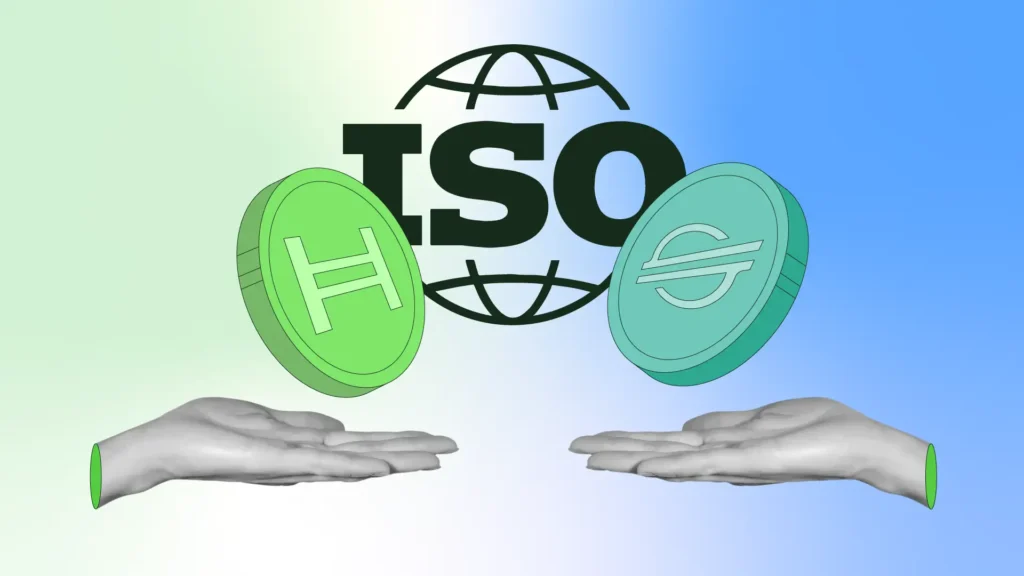
With SWIFT officially retiring its legacy financial messaging format on Nov. 22, ISO 20022 is now the universal standard for financial messaging.
As financial institutions around the world embrace stablecoins and tokenized deposits, the possibility of integrating digital assets is among the biggest advantages of the new standard.
But which stablecoins are compatible with ISO 20022?
+245
Ethereum
Tether
Build'N'Build
USD Coin
Solana
Ripple
Dogecoin
Cardano
Toncoin
Shiba Inu
Avalanche
TRON
Chainlink
Polygon Matic
Polkadot
Wrapped Bitcoin
Litecoin
Dai
NEAR Protocol
Bitcoin Cash
Monero
Stellar
Cosmos
Filecoin
Ethereum Classic
Aptos
Hedera Hashgraph
Immutable
Optimism
Arbitrum
VeChain
The Sandbox
Decentraland
Axie Infinity
Injective Protocol
Render Token
The Graph
Maker
Aave
Chiliz
Helium
PAX Gold
Compound
Lido DAO Token
THORChain
Stacks
Arweave
Sui
Conflux Network
Lido Staked ETH
Bitget Token
Wrapped Ethereum
OKB
Uniswap
Pepe
Ondo
Mantle
First Digital USD
Bittensor
Kaspa
Celestia
XDC Network
Artificial Superintelligence Alliance
Jupiter
Quant
Worldcoin
PayPal USD
Bonk
Rocket Pool ETH
Flare
Tether Gold
Sei
JITO
JasmyCoin
PancakeSwap
Core
Floki Inu
Ethereum Name Service
SushiSwap
Kava.io
1inch Network
Tezos
Algorand
Flow
Trust Wallet Token
Curve DAO Token
KuCoin Token
MultiversX
GateToken
Zcash
IOTA
Basic Attention Token
Enjin Coin
Frax
Ethena
Ethena USDe
Ethena Staked USDe
BlackRock USD Institutional Digital Liquidity Fund
Fasttoken
Pi Network
SATS
Adventure Gold
Audius
Acala Token
Alchemy Pay
Arkham
API3
Bounce Token
Bitcoin
Altlayer
Aergo
Amp
Aevo
ARPA Chain
Astar
Ark
Ankr
AirSwap
Axelar
Alpaca Finance
SingularityNET
Blur
Beam
Badger DAO
Bancor
BakeryToken
Biconomy
Chromia
Tranchess
Celer Network
Celo
Shentu
Civic
Convex Finance
Cartesi
Cyber
COTI
DigiByte
DIA
Dymension
dYdX
ether.fi
FUNToken
FLUX
Firo
Ampleforth Governance Token
Golem
GMX
Gnosis
Gitcoin
Moonbeam
Holo
IoTex
ICON
Illuvium
JUST
Kadena
Kusama
Liquity
Livepeer
Lisk
Memecoin
Manta Network
Treasure
Mask Network
MetisDAO
NKN
Neutron
Ocean Protocol
Origin Protocol
ORDI
Ontology
Osmosis
Powerledger
Phala Network
Pendle
Portal
Pyth Network
ConstitutionDAO
Polkastarter
Qtum
iExec RLC
Rocket Pool
Reserve Rights
Ronin
Ravencoin
Starknet
Storj
Status
Spell Token
Sun (New)
Saga
SuperVerse
Toko Token
Theta Fuel
Tellor
Tensor
Unstoppable Ecosystem Token
Wrapped BNB
LayerZero
Scroll
Usual
Cetus Protocol
Eigenlayer
Hamster Kombat
Catizen
Berachain
KAITO
Pudgy Penguins
Vana
Solayer
Bio Protocol
ChainGPT
Cookie DAO
Solv Protocol
Alchemix
Bitcoin SV
Usual USD
Movement
DeXe
Kelp DAO Restaked ETH
Binance Staked SOL
Nexo
Solv Protocol BTC
Tokenize Xchange
Wrapped eETH
Hyperliquid
Casper
Zilliqa
Secret
Nervos Network
TrueUSD
EOS
BitTorrent
Mina
Dash
STEPN
Gemini Dollar
UNUS SED LEO
Synthetix
Neo
APEcoin
Gala
Theta Network
Fantom
Cronos
Internet Computer
Binance USD
+96
Bitcoin
Ethereum
Tether
Build'N'Build
USD Coin
Solana
Ripple
Dogecoin
Cardano
Toncoin
Shiba Inu
Avalanche
TRON
Chainlink
Polygon Ecosystem Token
Polkadot
Wrapped Bitcoin
Litecoin
Dai
NEAR Protocol
Bitcoin Cash
Monero
Stellar
Cosmos
Filecoin
Ethereum Classic
Aptos
Hedera Hashgraph
Immutable
Optimism
Arbitrum
VeChain
The Sandbox
Decentraland
Axie Infinity
Injective Protocol
Render Token
The Graph
Maker
Aave
Chiliz
Helium
PAX Gold
Compound
Lido DAO Token
THORChain
Stacks
Arweave
Sui
Conflux Network
Lido Staked ETH
Bitget Token
Wrapped Ethereum
OKB
Uniswap
Pepe
Ondo
Mantle
First Digital USD
Bittensor
Kaspa
Celestia
XDC Network
Artificial Superintelligence Alliance
Jupiter
Quant
Worldcoin
PayPal USD
Bonk
Rocket Pool ETH
Flare
Tether Gold
Sei
JITO
JasmyCoin
PancakeSwap
Core
Floki Inu
Ethereum Name Service
SushiSwap
Kava.io
1inch Network
Tezos
Algorand
Flow
Trust Wallet Token
Curve DAO Token
KuCoin Token
MultiversX
GateToken
Zcash
IOTA
Basic Attention Token
Enjin Coin
Frax
Ethena
Ethena USDe
Ethena Staked USDe
BlackRock USD Institutional Digital Liquidity Fund
Fasttoken
Pi Network
+95
Bitcoin
Ethereum
Tether
Build'N'Build
USD Coin
Solana
Ripple
Dogecoin
Cardano
Toncoin
Shiba Inu
Avalanche
TRON
Chainlink
Polygon Ecosystem Token
Polkadot
Wrapped Bitcoin
Litecoin
Dai
NEAR Protocol
Bitcoin Cash
Monero
Cosmos
Filecoin
Ethereum Classic
Aptos
Hedera Hashgraph
Immutable
Optimism
Arbitrum
VeChain
The Sandbox
Decentraland
Axie Infinity
Injective Protocol
Render Token
The Graph
Maker
Aave
Chiliz
Helium
PAX Gold
Compound
Lido DAO Token
THORChain
Stacks
Arweave
Sui
Conflux Network
Lido Staked ETH
Bitget Token
Wrapped Ethereum
OKB
Uniswap
Pepe
Ondo
Mantle
First Digital USD
Bittensor
Kaspa
Celestia
XDC Network
Artificial Superintelligence Alliance
Jupiter
Quant
Worldcoin
PayPal USD
Bonk
Rocket Pool ETH
Flare
Tether Gold
Sei
JITO
JasmyCoin
PancakeSwap
Core
Floki Inu
Ethereum Name Service
SushiSwap
Kava.io
1inch Network
Tezos
Algorand
Flow
Trust Wallet Token
Curve DAO Token
KuCoin Token
MultiversX
GateToken
Zcash
IOTA
Basic Attention Token
Enjin Coin
Frax
Ethena
Ethena USDe
Ethena Staked USDe
BlackRock USD Institutional Digital Liquidity Fund
Fasttoken
Pi Network
Where legacy payments based on SWIFT’s MT (Message Type) format assumed a world of fiat money, bank accounts, and traditional securities, ISO 20022 is asset-agnostic.
The same settlement message can describe a traditional fiat transfer, a tokenized swap, or a stablecoin payment.
ISO 20022 doesn’t bless or ban any particular stablecoin.
It’s a messaging language for banks and market infrastructures, and stablecoins are just another settlement asset that can be described in that language.
However, integrating stablecoins into SWIFT or any other ISO 20022-based payment system first requires standardized identifiers.
Traditionally, SWIFT identifies securities using the International Securities Identification Number (ISIN) system.
However, banks are increasingly adopting a new framework based on ISO 24165.
ISO 24165 defines unique alphanumeric codes for blockchain-based digital assets.
Any fungible token issued on a distributed ledger can be assigned an ISO 24165 Digital Token Identifier (DTI).
Most mainstream stablecoins now have DTI codes for each instance across different networks.
While there is a lot of crypto marketing around “ISO 20022 coins,” the idea that some blockchains are compatible with the standard but others aren’t is misleading.
The official ISO 20022 FAQ is blunt.
Cryptocurrency exchanges and payment processors may integrate the standard for their interactions with the traditional financial system, “but at the protocol level, blockchains themselves are not inherently ISO 20022 compliant.”
Instead of asking whether a given stablecoin supports ISO 20022, a more precise question would be: Can X token be clearly identified and instructed within ISO 20022 flows used by banks and market infrastructures?
For deep TradFi integration, a stablecoin requires universally accepted DTI registrations mapped to an official ISIN.
Because each one has a single issuer performing the operational work required to harmonize standards, the large, centralized stablecoins have pulled ahead in the race to integrate with ISO20022.
For instance, Tether, Circle, and Paxos have all endorsed DTI groupings that define multi-chain stablecoins as a single asset.
Meanwhile, decentralized coins like Dai/USDS are moving into the identifier ecosystem as users rally around specific DTI and ISIN codes, but they lag behind their centralized peers in formal standardization.
James Morales is CCN’s blockchain and crypto policy reporter. He has been working in the news media since 2020, writing about topics such as payments, banking and financial technology. These days, he likes to explore the latest blockchain innovations and the evolving landscape of global crypto regulation.
With an educational background in social anthropology and media studies, James uses his platform as a journalist to explore how new technologies work, why they matter and how they might shape our future.
You’re All Set!
Thanks for signing up. We’ll be in touch soon with the latest insights.