Raoul Pal said the probability of a new economic and crypto “supercycle” is rising.
Crypto community reactions were mixed
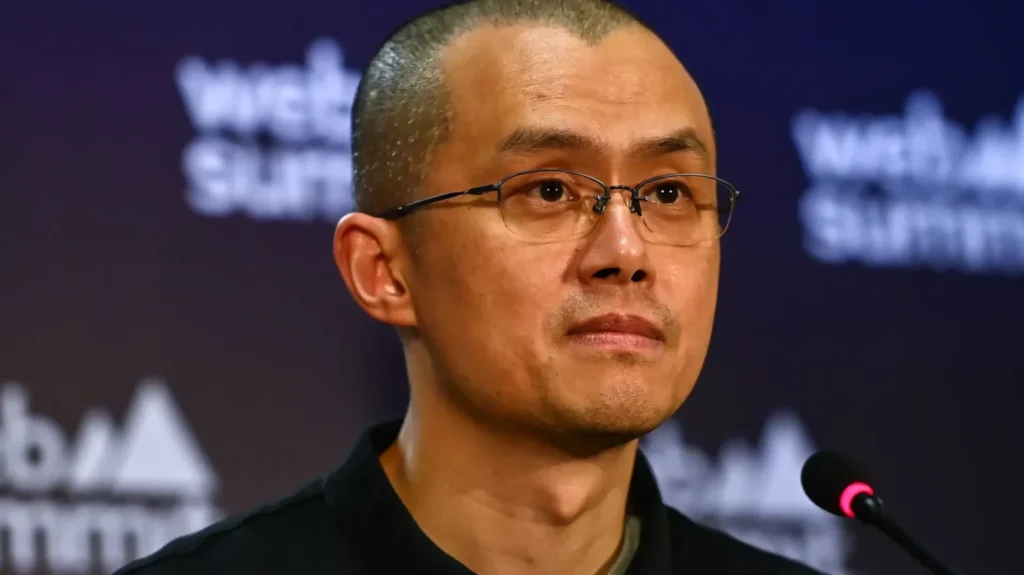
Pal’s comments come after Binance founder CZ recently walked back his own Bitcoin supercycle.
Raoul Pal, founder of Real Vision and a longtime crypto market commentator, said the probability of a new economic “supercycle” was rising.
The comments sparked some pushback from the crypto community — especially after other figureheads dialed back their supercycle claims.
New Trending Crypto Wallet Offers
Sponsored
Disclosure
We sometimes use affiliate links in our content, when clicking on those we might receive a commission at no extra cost to you. By using this website you agree to our terms and conditions and privacy policy.
Pal argued that the chance of a super cycle is being pushed forward by a combination of debt monetization, artificial intelligence-driven capital expenditure, and geopolitical competition.
“There is a rising probability that we have a super cycle,” Pal wrote on X.
He argued that increasing interest payments on government debt may eventually need to be monetized through the banking system.
Pal added that a growing reliance on short-term Treasury bill issuance could reduce the cyclicality of debt rollovers.
There is a rising probability that we have a super cycle based on:
Increasing interest payments that need monetizing via the bank of system
The reliance on short term bill issuance reducing cyclically of debt rollover.
The largest capex boom in history based on the most…
As well as this, Pal said a surge in bank lending to finance AI-related investment and a global race between China and the US could further accelerate economic expansion.
“The only thing that stops this is if services inflation disinflation (via productivity) doesn’t offset goods inflation,” he wrote.
He noted that a similar dynamic helped support growth during the 1990s technology boom.
Pal linked the thesis to what he described as the “Economic Singularity,” arguing that capital would increasingly flow toward improving “output of intelligence per unit of energy” and lowering electricity costs as AI adoption accelerates.
“Not a certainty but a rising probability,” he added.
Crypto Response Mixed
The comments triggered mixed reactions across the crypto community, where the term “supercycle” has become increasingly controversial after several bullish predictions failed to materialize.
One X user pushed back against the idea, writing:
“But it’s been a bear market in crypto for 7 months……. Please no more supercycle talk.”
Some users were not convinced | Source: X (@BTCnPEPE)
Others reacted with skepticism toward repeated bullish forecasts.
“Give it a rest bro,” another user wrote.
Some market participants, however, welcomed Pal’s thesis and viewed it as validation of the long-term bullish case for digital assets.
“If this turns out to be true for crypto, I will fly to you to shake your hand,” one user responded.
During an AMA session in February addressing market fear, Zhao said he was no longer as confident that the crypto market would experience a prolonged parabolic expansion anytime soon.
“Couple weeks ago, I was very confident about the supercycle. But now with all that FUD, I’m not sure,” Zhao said.
CZ just said the super cycle is cancelled because people are fudding me on CT 😂 pic.twitter.com/rHCe27kwJW
ARK estimates the total crypto market could expand to $28 trillion by 2030, stating Bitcoin alone potentially reaching a $16 trillion market capitalization in its base-case scenario.
Wood has previously argued that declining volatility could eventually push Bitcoin’s price between $300,000 and $1.5 million.
Wall Street research firm Bernstein has echoed that view, pointing to stablecoins, tokenization and prediction markets as key drivers of crypto’s next major growth phase.
Meanwhile, analysts at firms such as Fidelity have increasingly linked the supercycle thesis to the rapid growth of spot Bitcoin ETF inflows and rising institutional demand.
What Is A Supercycle?
In financial markets, a “supercycle” refers to an unusually long period of economic expansion driven by structural shifts.
Unlike standard economic cycles, which typically last between five and 10 years, supercycles can extend for decades, often associated with transformative events such as globalization or major technological revolutions.
Economists often cite the China-driven commodity boom of the 2000s and the globalization-led expansion that followed the 1980s as examples of previous supercycles.
Both of these were characterized by sustained growth, rising investment and prolonged commodity rallies.
Kurt Robson is a London-based reporter at CCN, specialising in the fast-moving worlds of crypto and emerging technology. He began his career covering local news in Cornwall after graduating from Falmouth University with First Class Honours in Journalism. There, he cut his teeth on everything from council meetings to missing swans.
He quickly rose through the ranks to become a frontline journalist at several of the UK’s leading national newspapers. Over the years, he has interviewed musicians and celebrities, reported from courtrooms and crime scenes, and secured multiple front-page exclusives.
Following the upheaval of the COVID-19 pandemic, Kurt shifted his focus to technology journalism—just ahead of the AI boom. With a natural curiosity and a trained eye for emerging trends, he has found a new rhythm in reporting on innovation.
At CCN, Kurt's work focuses on the cutting edge of crypto, blockchain, AI, and the evolving digital world. Drawing on his background in people-first reporting and his deep interest in disruptive tech, Kurt delivers stories that are insightful, entertaining, and human-centric.