Key Takeaways
- The U.S. Department of Justice has rejected Roman Storm’s request to dismiss criminal charges in the Tornado Cash case.
- Prosecutors said a recent Supreme Court copyright ruling does not apply because the facts differ significantly.
- A court hearing is set for April 9, 2026, with a possible retrial on key charges in October 2026.
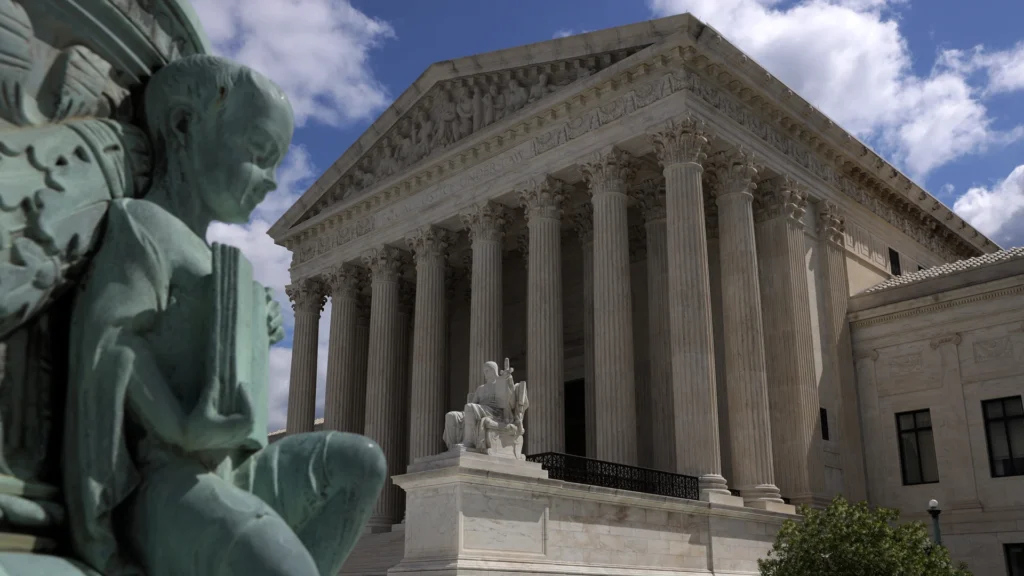
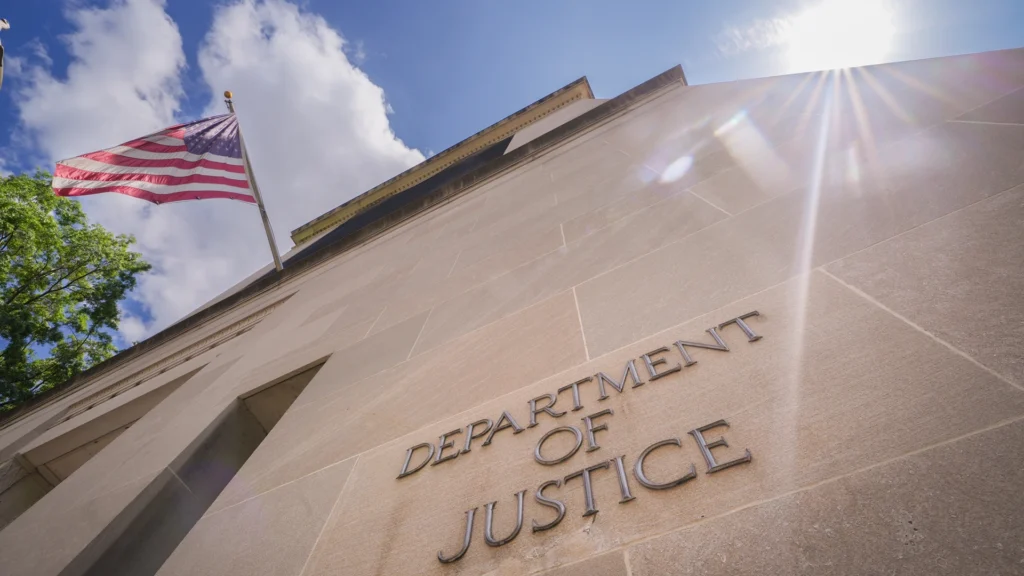
The U.S. Department of Justice (DoJ) has opposed Tornado Cash co-founder Roman Storm’s latest bid to dismiss or overturn his criminal charges, rejecting his reliance on a recent Supreme Court ruling.
In a letter filed on April 7 in the U.S. District Court for the Southern District of New York, prosecutors argued that the decision in a civil copyright case has no relevance to Storm’s criminal prosecution.
DoJ Pushes Back on Storm’s Argument
The filing responds to Storm’s April 2 supplemental argument in his post-trial motion for acquittal.
Prosecutors dismissed Storm’s reliance on Cox Communications, Inc. v. Sony Music Entertainment, a 2026 Supreme Court case that limited contributory liability for internet service providers.
The DoJ said the ruling applies only to civil copyright law and “has no bearing” on the criminal charges in this case.
Those charges include conspiracy to commit money laundering, conspiracy to violate sanctions under the International Emergency Economic Powers Act (IEEPA), and operating an unlicensed money-transmitting business.
“The Supreme Court’s recent decision in Cox Commc’ns, Inc. v. Sony Music Ent. is inapposite because the defendant’s conduct bears no resemblance to the conduct at issue in Cox. … The defendant’s conduct simply is not comparable to the conduct at issue in Cox. In any event, a civil copyright case has no relevance here in the first place,” an excerpt from the DoJ letter read.
The filing emphasized that Storm’s alleged conduct differs fundamentally from that of a neutral service provider.
Prosecutors argued that Tornado Cash was not a passive platform and that Storm knowingly facilitated the movement of over $1 billion in illicit funds, including proceeds linked to North Korea’s Lazarus Group.
They further criticized Storm’s defense arguments as “window dressing at best and outright misdirection at worst,” noting a lack of effective anti-money-laundering safeguards despite claims that the protocol was a neutral privacy tool.
Tornado Cash Case Timeline
Storm, a U.S. citizen and co-founder of Tornado Cash, is at the center of a closely watched case testing liability for open-source crypto developers.
| Tornado Cash Case Timeline |
|
| August 2023 |
The DoJ unseals a three-count indictment against Storm and co-founder Roman Semeno. Charges include conspiracy to commit money laundering, conspiracy to violate IEEPA sanctions, and conspiracy to operate an unlicensed money-transmitting business. |
| September 2024 |
Storm remains free pending trial. Pre-trial motions to dismiss the indictment, arguing Tornado Cash was not a “money transmitter” under U.S. law, and that code is protected speech, were denied by Judge Katherine Polk Failla in September 2024. |
| July–August 2025 |
A four-week jury trial unfolds in Manhattan. On Aug. 6, 2025, jurors convicted Storm of the unlicensed money-transmitting business conspiracy but remained deadlocked on the two more serious money laundering and sanctions counts, resulting in a partial mistrial on those charges. Storm stays out on bail. |
| October 2025–March 2026 |
Defense files a post-trial motion for acquittal under Federal Rule of Criminal Procedure 29, challenging the sufficiency of evidence on intent and venue. In March 2026, the DoJ requests a retrial date for the deadlocked counts (proposing October 5 or 12, 2026). |
| April 2, 2026 |
Storm’s team supplements the acquittal motion with the new Cox Supreme Court ruling, arguing it bolsters the “neutral tool” defense—that mere knowledge of potential misuse does not prove criminal intent. |
| April 7, 2026 |
The DoJ responded, rejecting that argument and keeping the case moving. |
What Happens Next?
The April 9 hearing before Judge Failla is approaching, with a focus on her ruling on the acquittal motion.
If granted, the ruling could dismiss the conviction or even end the case entirely.
It could also significantly narrow the scope of the prosecution.
If denied, Storm faces sentencing on the guilty verdict, with a maximum penalty of five years.
The government would then proceed with a retrial on the unresolved charges in October 2026.
The retrial could last about three weeks and revisit key questions around intent and the protocol’s role.
Appeals are likely regardless of the outcome, given the case’s broader implications.
The case could shape how courts treat DeFi, privacy tools and open-source software.
A conviction may increase legal risks for developers, while an acquittal could strengthen arguments for decentralized protocols.
The case highlights ongoing tensions between privacy, national security and regulation in digital assets.
Attention now turns to the Southern District of New York as the next phase unfolds.
Top Trending Crypto Articles

Prashant Jha is a seasoned crypto journalist based in Delhi, India, with a Bachelor’s Degree in Computer Science Engineering. Passionate about the evolving world of blockchain and cryptocurrencies, he has been a dedicated voice in the industry since 2018. Prashant’s expertise lies in regulatory reporting, where he unravels complex legal and financial developments with clarity and precision. Before joining CCN in 2024, he honed his craft at Cointelegraph, establishing himself as a trusted name in crypto journalism.
His coverage spans major industry events, including the high-profile collapses of FTX, Three Arrows Capital (3AC), and LUNA, offering readers insightful analyses of their regulatory and market implications. Prashant’s technical background enables him to bridge the gap between intricate blockchain technology and its real-world applications, making his work accessible to novices and experts.
Beyond his professional pursuits, Prashant is an avid music enthusiast, often exploring diverse genres to unwind. A sports lover, he has a particular passion for cricket and frequently engages in discussions about the game. His multifaceted interests and sharp journalistic instincts make him a valuable contributor to CCN, where he continues shaping the crypto landscape's narrative.