Key Takeaways
- Prediction market volume remained elevated in early 2026 after topping $20 billion in January, according to TRM Labs.
- Geopolitics, macroeconomics and politics are now driving most activity across the sector.
- U.S. regulators and state officials are increasing scrutiny as event-contract markets expand.
Prediction markets had a busy March.
As global tensions picked up — from geopolitical risks to macro uncertainty — traders leaned heavily into event-driven bets, turning everything from conflict scenarios to political stability into tradable outcomes.
According to TRM Labs, prediction market volume has surged from about $1.2 billion in early 2025 to more than $20 billion by January 2026, with monthly active wallets crossing 800,000.
March hasn’t slowed down either.
Data from Dune shows more than 191 million transactions so far this month, a 2,838% year-over-year increase, with total volume nearing $24 billion.
Geopolitical Contracts Lead Prediction Markets
The most active contracts increasingly resemble live dashboards for political risk.
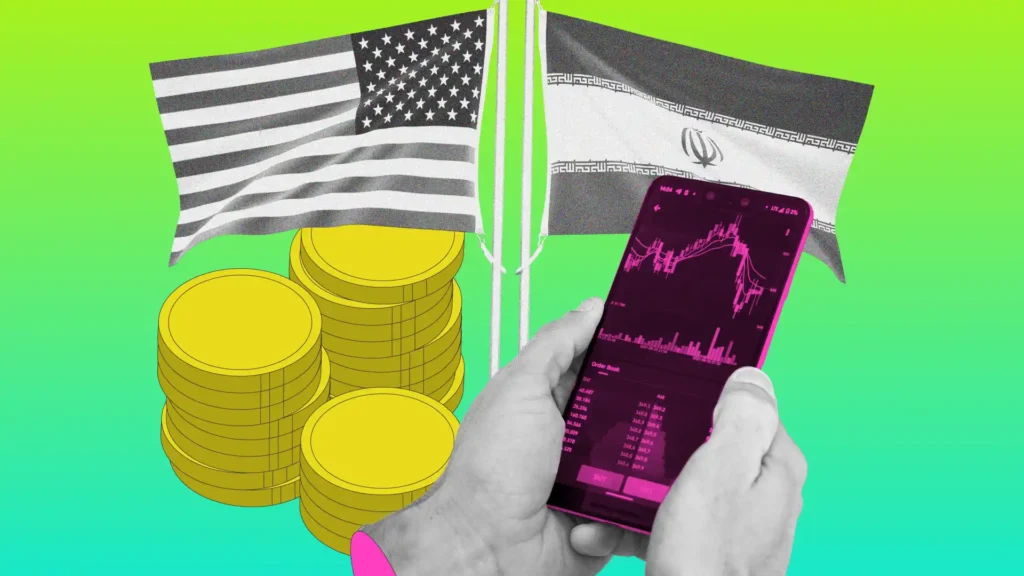
On Polymarket, Iran-related contracts were among the clearest magnets for attention in late March.
Markets tied to the timing of the end of military action and the odds of further escalation drew large trading volumes.
That pattern tracks TRM’s broader conclusion that prediction markets are becoming a venue for pricing the same flashpoints moving commodities, currencies and other risk assets.
In its March analysis, the firm also noted suspicious trading patterns and coordinated wallet activity around major geopolitical events, including recent Iran-related developments.
The appeal is straightforward. Prediction markets turn fast-moving news into probabilities and invite traders to challenge those numbers with capital.
In periods of geopolitical stress, they are among the quickest public arenas for expressing conviction or seeking an informational edge.
Federal Scrutiny Intensifies
That expansion is drawing a harder response from regulators.
On March 12, the Commodity Futures Trading Commission (CFTC) published an Advanced Notice of Proposed Rulemaking seeking public comment on whether it should amend or introduce regulations for event contracts traded on prediction markets.
The agency said it was examining how existing statutory and regulatory standards apply, including questions around public interest, market structure and the types of event contracts that may be prohibited.
The Federal Register notice also shows the scope of the inquiry.
The CFTC specifically asked for comment on core principles, public-interest concerns, inside information and other issues tied to prediction market design and oversight.
Comments are due by April 30, 2026.
Integrity Questions Follow the Surge
Recent trading has also sharpened concerns about market integrity.
Several well-timed bets tied to developments in Iran and Venezuela have drawn scrutiny across options, oil futures and prediction markets, adding to a broader debate over whether politically sensitive event contracts are becoming more vulnerable to the misuse of nonpublic information.
No official investigation had been confirmed as of March 29.
State Pressure Builds Against Prediction Markets
Pressure is also building outside Washington.
On March 27, Washington Attorney General Nick Brown announced that the state had sued Kalshi, alleging that the platform violated the Washington Gambling Act and the Consumer Protection Act.
The lawsuit seeks to halt what the attorney general described as unlawful activity in the state.
The case adds another front in the debate over how event contracts should be classified and governed as the category grows.
Platforms are attracting more users and larger headline-driven trades just as regulators and state authorities are taking a closer look at their structure and legal status.
March pointed to a market that is getting bigger, more politically charged and harder for regulators to ignore.
Top Trending Crypto Articles
ffff

PhD, researcher and writer exploring AI, blockchain, and the philosophy of tech, with a focus on DeScAI, governance, and trust.