Retail investors are returning to Bitcoin. (Photo By: Tomohiro Ohsumi/Getty Images)
Share
Key Takeaways
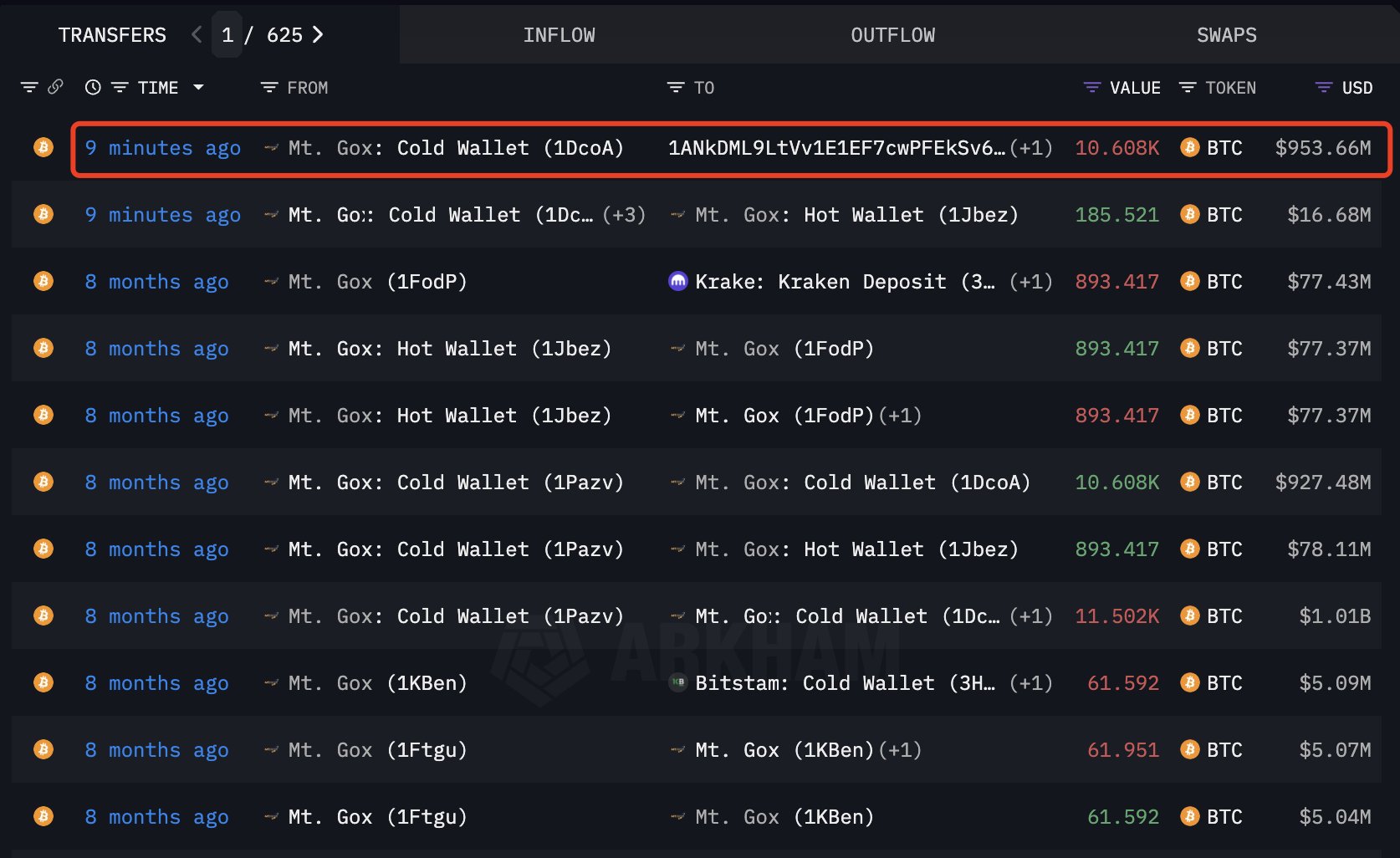
Mt. Gox moved nearly $1 billion in BTC, its first significant wallet activity in eight months.
The transfer sparked speculation of an imminent sell-off as markets hit new lows.
Analysts say the movement appears to be internal restructuring, with creditor payouts still slated for October 2026.
A dormant chapter in crypto history briefly roared back to life this week after Mt. Gox, once the world’s largest Bitcoin exchange before collapsing in 2014, moved nearly $1 billion worth of BTC on-chain.
Bitcoin slid below $90,000 and Ethereum (ETH) broke through the $3,000 level, fueling instant speculation that a long-feared Mt. Gox “supply shock” had finally begun.
But early indications suggest something far more mundane: internal wallet shuffling rather than a mass liquidation.
Earn Crypto with These Top Mining Apps
Sponsored
Disclosure
We sometimes use affiliate links in our content, when clicking on those we might receive a commission at no extra cost to you. By using this website you agree to our terms and conditions and privacy policy.
The absence of deposits into exchange-linked wallets—a common precursor to liquidation—had led analysts to categorize this as routine preparation rather than market impact.
However, hours after the initial $1 billion worth of transfer, Mt. Gox moved 185 Bitcoins, worth $17 million, to a Kraken exchange.
While the transfer has contributed to heightened nerves during an already tense trading day, there is no evidence that any of the BTC is headed for spot markets.
For now, the episode underlines a recurring pattern in crypto: every time Mt. Gox moves coins, the market braces for a disaster that has yet to materialize.
And with the repayment horizon still nearly two years away, this week’s transfer may be more of a reminder than a warning.
Prashant Jha is a seasoned crypto journalist based in Delhi, India, with a Bachelor’s Degree in Computer Science Engineering. Passionate about the evolving world of blockchain and cryptocurrencies, he has been a dedicated voice in the industry since 2018. Prashant’s expertise lies in regulatory reporting, where he unravels complex legal and financial developments with clarity and precision. Before joining CCN in 2024, he honed his craft at Cointelegraph, establishing himself as a trusted name in crypto journalism.
His coverage spans major industry events, including the high-profile collapses of FTX, Three Arrows Capital (3AC), and LUNA, offering readers insightful analyses of their regulatory and market implications. Prashant’s technical background enables him to bridge the gap between intricate blockchain technology and its real-world applications, making his work accessible to novices and experts.
Beyond his professional pursuits, Prashant is an avid music enthusiast, often exploring diverse genres to unwind. A sports lover, he has a particular passion for cricket and frequently engages in discussions about the game. His multifaceted interests and sharp journalistic instincts make him a valuable contributor to CCN, where he continues shaping the crypto landscape's narrative.