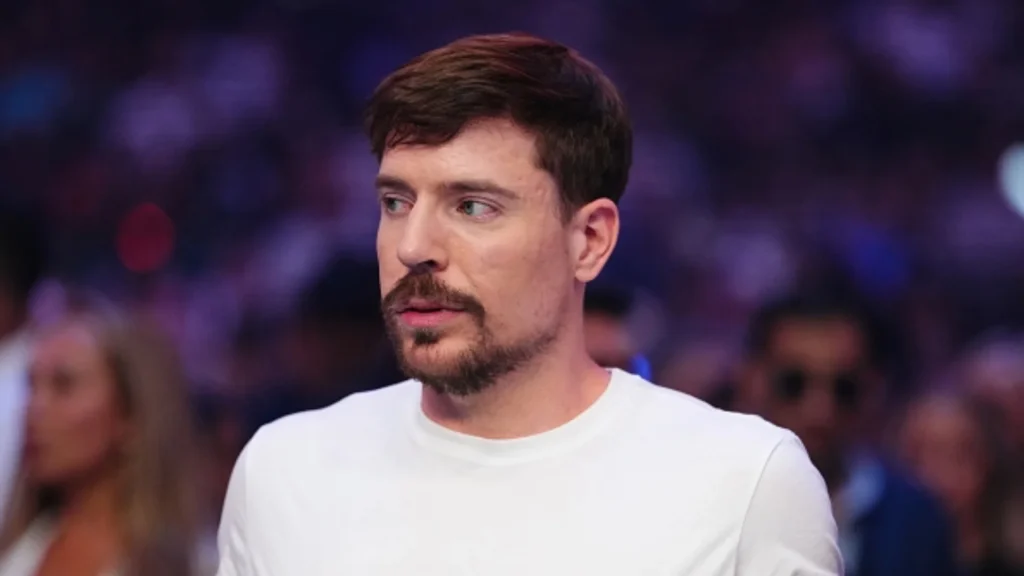
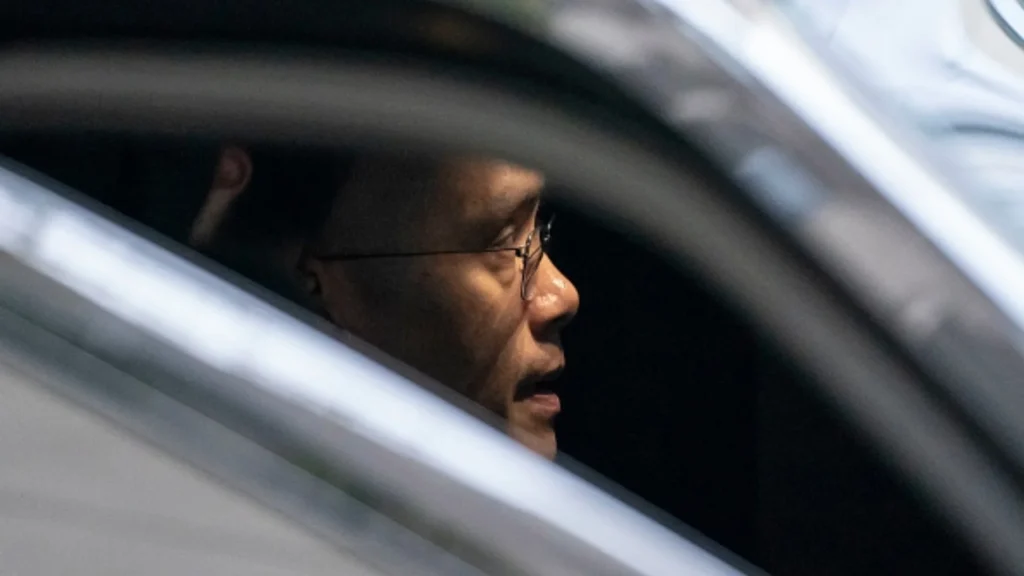
MrBeast faces renewed scrutiny after being linked to Aster buys. His case is part of a trend of YouTubers embroiled in crypto scandals. | Credit: Chris Unger / Getty Images.
Share
Key Takeaways
Despite public denials, blockchain investigators continue linking MrBeast to large crypto purchases of Aster.
MrBeast’s case is part of a wider trend of influencers becoming embroiled in failed tokens and schemes that take advantage of their audience.
The repeated controversies highlight a growing distrust between creators and fans.
Jimmy Donaldson, the YouTube star known as MrBeast, is facing renewed questions over his alleged involvement in the crypto market after on-chain data linked him to substantial purchases of the token Aster.
He has publicly denied this.
The case highlights a growing number of YouTubers becoming entangled in crypto scandals, underscoring a widening trust gap between influencers and their audiences.
Try Our Recommended Crypto Exchanges
Sponsored
Disclosure
We sometimes use affiliate links in our content, when clicking on those we might receive a commission at no extra cost to you. By using this website you agree to our terms and conditions and privacy policy.
The disclosure followed a post from the monitoring service Lookonchain, which said the YouTuber’s wallets had deposited $1 million in tether (USDT) before acquiring more than half a million Aster tokens in recent days.
The average buying price was estimated at $1.87.
However, Donaldson, who has more than 600 million subscribers across his channels, has previously dismissed the claims.
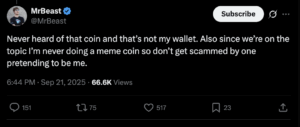
MrBeast denied knowing what Aster was on X | Source: X
“Never heard of that coin and that’s not my wallet,” he wrote on X last week.
“Also since we’re on the topic I’m never doing a meme coin so don’t get scammed by one pretending to be me,” he added.
MrBeast’s Crypto Controversies
The latest allegations add to a series of scandals that have dogged the 26-year-old, whose global popularity has made him one of YouTube’s most bankable figures.
Donaldson has recently faced claims of controversial stunts and questionable employment practices, but he has also come under scrutiny in the crypto world.
In November, the research collective Loock.io said it had traced more than 50 wallets connected to Donaldson, alleging a pattern of insider trading and “pump and dump” behavior.
MrBeast’s reported primary address has allegedly branched into dozens of crypto side accounts.
Investigators pointed to its repeated use of the same Gemini exchange deposit address as strong evidence that the wallets are under common control.
The YouTuber is believed to have transacted heavily through Binance and Gemini.
One Binance-funded wallet transferred 200 ETH, worth more than $600,000, to his main account, while another moved almost $200,000 to Gemini.
In total, his Binance account alone has reportedly processed more than $13 million in transfers.
Donaldson has consistently denied wrongdoing, maintaining that many of the wallets and tokens attributed to him are not his.
The Loock team alleged that MrBeast’s public relationships with crypto promoters gave him insider knowledge about projects before their values surged.
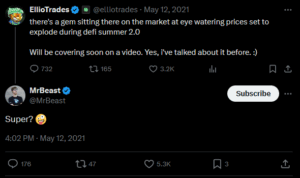
MrBeast was accused of insider trading | Source: X
One project, SuperVerse (formerly SuperFarm), was reportedly marketed by MrBeast early, before he sold off tokens shortly after launch.
“In total, MrBeast profited a total of $7.5 million from his initial $100k investment,” Loock wrote in its investigation.
YouTuber Crypto Scandals
Alongside MrBeast, a growing number of high-profile YouTubers have been embroiled in cryptocurrency controversies.
From undisclosed sponsorships to alleged pump-and-dump schemes, the trend has continually raised concerns about risks posed to their often young audiences.
Logan Paul
Logan Paul’s name has become almost synonymous with failed crypto ventures.
In 2021, he launched the now infamous CryptoZoo, which promised an “autonomous ecosystem” of NFT eggs that hatch into hybrid creatures, with rewards tied to on-chain mechanics.
By late 2022, critics and investors accused the project of being non-functional and underdelivered.
YouTuber and blockchain investigator Coffeezilla ran an exposé series branding it a “scam” and questioned Paul’s involvement and accountability.
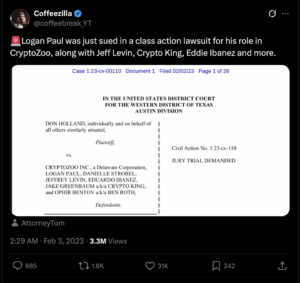
Paul threatened legal action but later apologized, and in 2023 faced a class-action lawsuit from investors.
Logan Paul was sued for his involvement in the project | Source: X
In 2024, he came under more online scrutiny when he filed a defamation suit against Coffeezilla.
Most recently, a U.S. magistrate judge recommended dismissing many of the claims in the CryptoZoo class action.
The majority of his followers who invested in the project have still not received reimbursement.
However, the judge also rejected Paul’s attempt to shift primary blame onto the project’s co-founders.
Paul has also been tied to earlier dubious crypto ventures, such as promoting a memecoin called Dink Doink, claiming to be “all in” while later denying that he sold tokens.
Jake Paul
Jake Paul, the other Paul brother and a boxer in addition to being a YouTuber, has also faced significant crypto scrutiny.
In 2023, he was among several celebrities charged by the U.S. SEC for promoting crypto projects without adequately disclosing that those promotions were paid endorsements.
He settled for more than $400,000 without admitting wrongdoing.
Paul was also named in class-action litigation tied to SafeMoon, alongside celebrities such as Lil Yachty and Soulja Boy, accused of promoting the token with misleading statements to his audience.
Coffeezilla has repeatedly pointed to Paul for using NFT and crypto promotions to mislead and extract value from his young audience.
Adam22
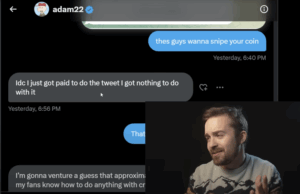
Podcast host and controversial influencer Adam Grandmaison, known online as Adam22, was recently embroiled in a meme token scandal.
The influencer announced a coin on social media shortly after its deployment, which ballooned in market cap only to collapse quickly after insiders reportedly sold their shares.
Coffeezilla, among others, called it a “pump and dump” and even shared messages where he warned him against launching a coin.
“Real talk you shouldn’t run a coin,” Coffeezilla told Adam22 in an X DM. “It’s lame and you’re gonna scam or get scammed.”
Coffeezilla also shared screenshots and leaked messages suggesting Adam22 was in an insider group and knowingly misled audiences to profit from the token’s hype.
In response to the leak, Adam22 wrote: “Idc I just got paid to do the tweet I got nothing to do with it.”
Hawk Tuah Girl (Hailey Welch)
Hailey Welch, known online as the “Hawk Tuah Girl,” was recently investigated by the Federal Bureau of Investigation (FBI) and the Securities and Exchange Commission (SEC) over her involvement in the now-infamous HAWK token.
On Dec. 4, Welch launched HAWK, which quickly became one of the most hyped Solana memecoins.
Within minutes, the token achieved a market capitalization of $400 million, growing 500% from its launch price.
However, within hours, HAWK plummeted, losing 90% of its value and collapsing.
The coin quickly attracted scrutiny from Coffeezilla, who detailed allegations of insider knowledge and token dumping.
Welch later claimed she did not understand how crypto worked before being “talked into” the promotion, saying she only received a marketing fee and did not profit from the token’s performance.
In May, Welch said on her podcast that federal agents had come to her grandparents’ door after the scandal broke.
She claims that both the FBI and SEC cleared her of wrongdoing after investigating her phone.
FaZe Clan
One of the most notorious influencer crypto scandals is the “Save the Kids” token, launched in mid-2021.
Promoted by a range of influencers, including FaZe Clan members and Sam Pepper, the token was pitched as a charitable initiative but crashed almost immediately after launch.
Investigations, most notably by Coffeezilla, found that the token’s “anti-whale” mechanism was altered at launch to allow large holders to sell without restriction, leading to a classic pump-and-dump scheme.
After backlash, many promoters removed their initial posts, and FaZe Kay was ousted from the clan.
Kurt Robson is a London-based reporter at CCN, specialising in the fast-moving worlds of crypto and emerging technology. He began his career covering local news in Cornwall after graduating from Falmouth University with First Class Honours in Journalism. There, he cut his teeth on everything from council meetings to missing swans.
He quickly rose through the ranks to become a frontline journalist at several of the UK’s leading national newspapers. Over the years, he has interviewed musicians and celebrities, reported from courtrooms and crime scenes, and secured multiple front-page exclusives.
Following the upheaval of the COVID-19 pandemic, Kurt shifted his focus to technology journalism—just ahead of the AI boom. With a natural curiosity and a trained eye for emerging trends, he has found a new rhythm in reporting on innovation.
At CCN, Kurt's work focuses on the cutting edge of crypto, blockchain, AI, and the evolving digital world. Drawing on his background in people-first reporting and his deep interest in disruptive tech, Kurt delivers stories that are insightful, entertaining, and human-centric.