Key Takeaways
- A Consensys employee publicly defended MetaMask’s sponsorship of a Consensus 2026 afterparty at Miami nightclub E11EVEN, sparking backlash across Crypto Twitter.
- The dispute escalated after he accused a Web3 founder of making “slanderous” claims and warned, “see you in court.”
- The controversy reignited debate around crypto culture, branding, and whether the industry’s image still clashes with its push toward mainstream adoption.
Crypto conferences have always mixed business with spectacle.
But at Consensus 2026, the afterparty became bigger than the conference itself.
What began as criticism over a MetaMask-branded closing party at Miami nightclub E11EVEN quickly spiraled into one of Crypto Twitter’s messiest public disputes of the year — complete with accusations of bad optics, screenshots flying across timelines, and threats of legal action.
At the center of the controversy was Michael Khekoian, a senior business development manager at Consensys, the company behind MetaMask.
His sarcastic response to criticism surrounding the event triggered a viral backlash that eventually evolved into a broader debate about professionalism, branding, and the image crypto wants to project in 2026.
How the Consensus Afterparty Became a Crypto Twitter Flashpoint
The controversy began after Consensus 2026 wrapped up with an official afterparty at E11EVEN, a well-known Miami nightclub.
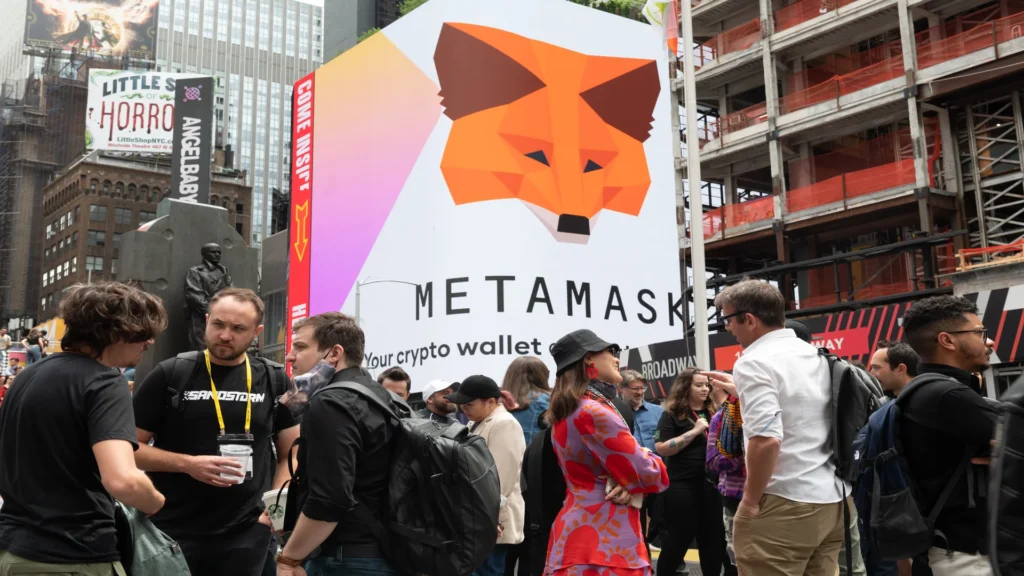
Photos and videos circulating online showed heavy MetaMask and Consensus branding throughout the venue, along with crowded dance floors, stage performances, and long lines of conference attendees waiting outside.
The event itself was not hidden or unofficial.
But criticism intensified after Bloomberg published a story, “Crypto Industry Throws Lap-Dance Party in the Middle of Bear Market,” framing the party as a poor look for an industry seeking institutional credibility amid a difficult market environment.
Some critics argued the sponsorship reinforced outdated stereotypes about “crypto bro” culture at a moment when the industry is increasingly courting regulators, Wall Street firms, and mainstream users.
One of the most vocal critics was Jess, founder and CEO of Web3 gaming company Blockus, who posted photos from inside the event and criticized organizers and sponsors for what she described as bad optics for the industry.
That criticism soon collided directly with Khekoian’s response.
The Tweet That Escalated Everything
Responding to criticism surrounding the nightclub sponsorship, Khekoian posted a sarcastic reply defending the event and pushing back against what he viewed as exaggerated outrage.
“I never knew the women working there were forced sex slaves,” he wrote, adding that the conference included “actual networking outside of a closing party.”
The tone immediately became a flashpoint.
Jess later summarized Khekoian’s comments in a separate post criticizing both the sponsorship and his response.
She framed it as a MetaMask-affiliated employee defending the nightclub partnership despite negative press coverage.
That was the moment the dispute escalated beyond criticism of the event itself.
Khekoian replied directly, calling the characterization “a serious, slanderous accusation” before adding: “See you in court.”
Screenshots of the exchange spread rapidly across Crypto Twitter, turning a debate about conference optics into a viral argument about harassment, free speech, context, and online reputation.
Crypto Twitter Split Into Two Camps
As the posts circulated, reactions across the crypto community became deeply polarized.
Supporters of Khekoian argued that his original comment was clearly sarcastic and that critics were intentionally stripping it of context to manufacture outrage.
Some accused critics of turning a nightlife sponsorship into a moral panic for engagement.
Others defended the party itself, arguing that adult entertainment venues are legal businesses, performers are consenting adults, and that Miami nightlife has long been intertwined with crypto conference culture.
Critics, meanwhile, argued the issue was less about legality and more about image.
For them, the concern was whether major crypto brands should align with nightlife events that could alienate potential users, institutional partners, or women entering the industry.
The legal-threat language intensified those concerns further.
Jess later said she would not remove her posts and framed the exchange as an attempt to publicly intimidate criticism.
Other users argued that threatening lawsuits over social media disputes risked making the controversy even larger.
As of May 11, 2026, no public lawsuit had been filed.
Consensys Responds
In a statement shared with CCN, a Consensys spokesperson said the company was not a paid sponsor of the event and had no involvement in selecting the venue or its programming.
“We are aware that our logo appeared at a Consensus 2026 afterparty event. To be clear: we were not a paid sponsor of this event, had no role in selecting the venue, and provided no input on programming or entertainment. Our logo was displayed as part of a reciprocal partnership arrangement with another organization we work with.
“Our brand reflects our core values, trust, security, and being welcoming to everyone in our community, and we hold those values to a high standard.
“We are reviewing our partner selection and brand usage processes to ensure that any association with our name is fully consistent with what we stand for.”
Crypto Still Struggles With Its Public Image
The controversy landed at a particularly sensitive time for the industry.
Crypto firms are spending billions trying to reposition themselves as serious financial infrastructure providers rather than speculative internet subcultures.
Spot Bitcoin ETFs, stablecoin regulation, tokenization, and institutional adoption have pushed the industry deeper into mainstream finance than ever before.
At the same time, parts of crypto culture still lean heavily into the chaotic, anti-establishment identity that defined earlier market cycles.
Consensus Miami exposed that tension in real time.
For some attendees, the E11EVEN party was simply a standard Miami afterparty — networking mixed with nightlife in a city known for both.
For others, it represented the exact kind of branding problem the industry should be trying to leave behind.
The divide reflects a broader question crypto still has not fully answered: whether the industry wants to behave like traditional finance, disrupt it entirely, or somehow balance both identities at once.
MetaMask’s Brand Momentum Continues Despite the Controversy
The public dispute also emerged as MetaMask and Consensys continue to expand aggressively beyond simple wallet infrastructure.
Over the past year, MetaMask has rolled out integrations tied to rewards systems, prediction markets, real-world asset infrastructure, and broader consumer crypto functionality as competition among wallets intensifies.
That growth is part of a much larger race across crypto platforms to become all-in-one financial ecosystems as mainstream adoption accelerates.
But the controversy surrounding the Consensus afterparty showed how quickly brand conversations in crypto can shift from products to culture.
Top Trending Crypto Articles

Prashant Jha is a seasoned crypto journalist based in Delhi, India, with a Bachelor’s Degree in Computer Science Engineering. Passionate about the evolving world of blockchain and cryptocurrencies, he has been a dedicated voice in the industry since 2018. Prashant’s expertise lies in regulatory reporting, where he unravels complex legal and financial developments with clarity and precision. Before joining CCN in 2024, he honed his craft at Cointelegraph, establishing himself as a trusted name in crypto journalism.
His coverage spans major industry events, including the high-profile collapses of FTX, Three Arrows Capital (3AC), and LUNA, offering readers insightful analyses of their regulatory and market implications. Prashant’s technical background enables him to bridge the gap between intricate blockchain technology and its real-world applications, making his work accessible to novices and experts.
Beyond his professional pursuits, Prashant is an avid music enthusiast, often exploring diverse genres to unwind. A sports lover, he has a particular passion for cricket and frequently engages in discussions about the game. His multifaceted interests and sharp journalistic instincts make him a valuable contributor to CCN, where he continues shaping the crypto landscape's narrative.