Key Takeaways
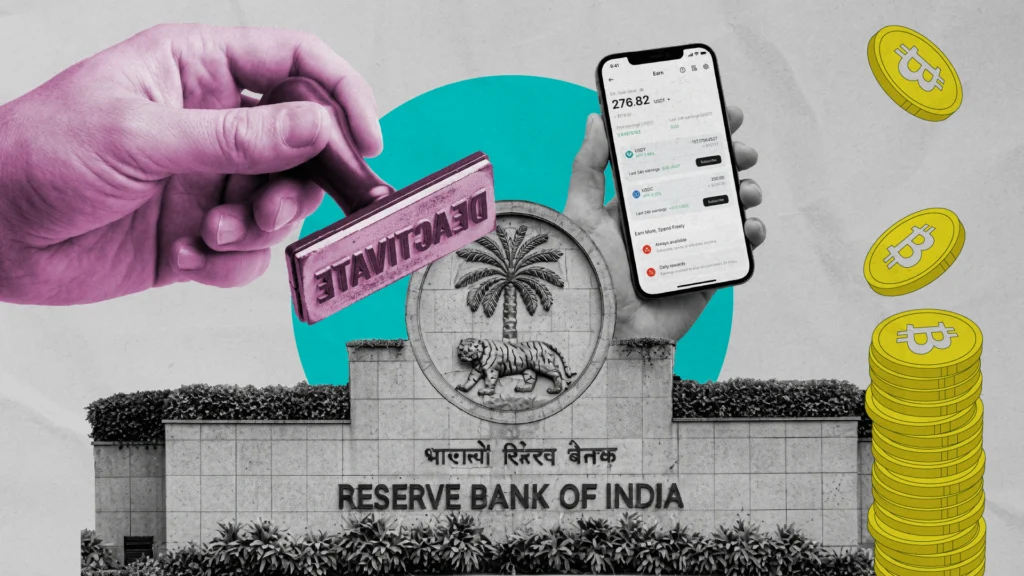
- India’s Reserve Bank of India (RBI) and Financial Intelligence Unit (FIU-IND) are reportedly examining offshore cryptocurrency cards, including those offered by RedotPay.
- Several Indian users have reported sudden card deactivations, although no official nationwide shutdown has been announced.
- Legal and blockchain industry executives warn that stablecoin-funded payments could raise questions about foreign exchange compliance, customer verification and transaction monitoring.
India’s growing use of stablecoin payment cards has attracted regulatory scrutiny, leaving some users uncertain whether they can continue spending cryptocurrency through international card networks.
The RBI and FIU-IND are examining offshore prepaid cards that allow Indian residents to convert digital assets into rupees for purchases and cash withdrawals, according to a Nov. 2 report by The Economic Times, citing two people familiar with the developments.
The review reportedly covers services such as RedotPay, whose cards use established payment networks, including Visa.
Some users have complained that their cards have stopped functioning in India in recent days. However, regulators have not publicly announced enforcement action against RedotPay, and the reasons for individual deactivations remain unconfirmed.
Why Are RBI and FIU Examining RedotPay Crypto Cards?
The attraction of stablecoin cards is straightforward: users can spend cryptocurrency without first transferring funds to an Indian bank account.
A customer holding dollar-backed stablecoins can use a prepaid card to purchase goods, recharge a phone, book travel or, where supported, withdraw cash. The conversion to local currency occurs through the payment infrastructure, so merchants receive conventional payments rather than cryptocurrency.
But this convenience creates a regulatory question.
If an Indian resident holds funds with an overseas crypto provider and spends them domestically, which institution is responsible for verifying the source of those assets and monitoring the transaction?
Sudhakar Lakshmanaraja, founder of Bengaluru-based nonprofit Digital South Trust, said his organization tested multiple crypto card programs and submitted its findings to authorities.
The organization reportedly obtained a Visa-backed RedotPay virtual card in August and successfully completed domestic purchases.
Lakshmanaraja warned that some offshore card programs advertise limited customer verification, which can make it difficult to identify who ultimately controls the cryptocurrency being spent.
His findings highlight a possible gap between traditional card-network compliance and the oversight of underlying digital assets.
Can Offshore Stablecoin Cards Bypass India’s Payment Rules?
Harshal Bhuta, co-founder and international tax and FEMA specialist at Ascentium India, warned that foreign-issued crypto debit cards could operate outside India’s domestic prepaid payment framework.
The concern arises when digital assets are held by an overseas custodian and automatically converted to fiat currency at the time of purchase.
Under the RBI’s prepaid payment instrument rules, payment operators generally require authorization to issue and operate regulated prepaid instruments in India.
However, whether a particular offshore card arrangement violates those requirements depends on its issuer, transaction structure, and applicable exemptions.
Manavendra Mishra, a white-collar crime and investigations partner at Khaitan & Co., raised another concern: users may not fully understand the implications of India’s Foreign Exchange Management Act.
He noted that blockchain analytics can trace cryptocurrency movements and help investigators examine the origins of funds, including assets associated with theft or other illicit activity. The executives’ comments were reported by The Economic Times.
The issue extends beyond individual cardholders. If an offshore service controls the cryptocurrency while a conventional payment network processes the purchase, regulators must determine where responsibility for customer verification and transaction reporting begins and ends.
Visa’s Stablecoin Expansion Raises a Bigger Question for India
India’s scrutiny comes as stablecoin-linked cards gain traction internationally.
In September, Visa disclosed that more than 160 stablecoin-linked card programs were operating globally, with payment volume growing nearly 200% year over year during its fiscal second quarter.
The company also reported an annualized stablecoin settlement run rate exceeding $20 billion, although settlement activity should not be confused with consumer card spending.
Vedang Ratan Vatsa, founder of Hashtag Web3, described stablecoin cards as an additional funding layer built on existing payment networks rather than a completely separate payment system.
This creates a challenge for Indian authorities: merchants may see an ordinary card transaction even when the customer’s purchasing power originates from cryptocurrency held abroad.
For users, the immediate uncertainty concerns access to existing balances.
A disabled card does not necessarily mean the underlying cryptocurrency has been seized or lost. However, users may face difficulties withdrawing or transferring assets if the provider restricts account functionality.
No public statement from the RBI, Visa or Mastercard has confirmed a coordinated shutdown, and RedotPay has not been formally accused of wrongdoing in the reported review.
The central question is whether offshore stablecoin cards can continue serving Indian customers while satisfying domestic payment, foreign exchange, and anti-money laundering requirements.
Until regulators clarify their position, reported card deactivations remain a warning about the operational risks of relying on offshore cryptocurrency payment services, rather than evidence of a nationwide ban.
Top Trending Crypto Articles
The information provided in this article is for informational purposes only. It is not intended to be, nor should it be construed as, financial advice. We do not make any warranties regarding the completeness, reliability, or accuracy of this information. All investments involve risk, and past performance does not guarantee future results. We recommend consulting a financial advisor before making any investment decisions.

Dr. Guneet Kaur is a senior editor at CCN.com and a Science Fellow at Exponential Science. She is a fintech and blockchain expert with extensive experience in digital finance education, blockchain ecosystems, and cryptocurrency markets. She has worked with global media such as Cointelegraph, as well as education and blockchain platforms, to design and lead strategic content and learning initiatives. As an educator and assessor for top-tier executive programs, she bridges real-world fintech trends with academic insight.
Dr. Kaur is also a published researcher and peer reviewer across fintech and data science journals, including Financial Innovation Journal and International Journal of Big Data Intelligence and Applications. Her work spans data-driven analysis, Web3 innovation, and technical content development. With a strong foundation in both industry and academia, she translates complex financial technologies into practical applications, empowering learners, professionals, and institutions across the rapidly evolving digital finance landscape.