Key Takeaways
- A Bitcoin whale holding more than $85 million has awoken after over a decade of inactivity.
- Despite this renewed whale activity, institutional sentiment has improved.
- Bitcoin’s price remains under pressure.
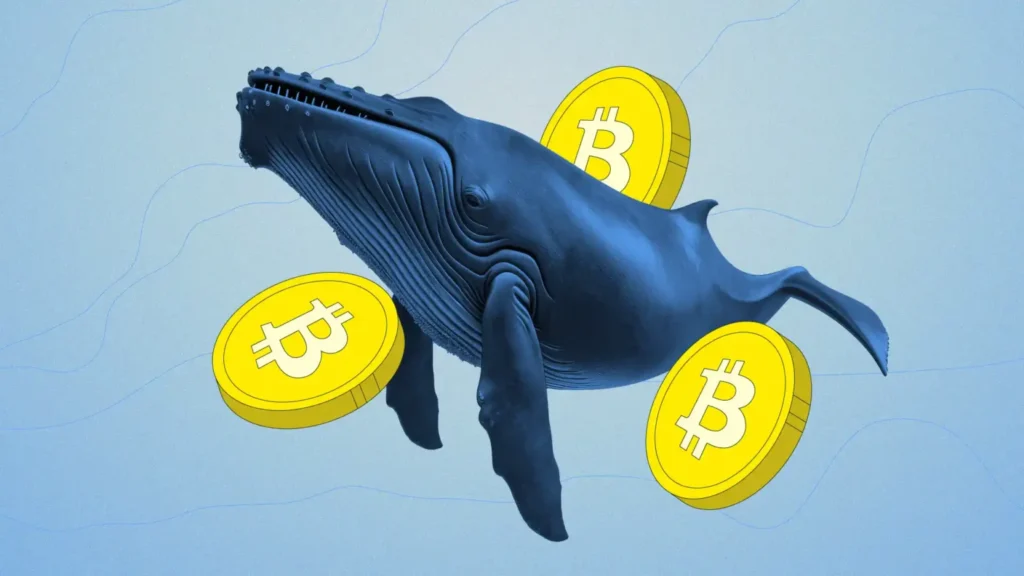
A long-dormant Bitcoin wallet holding more than $85 million has been reactivated after over 13 years, worrying traders about its impact on BTC’s price as it remains under pressure below recent highs.
Dormant Bitcoin Whale Awakens
Blockchain tracking service Whale Alert said on X on Monday that an address containing 909 Bitcoin was activated after 13.2 years of inactivity, moving the entire balance, currently worth around $85 million, to a new address.
On-chain data showed the wallet first received Bitcoin in 2013, which would have cost just $7 at the time.
The transfer reflects a broader pattern over the past year, as long-inactive Bitcoin wallets have begun moving again.
Separately, blockchain analytics firm Santiment reported in December a modest increase in participation among mid-sized holders.
Since mid-November, the number of wallets holding at least 100 Bitcoin has risen by nearly 0.5%, adding more than 90 new wallets to that category.
At the same time, smaller retail wallets, particularly those holding a fraction of a Bitcoin, have continued to decline.
“Retail capitulation will generally play out well for crypto prices in the long run,” Santiment said in a post last month.
Why Bitcoin Whales Make Traders Worry
Large transfers from long-dormant Bitcoin wallets often unsettle traders because they raise the possibility of significant supply hitting the market in a short period of time.
When whales move sizeable amounts of Bitcoin, especially after years of inactivity, traders often interpret it as a potential precursor to selling.
Even when no sale follows, the uncertainty itself can drive volatility.
There is also a psychological element, as dormant wallets are often associated with early adopters who accumulated Bitcoin at very low prices.
The idea that such holders may be taking profits after large rallies can amplify fears particularly when prices are already struggling to regain momentum.
Crypto Investments Surge
As long-dormant Bitcoin whales resurface on-chain, institutional investors are also beginning to edge back into crypto markets after a prolonged period of withdrawals.
Following months of steady outflows toward the end of last year, crypto exchange-traded products recorded net inflows, according to weekly data from asset manager CoinShares.
Bitcoin led the rebound, attracting about $1.55 billion in inflows. Ethereum followed with roughly $496 million in inflows.
Meanwhile, smaller allocations also benefited, with Solana drawing about $45 million in new inflows.
Bitcoin Price Outlook
Bitcoin’s price has struggled to regain momentum after retreating from recent peaks. However, some analysts see early technical signs of stabilisation.
In a recent report, Victor Olanrewaju, an analyst at CCN, said that despite the pullback, indicators on the daily chart are beginning to point to a potential rebound.
He noted that as Bitcoin fell below a key support level near $93,700, the Chaikin Money Flow indicator moved above zero.
“Bitcoin’s price has not broken below the lower trendline of its earlier ascending channel. This implies sellers are struggling to force a full trend breakdown,” Olanrewaju said.
Adding: “If BTC continues to defend that structure, the next upside test becomes clearer.”
In the more bullish scenario, Bitcoin could retest the $98,255 resistance, he wrote.

Kurt Robson is a London-based reporter at CCN, specialising in the fast-moving worlds of crypto and emerging technology. He began his career covering local news in Cornwall after graduating from Falmouth University with First Class Honours in Journalism. There, he cut his teeth on everything from council meetings to missing swans.
He quickly rose through the ranks to become a frontline journalist at several of the UK’s leading national newspapers. Over the years, he has interviewed musicians and celebrities, reported from courtrooms and crime scenes, and secured multiple front-page exclusives.
Following the upheaval of the COVID-19 pandemic, Kurt shifted his focus to technology journalism—just ahead of the AI boom. With a natural curiosity and a trained eye for emerging trends, he has found a new rhythm in reporting on innovation.
At CCN, Kurt's work focuses on the cutting edge of crypto, blockchain, AI, and the evolving digital world. Drawing on his background in people-first reporting and his deep interest in disruptive tech, Kurt delivers stories that are insightful, entertaining, and human-centric.












 Bitcoin (BTC) Cracks Under $93K, Crypto Market Down Amid Trump-Greenland Tariffs: Data Tells Different Story