Key Takeaways
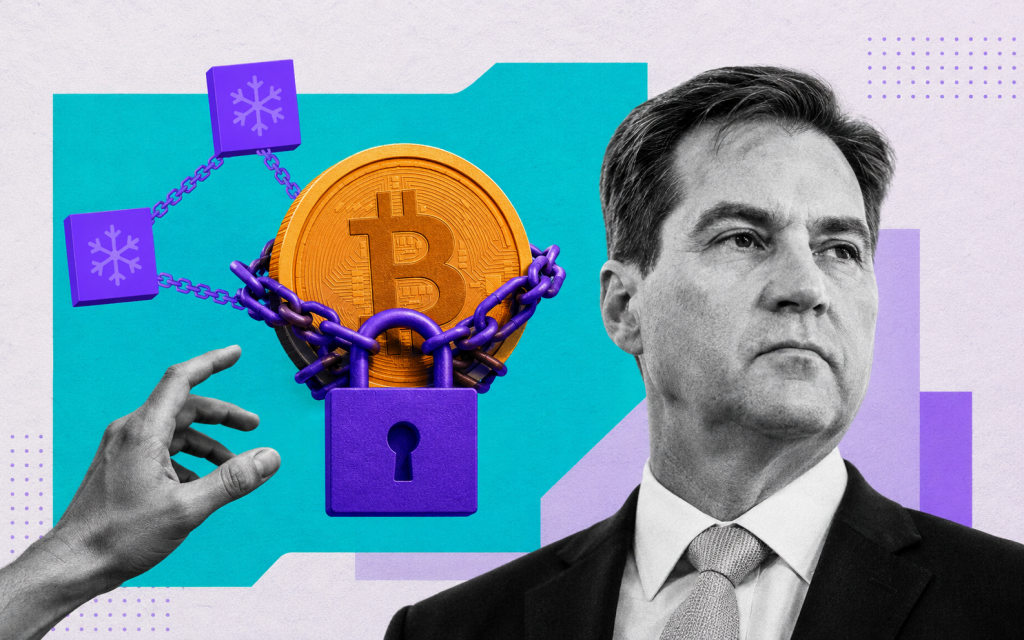
Craig Wright has reignited one of Bitcoin’s oldest ideological disputes, arguing that its base protocol should be permanently fixed to prevent developers, miners, corporations or foundations from changing its rules.
In a series of posts on X, Wright claimed Bitcoin was designed as an open system in which competition occurs above an immutable protocol.
He accused supporters of developer-led upgrades of defending “rule by committee” while describing fixed rules as centralized.
The comments revive the conflict between protocol stability and adaptability. Bitcoin supporters generally agree that no single party should control the network, but they disagree over whether preventing all future changes would strengthen decentralization or leave the protocol unable to respond to vulnerabilities and new technical demands.
+12
Bitcoin
Ethereum
Litecoin
Tether
Solana
Dogecoin
Bitcoin Cash
Ripple
TRON
Build'N'Build
USD Coin
Dai
Chainlink
The Sandbox
Shiba Inu
Uniswap
Polygon Matic
+22
Bitcoin
Ethereum
Tether
Build'N'Build
USD Coin
Ripple
Cardano
Solana
Avalanche
Dogecoin
Toncoin
Polygon Ecosystem Token
Litecoin
Shiba Inu
Lido Staked ETH
Algorand
Zcash
Dai
TRON
Stellar
Bitcoin Cash
Chainlink
PAX Gold
Hedera Hashgraph
Ethena Staked USDe
Ethena USDe
Polkadot
+63
Tether
Ethereum
Bitcoin
TRON
Build'N'Build
Litecoin
Ripple
Chainlink
Polkadot
USD Coin
Dogecoin
Solana
Bitcoin Cash
Stellar
Cosmos
Polygon Ecosystem Token
Dai
Aptos
Aave
Helium
THORChain
Sui
Wrapped Bitcoin
Arbitrum
Algorand
Hedera Hashgraph
Pepe
Kava.io
Uniswap
Filecoin
Tezos
Kaspa
Toncoin
Monero
Decentraland
Basic Attention Token
Enjin Coin
Curve DAO Token
PancakeSwap
Trust Wallet Token
Shiba Inu
NEAR Protocol
Avalanche
Ethereum Classic
SushiSwap
Wrapped Ethereum
Cardano
VeChain
The Sandbox
Axie Infinity
Conflux Network
Chiliz
First Digital USD
Worldcoin
Ethereum Name Service
Optimism
Render Token
MultiversX
OKB
Jupiter
PayPal USD
Ethena
Ethena USDe
Lido DAO Token
Zcash
Tether Gold
JITO
Ondo
Wright argued that Bitcoin’s protocol should provide stable conditions under which anyone can transact, build services or accept payments without seeking approval from a central organization.
“The base rules remain stable while competition above them remains unlimited,” he wrote, adding that changing the protocol should not itself be considered innovation.
In his view, developers should create products and competing implementations without requiring the broader network to adopt their preferred rules.
Now think carefully about what that means.
Many of you called me a fraud for arguing that Bitcoin should remain an open system with a fixed protocol—one in which anyone can transact, build, compete and accept payment without seeking permission.
At the same time, you yelled in… https://t.co/LbYGl6jtbd
— Dr Craig S Wright (@Dr_CSWright) August 2, 2026
Wright also criticized artificial capacity limits, claiming they push users toward exchanges, custodians and other intermediaries.
His position closely reflects the philosophy associated with Bitcoin SV, which supports much larger blocks and attempts to preserve what its advocates describe as Bitcoin’s original design.
Under this model, no developer group could introduce upgrades that alter transaction processing or network economics. Businesses could consequently invest without fearing that a future protocol change might undermine their services.
Bitcoin’s existing governance system is less centralized than Wright’s criticism implies. Developers can write code and propose changes through Bitcoin Improvement Proposals, but they cannot independently force the network to accept them.
Node operators choose which software to run, while miners, exchanges, wallet providers and users decide whether to support new rules.
Imagine thinking Bitcoin was supposed to be governed by a small group of developers who can change the rules, isolate dissenters and gradually degrade the protocol—then calling that decentralisation.
Bitcoin was designed to be the opposite.
The protocol should be fixed so that…
— Dr Craig S Wright (@Dr_CSWright) August 2, 2026
Upgrades generally require broad coordination because incompatible changes can split the network into competing chains.
Segregated Witness demonstrated this complicated process. The upgrade modified how certain transaction data is handled, increasing effective capacity and addressing transaction malleability.
It was proposed through the open-source development process, but required support across the ecosystem before activation.
Critics of permanently fixing Bitcoin argue that some capacity for change is necessary. Software vulnerabilities, cryptographic threats, and unexpected economic behavior may require protocol-level responses. Removing all upgrade mechanisms could make the network more stable but potentially more brittle.
Supporters of greater immutability counter that this flexibility gives influential developers and companies disproportionate agenda-setting power, even when they cannot unilaterally impose changes.
Wright’s intervention remains controversial because of his previous claim that he created Bitcoin under the name Satoshi Nakamoto.
In 2024, the UK High Court ruled that Wright was not Satoshi, did not write the Bitcoin white paper, and did not create the original software.
The judge found that Wright had fabricated his claim and supported it with forged documents. A subsequent judgment recounts the court’s conclusion that the evidence against his claim was overwhelming.
A court later found Wright in contempt for breaching an order related to further litigation and handed him a suspended 12-month prison sentence.
Those rulings establish that Wright is not Bitcoin’s creator, but they do not resolve the governance question raised by his latest posts.
The dispute instead exposes a fundamental trade-off: permanently fixed rules can limit institutional control, while carefully coordinated upgrades can protect and improve a changing network.
Bitcoin’s current model attempts to balance both by making changes possible but difficult to impose without broad consent.
Giuseppe Ciccomascolo began his career as an investigative journalist in Italy, where he contributed to both local and national newspapers, focusing on various financial sectors.
Upon relocating to London, he worked as an analyst for Fitch's CapitalStructure and later as a Senior Reporter for Alliance News. In 2017, Giuseppe transitioned to covering cryptocurrency-related news, producing documentaries and articles on Bitcoin and other emerging digital currencies. He also played a pivotal role in establishing the academy for a cryptocurrency exchange website. Crypto remained his primary area of interest throughout his tenure as a writer for ThirdFloor.
You’re All Set!
Thanks for signing up. We’ll be in touch soon with the latest insights.