Coinbase lets businesses launch a branded stablecoin backed 1:1 with USD-stable collateral (including USDC).
The real work isn’t the token, it’s distribution, redemption, and rules.
Offering rewards or yield changes user expectations fast, and could conflict with The GENIUS Act.
Stablecoin regulation is tightening, so your onboarding, compliance, and accounting processes need to be solid before you scale.
Stablecoins have evolved far past a niche crypto tool into real financial infrastructure. With an estimated $46 trillion ($9 trillion adjusted) in annual transactions in 2025, these dollar-backed digital assets have broken into the mainstream.
As an endorsement of stablecoins’ success, popular crypto exchange Coinbase has launched a custom stablecoin program for you to create your own. Created stablecoins are backed 1:1 via Coinbase and are interoperable with the platform’s USDC stablecoin.
This guide will detail what the stablecoin product is, how to build a stablecoin with it, and what risks you might need to manage, even if Coinbase handles much of the heavy load.
New Trending Crypto Wallet Offers
Sponsored
Disclosure
We sometimes use affiliate links in our content, when clicking on those we might receive a commission at no extra cost to you. By using this website you agree to our terms and conditions and privacy policy.
What Coinbase’s Custom Stablecoin Platform Provides
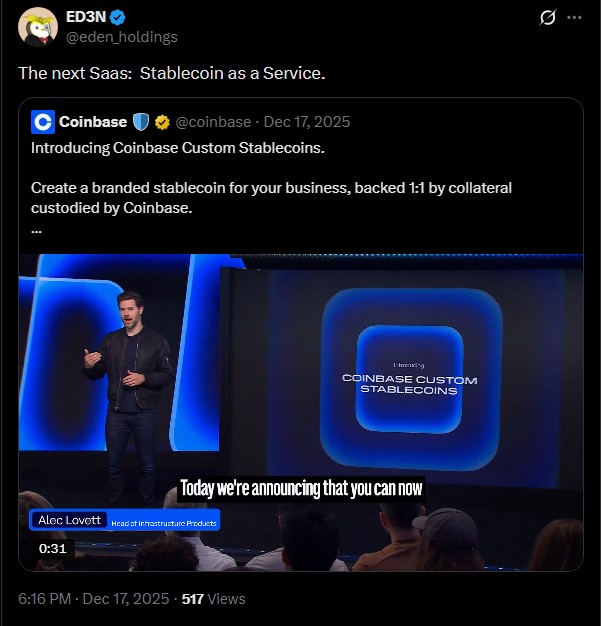
Coinbase describes its custom stablecoins platform as a white-label stablecoin (think stablecoin-as-a-service) that’s fully backed 1:1 by “flexible collateral,” which is held in segregated wallets by the exchange. It also promises zero-fee 1:1 conversions between your custom stablecoin and USDC, alongside other stablecoins created within the platform.
Source: @eden_holdings on X
Essentially, you’re launching a stablecoin that’s pegged to USDC and other crypto, with Coinbase handling the custody, minting/burning, and conversion.
What you do control is:
The stablecoin name, ticker, and overall visual representation.
The user experience, such as onboarding, the wallet user interface, rewards, support, and more.
What Coinbase controls is:
Issuance and redemption.
Custody.
Bridging between your stablecoin, USDC, and other custom stablecoins.
Now for the creation process.
Step 1: Decide Your Stablecoin Purpose
Before creating your stablecoin, understand:
Who can hold it: Is your stablecoin for retail use, business use, or just for use in certain regions
What’s it for: Is it used for payments between customers and merchants, to pay out creators and contractors, as a savings account, or for some other use?
How redemption works: Are there certain timelines or fees you’d charge?
What will you offer: Will you attempt to offer high yield rates, or no yield at all? Is your stablecoin meant to be an alternative bank account or something else entirely?
These decisions are important, as stablecoins now face a fair amount of regulatory scrutiny via President Trump’s GENIUS Act. The GENIUS Act legitimizes stablecoins but introduces strict guidelines when it comes to issuance, reserves, licensing, and more.
Interestingly, Coinbase offers you rewards for your stablecoin’s supply, which accrues daily and pays out to your Coinbase Prime account.
Step 2: Set up the Coinbase Rails
Coinbase positions its Custom Stablecoins as an enterprise-ready offering, meaning you should expect:
Business onboarding: The exchange will verify that your company and use case fit its risk and compliance requirements. Coinbase will review your business, how it’s funded, and more. It will require business documentation that details how money flows in and out of your business.
Treasury design: How does your governance work? Who decides when tokens are minted or burned? Checks and balances? You’re basically building a stablecoin central bank, and Coinbase wants to know how it operates.
Accounting: This is how your finance team reports mint and burn events, rewards distribution, reserves, and more in a way that complies with current reporting standards. Remember: Coinbase isn’t looking to take on a risky company. It wants clean books.
Step 3: Fund Collateral, Then Mint 1:1
Now for the tokenization process:
Deposit collateral: Place your collateral inside the Custom Stablecoin platform. You’re welcome to use USDC as a funding method.
Mint your stablecoin: Mint your stablecoin 1:1 against that collateral.
Distribute: Distribute your stablecoin to partners, users, or the designated parties you have identified.
Step 4: Customize Your Asset
You can name and provide visuals for your stablecoin as part of the program:
Asset name and ticker: Detail the stablecoin’s name and its designated ticker.
Visual branding: Provide a logo for your stablecoin to stand out amongst the rest.
Step 5: Widespread Distribution
While you’ve already distributed the stablecoin to initial partners, it’s time to go live. Widespread distribution occurs when your stablecoin is held in your treasury and becomes an asset that people can actually hold and use. There are a few common distribution models:
Custodial: You act as the exchange for your stablecoin. Users hold the stablecoin, see a balance of $25, yet you keep track of records for the user. This makes it easier for the user to hold your coin, but it does mean more work for you in terms of customer support.
For example, a gaming marketplace lets you cash out your winnings, but otherwise holds them.
Self-custody: These stablecoins go right to a user’s wallet, rather than you holding them after purchase. This gives the user more control, but it puts more responsibility on them as well.
For example, a user buys your stablecoin for use on other platforms.
Partner payouts: You use the stablecoin to pay other people or businesses, like creators and freelancers. This can be faster and easier than bank transfers, especially internationally, but it also means you need strong safety policies and need to abide by your own rules on who you’re allowed to pay.
A freelance platform pays contractors every Friday. Instead of managing bank transfers, it sends stablecoins to each contractor’s wallet so people around the world get paid quickly.
Partner settlement: You use the stablecoin to pay your business partners what’s owed. Like a daily “we owe you $20, here it is” type of payment.
A storefront works with a shipping company. At the end of each day, the store pays the shipping company a specific amount using stablecoins. The store only sends to the shipping company’s pre-approved wallet address and might require two managers to approve the payment.
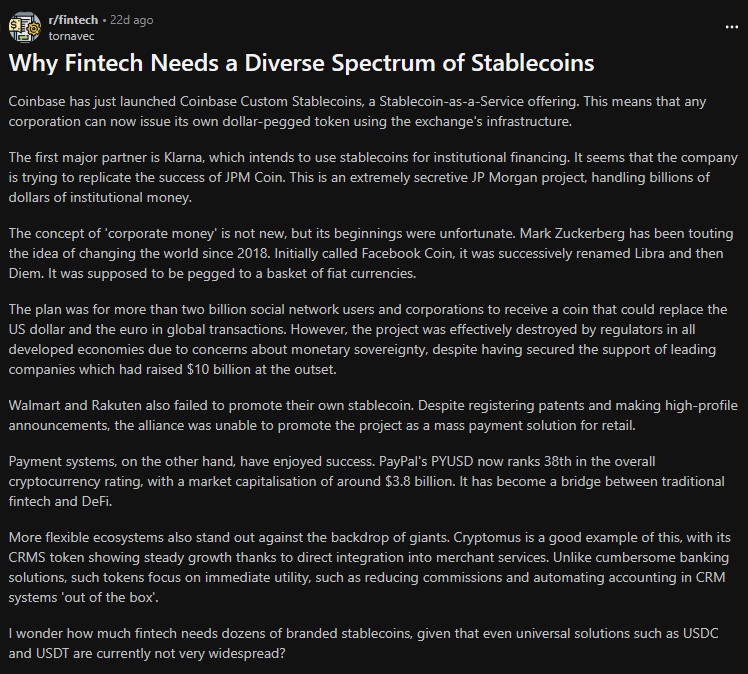
Source: tornavec on Reddit
Step 6: Redemption and Rewards
Redemption, or cashing out, is a vital part of your stablecoin creation process. Coinbase promises that your stablecoin can convert 1:1 into USDC and back with zero fees. This reassures users that they have a clear withdrawal method.
But you still need to decide how that looks:
Can users cash out anytime, or only at specific times?
Are there daily limits?
What happens if the user enters the wrong withdrawal address? Who do they contact, if anyone? Do you offer refunds?
Rewards can also serve as an incentive to keep users within your ecosystem. It’s giving them something a little extra for holding the stablecoin, like daily rewards. It sounds simple, but a fair rewards system can shift a user’s view from “these are digital dollars” to “this is an investment.”
This matters because it can increase:
Risk, as rewards have to come from somewhere.
User expectations, as people hate it when reward rates go down.
Legal and compliance pressure, as rewards can look like interest. The GENIUS Act currently prohibits interest-bearing stablecoins, though there are ways around the process.
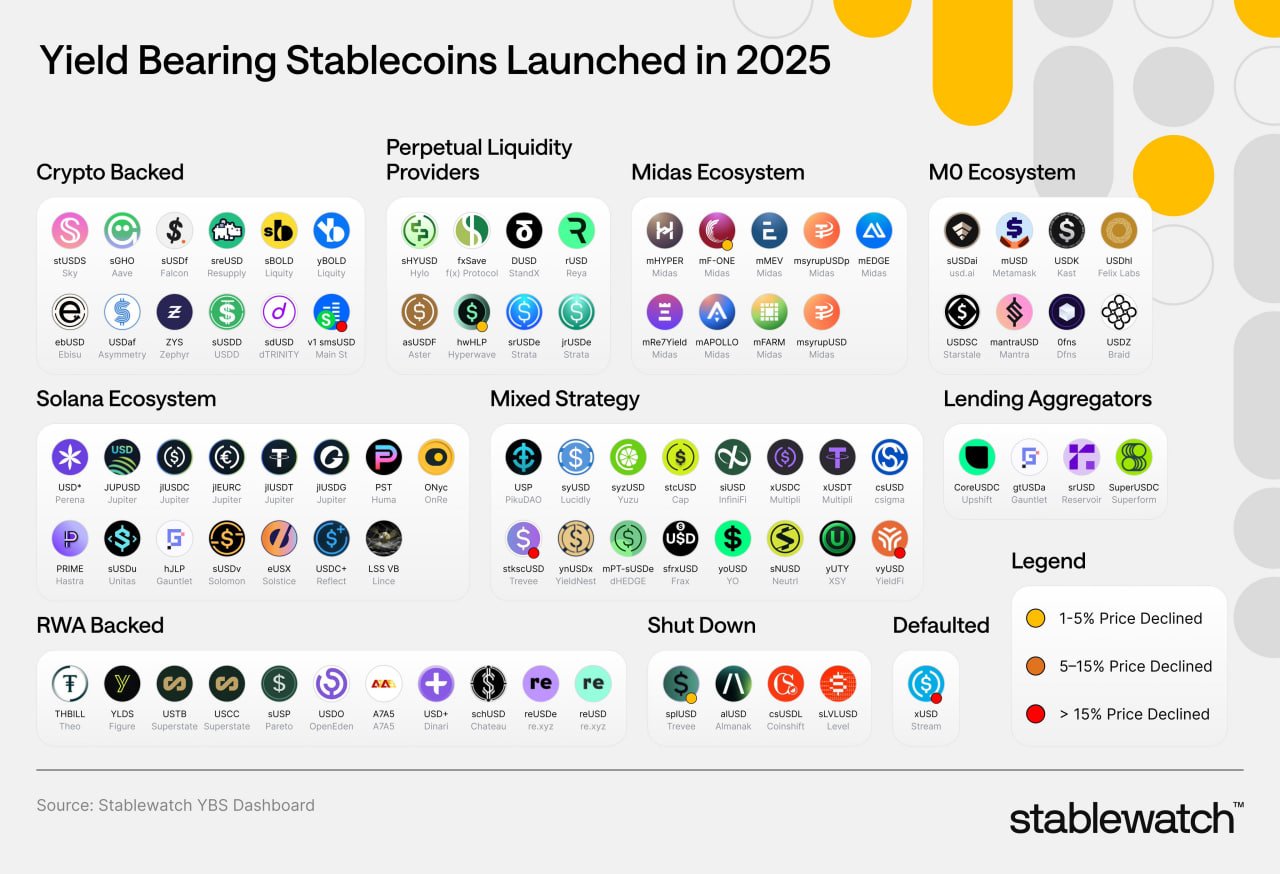
In fact, new yield stablecoins popped up across categories like crypto-backed designs, real-world asset (RWA) providers, and even some platforms like Solana. But some yield-bearing products failed, as well. Once you add yield, your “stable” offering introduces variables in reward rates.
Source: Stablewatch
All of this in mind, treat redemption as a core selling point. Make it as easy and reliable as possible. Rewards, should you choose to offer them, are more opt-in. Explain where they come from and explain that reward rates can change at any time.
Even if Coinbase manages custody and mint/burn mechanics, you still carry real risk:
User expectations: If users misunderstand how holdings or redemption works, they’ll shy away from continued use.
Compliance risk: If you allow international payouts, you may have to deal with local regulations.
Marketing risk: Wording like “savings,” “cash account,” and “guaranteed rewards” can create some regulatory friction if you’re not careful.
Operational risk: If you want to scale, you must consider how to handle incident response, purchase/withdrawal limits, and other potential problems.
Coinbase’s Custom Stablecoins platform opens up the ability to launch a branded stablecoin by providing you with custody, mint/burn capabilities, and built-in interoperability via USDC.
But the process isn’t as simple as “mint and move forward.” Creating a stablecoin means making a promise to your users. A promise that they can get in and out without issue, that compliance rules are clear, and that you’re offering them a reliable overall product.
Do I need to build my own stablecoin smart contract?
Not in the “from scratch” sense. Coinbase positions Custom Stablecoins as a stablecoin-as-a-service, where Coinbase provides the issuance infrastructure and custody. You still design the product rules and user experience.
What backs the stablecoin?
Coinbase says it’s fully backed 1:1 by a flexible mix of USD-stablecoin collateral (including USDC) held in segregated wallets custodied by Coinbase.
What does “redeem” mean for users?
Redeeming is cashing out. Converting your custom stablecoin back to USDC (or whatever exit you support). Coinbase highlights zero-fee 1:1 conversions between USDC and supported custom stablecoins inside its ecosystem.
Can I offer yield or rewards?
You can structure rewards, but it adds complexity and scrutiny. CCN’s coverage shows the GENIUS Act debate around whether stablecoin “rewards” look like interest, and why firms are arguing these are loyalty/revenue-share programs instead.
Disclaimer:
The information provided in this article is for informational purposes only. It is not intended to be, nor should it be construed as, financial advice. We do not make any warranties regarding the completeness, reliability, or accuracy of this information. All investments involve risk, and past performance does not guarantee future results. We recommend consulting a financial advisor before making any investment decisions.
Max Moeller is a Chicago‑based writer and video editor passionate about games, tech, and crypto. Whether it’s crafting clear, insightful articles or piecing together engaging video retrospectives, he’s driven by curiosity and takes pride in keeping things human. Since 2017, Max has been published in a variety of notable crypto magazines.


 Intermediate