Bloomberg’s Mike McGlone reiterated his view that Bitcoin could revert to $10,000.
Debate continues over the cause of the decline.
Bitcoin fell on Thursday, extending losses alongside global risk assets, as some analysts revived long-term bearish price targets.
At the same time, others cautioned against tying the latest decline too closely to geopolitical headlines.
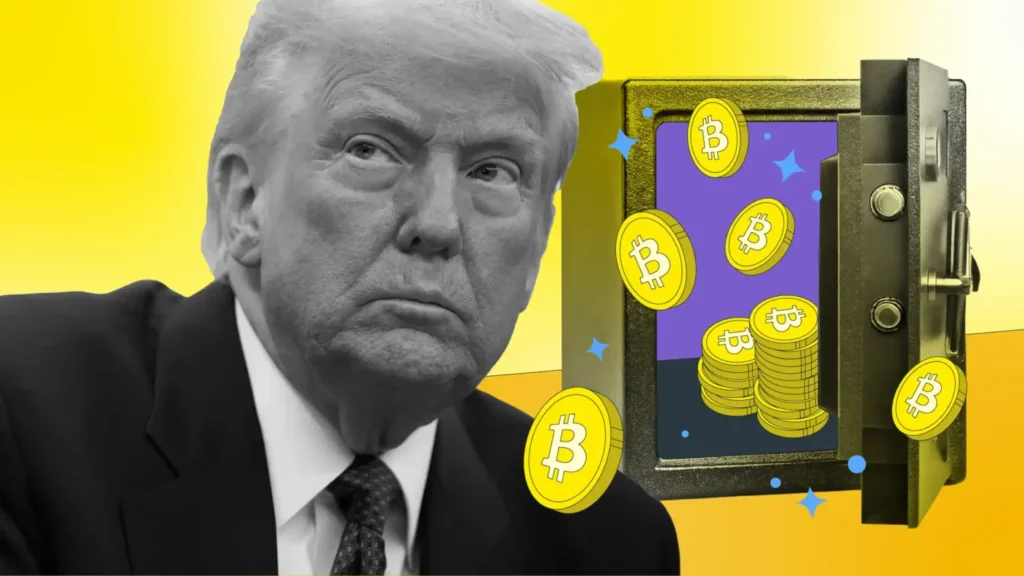
Bitcoin was last down about 3% over 24 hours at roughly $66,200, tracking a broader pullback in digital assets and equities amid heightened tensions following U.S. President Donald Trump’s latest address on Iran.
Sponsored
Disclosure
We sometimes use affiliate links in our content, when clicking on those we might receive a commission at no extra cost to you. By using this website you agree to our terms and conditions and privacy policy.
Bloomberg Intelligence analyst Mike McGlone renewed his long-standing view that Bitcoin could eventually retrace toward $10,000.
He argued that the asset may be reverting toward historical norms after years of stimulus-fueled gains.
In a recent note, McGlone said Bitcoin’s price behavior still reflects the aftermath of the “biggest money pump in history” during 2020–2021, adding that prior to that period, it had largely traded around the $10,000 level.
He also once again pointed to $10,000 as one of Bitcoin’s most heavily traded price zones since the launch of futures in 2017, suggesting it represents a key equilibrium level.
The Bursting Crypto Bubble and Potential $10,000 Bitcoin in 2026 –
Before the biggest money pump in history in 2020-21, Bitcoin hovered around $10,000, and it may be reverting. Roughly $10,000 is also the first-born crypto's most traded price since 2017, when futures were… pic.twitter.com/bchbAOcYxi
McGlone contrasted Bitcoin with the broader digital asset market, claiming that only a small subset of cryptocurrencies — such as stablecoins — are tied to tangible value.
In a separate post, he outlined a broader “reversion” scenario across asset classes by 2026, forecasting crude oil at $40 per barrel, gold at $4,000 per ounce, and Bitcoin back at $10,000.
He argued that past boom-and-bust cycles in oil markets, combined with strong U.S. commodity supply and a stretched equity market, point to a normalization phase.
McGlone added that gold’s sharp rally in 2025 and Bitcoin’s previous peak could be early warning signs of such a shift.
Bitcoin Declines Amid Geopolitical Tensions
Bitcoin’s latest drop comes as part of a broader risk-off move across markets, with the crypto showing a strong positive correlation with equities, particularly the S&P 500.
The further pullback followed Trump’s April 1 address, in which he outlined progress in the ongoing U.S.-Israel military campaign against Iran, known as “Operation Epic Fury,” and signaled that further strikes would continue for another two to three weeks.
The speech dampened earlier hopes of de-escalation, contributing to a surge in oil prices and prompting investors to reduce exposure to riskier assets, including crypto.
Market data also showed a wave of forced liquidations amplifying the decline, with roughly $70 million in Bitcoin positions wiped out over 24 hours — the majority of them leveraged long bets.
At the same time, Bitcoin slipped below a key technical support level near $66,900, reinforcing near-term bearish momentum.
Analysts said failure to reclaim that level could leave the crypto vulnerable to further downside, with support seen in the low-$60,000 range.
Benjamin Cowen Pushes Back on Trump-Liked Narrative
Some market participants, however, cautioned against attributing Bitcoin’s move primarily to Trump’s speech.
Crypto analyst Benjamin Cowen said the current price action aligns with historical patterns seen during U.S. midterm cycles, where Bitcoin often forms a low in February, posts a lower high in March, and weakens again in April.
“There is always a narrative,” Cowen wrote on X, adding that investors should avoid letting emotionally driven explanations shape their market outlook.
Bitcoin tends to find a low in February, lower high in March, then it drops back down in April in midterm years.
Those that faded this want to blame current price action on a speech.
There is always a narrative. Don’t let emotional investors affect your resolve
Trump’s address itself focused on military progress rather than financial markets.
Speaking from the White House, he said U.S. objectives were “nearing completion,” highlighted significant damage to Iran’s military capabilities, and reiterated that no ground troops were planned.
He also addressed concerns about oil prices and the broader economy, as energy markets reacted sharply to the escalation.
Kurt Robson is a London-based reporter at CCN, specialising in the fast-moving worlds of crypto and emerging technology. He began his career covering local news in Cornwall after graduating from Falmouth University with First Class Honours in Journalism. There, he cut his teeth on everything from council meetings to missing swans.
He quickly rose through the ranks to become a frontline journalist at several of the UK’s leading national newspapers. Over the years, he has interviewed musicians and celebrities, reported from courtrooms and crime scenes, and secured multiple front-page exclusives.
Following the upheaval of the COVID-19 pandemic, Kurt shifted his focus to technology journalism—just ahead of the AI boom. With a natural curiosity and a trained eye for emerging trends, he has found a new rhythm in reporting on innovation.
At CCN, Kurt's work focuses on the cutting edge of crypto, blockchain, AI, and the evolving digital world. Drawing on his background in people-first reporting and his deep interest in disruptive tech, Kurt delivers stories that are insightful, entertaining, and human-centric.













 Bitcoin’s (BTC) Brutal Weekend Rollercoaster Wipes $185M in Long Positions, but Bears Need to Watch Out