A diversified investment strategy can cushion market fluctuations and support long-term goals.
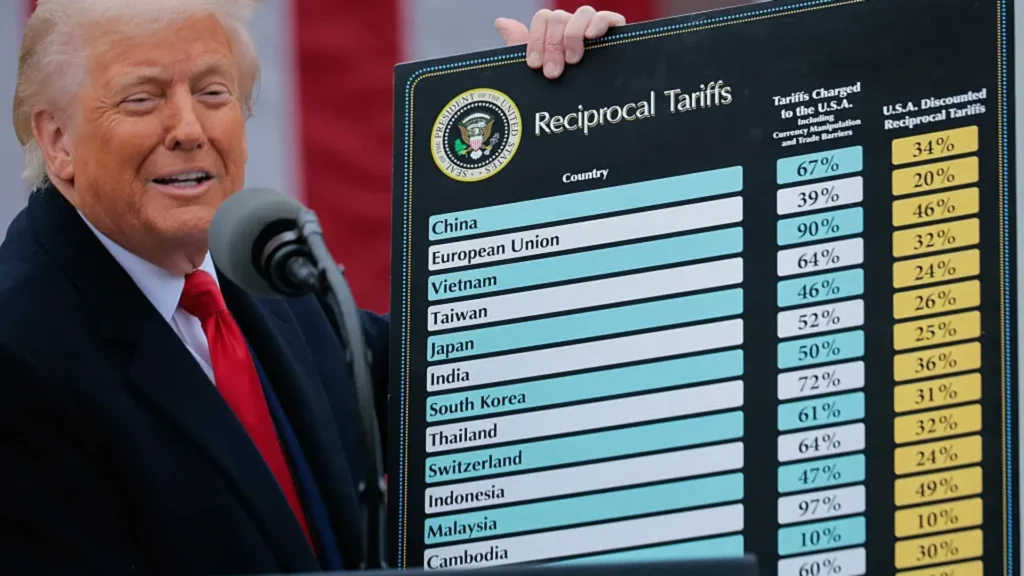
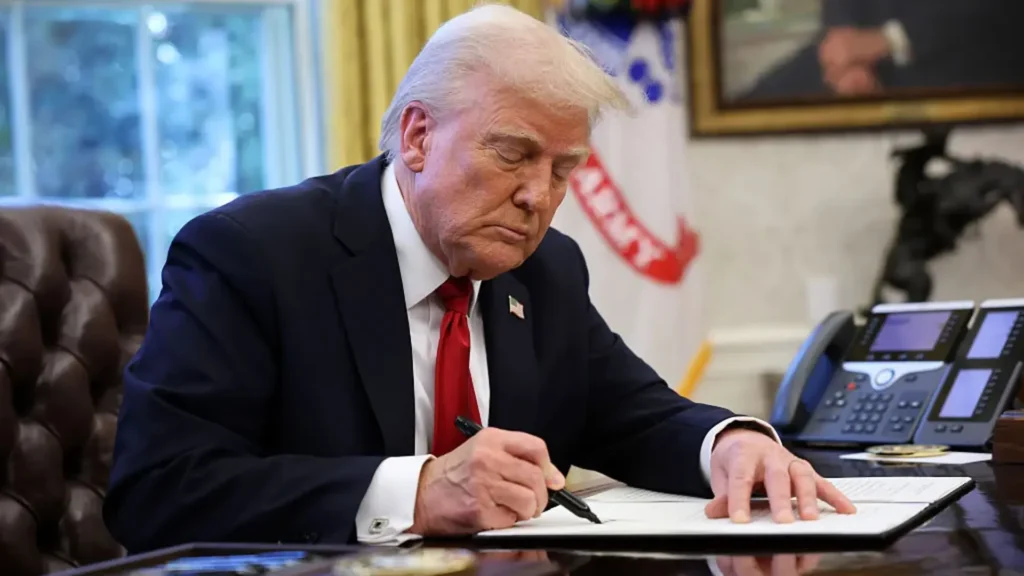
The U.S. has rolled out a new wave of tariffs on global imports, shaking up trade dynamics and raising questions about inflation, growth, and globalization.
While the economic hit may be minor, the uncertainty is fundamental. It reminds investors that short-term volatility is no reason to lose sight of a long-term strategy.
Recent U.S. trade policy moves have introduced new tariffs on a wide range of imports worldwide, building on earlier levies against countries like Mexico, Canada, andChina and products such as steel, aluminum, and automobiles.
Energy products are mainly excluded. However, these changes still affect roughly $600 billion of the $4 trillion the U.S. imports annually. That’s about 2% of the $30 trillion U.S. economy—a meaningful but limited portion.
What remains uncertain is the broader economic impact. Tariffs may slightly slow GDP growth, with estimates suggesting a potential drag of 0.6%. While that alone may not tip the U.S. into recession, the potential for prolonged inflation and reduced consumer spending is real.
Investors closely watch corporate responses—whether costs will influence consumers, jobs cut, or supply chains adjusted—and how foreign governments might retaliate.
This environment raises concerns about the future of globalization, a long-standing driver of economic growth and low inflation in the U.S. How long these tariffs stay in place and how global trade relationships evolve from here remains a central unknown.
Volatility Now, Long-Term Opportunity Ahead
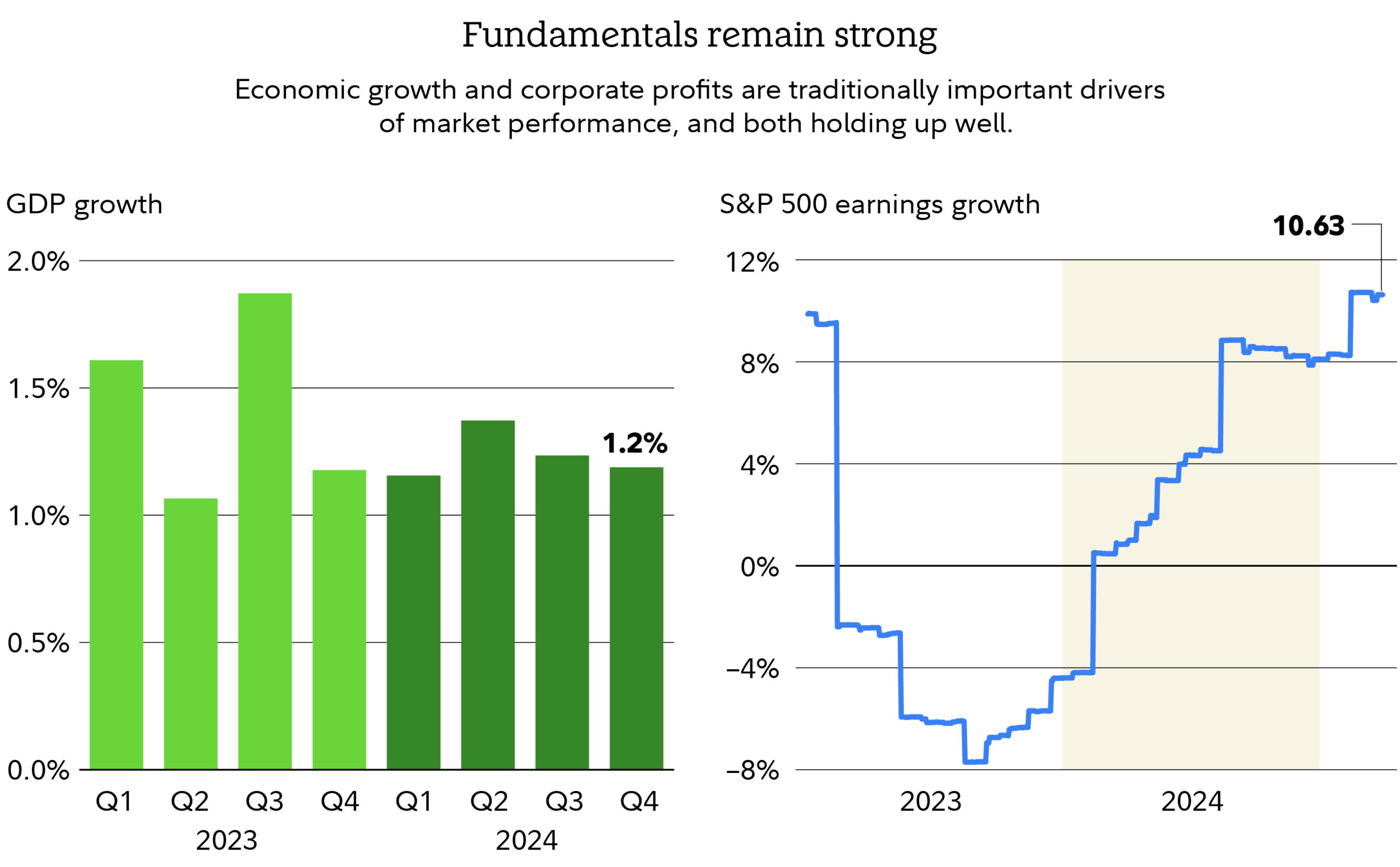
Despite the anxiety due to these developments, it’s crucial to remember that long-term market performance is typically driven more by corporate earnings and economic fundamentals than short-term policy shocks.
According to Fidelity, historical data supports this. It shows strong stock market and GDP growth during heightened trade tension and geopolitical uncertainty.
Economic growth and corporate profits have been far more important for market performance than policy shifts. | Credit: Fidelity
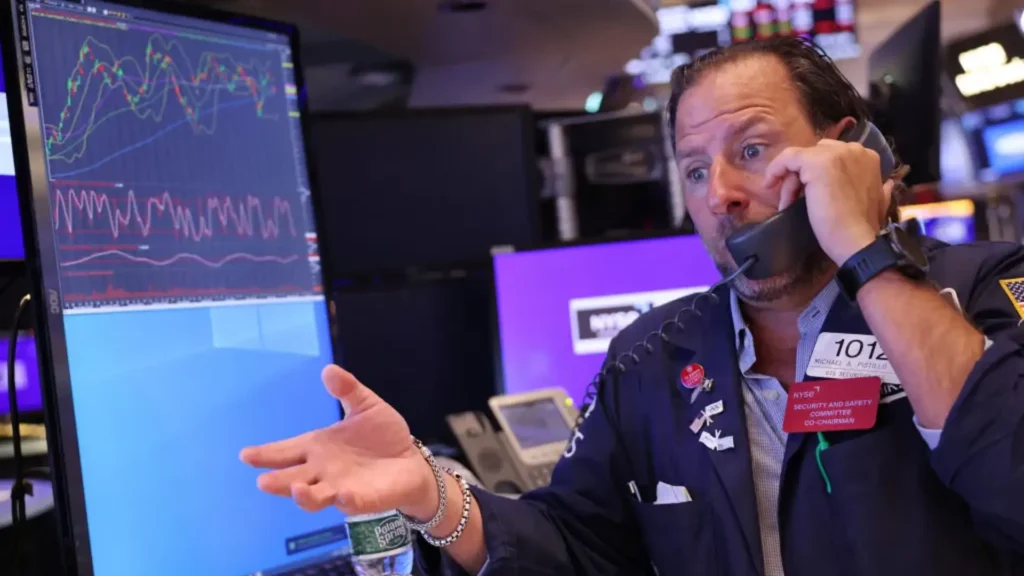
As markets digest these new trade dynamics, investors are seeing signs of pricing in slower growth, warmer inflation, a weaker U.S. dollar, and the possibility of interest rate cuts later in 2025. In the short term, volatility may persist.
However, Fidelity’s portfolio managers, Lars Schuster and Mike Scarsciotti emphasize that the longer-term outlook for U.S. stocks and bonds remains positive.
Intermediate-term bonds are particularly highlighted for their potential to provide yield and cushion during market fluctuations. Schuster notes that bonds again play their traditional role as shock absorbers, counterbalancing stock volatility within diversified portfolios.
Diversification is the Best Hedge
During times of uncertainty, the instinct to react quickly can be strong, but often, staying the course proves more beneficial. Schuster and Scarsciotti stress the importance of maintaining a diversified, long-term investment strategy. This has to align with one’s financial goals, risk tolerance, and investment time frame.
A well-diversified portfolio—including a mix of U.S. and international stocks, bonds across maturities, and inflation-protected assets—can help mitigate risk while offering potential growth.
“Within equities, consider balancing value-oriented dividend-paying stocks with growth opportunities. Also, review your cash holdings and evaluate the potential benefits of locking in attractive yields on intermediate-term bonds,” Fidelity experts said.
“The bottom line? Trying to time the market rarely works. Staying invested through market fluctuations positions you to benefit when the recovery comes—often faster and more unexpectedly than many anticipate.”
“Regular portfolio reviews, guided by your goals and a disciplined strategy, are the best defense in an unpredictable investing environment.”
Giuseppe Ciccomascolo began his career as an investigative journalist in Italy, where he contributed to both local and national newspapers, focusing on various financial sectors.
Upon relocating to London, he worked as an analyst for Fitch's CapitalStructure and later as a Senior Reporter for Alliance News. In 2017, Giuseppe transitioned to covering cryptocurrency-related news, producing documentaries and articles on Bitcoin and other emerging digital currencies. He also played a pivotal role in establishing the academy for a cryptocurrency exchange website. Crypto remained his primary area of interest throughout his tenure as a writer for ThirdFloor.