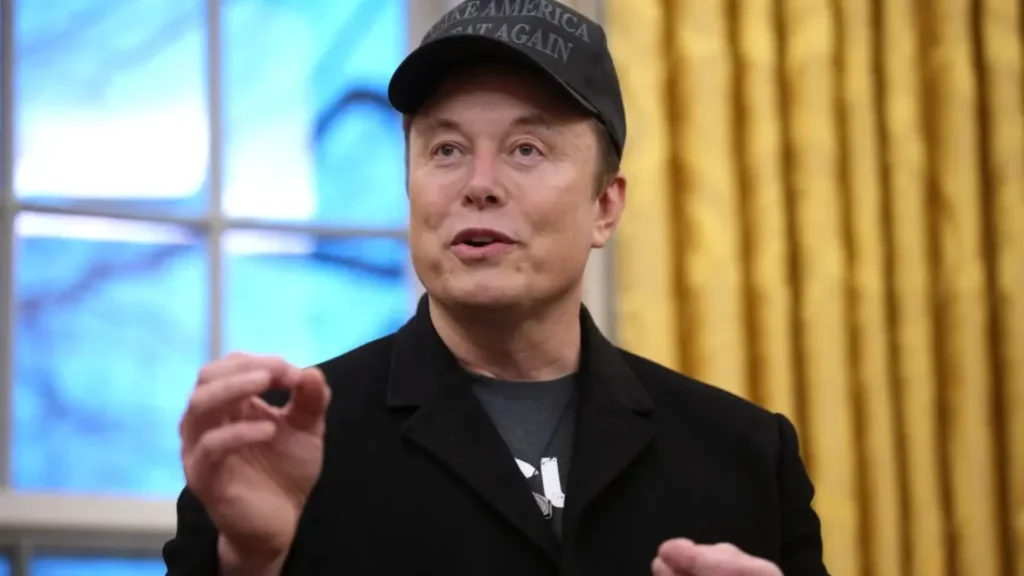
Elon Musk's (pictured) DOGE faces scrutiny for overstated figures. Credit: Andrew Harnik, Getty Images.
Share
Key Takeaways
While DOGE claims $6.5 billion in savings, over half of these contract cancellations haven’t yet occurred.
Government consulting firms are experiencing significant contract losses, with Deloitte losing $219 million in deals.
The highest risk is faced by firms that rely on government IT contracts, such as BigBear.ai, DLH Holdings, and Leidos Holdings.
However, DOGE removed all canceled contract details from its website amid court rulings and revealed accounting errors.
The Department of Government Efficiency (DOGE), led by Elon Musk, recently announced significant IT spending cuts, claiming savings of $9.6 million from unused software licenses and $6.5 billion from contract cancellations.
Companies relying on government contracts, especially in IT, face significant losses as these cuts occur.
However, recent Trump words on Musk potentially leaving DOGE in some months put raised some concerns about the future of the Department.
Musk Set To Leave DOGE
Elon Musk’s Department of Government Efficiency (DOGE) was always intended to be temporary, and now, just three months into his role, President Trump has hinted that Musk’s time in government may be coming to an end.
Trump said that Musk might return to his business empire soon. Musk’s temporary government role could end by late May, as his services are limited to 130 days.
Despite this, DOGE continues to restructure government institutions, including taking control of agencies it deems obstacles, such as the United States Peace Institute (USIP).
USAID Canceled Contracts Details No Longer Available
According to a White House official, reported by CBS, the DOGE has stopped publishing details of canceled USAID contracts on its website due to “legal reasons” related to ongoing litigation.
As of March 28, the 3,214 USAID contracts listed on the DOGE site show only total contract values and claimed savings, with no specifics on canceled contracts. These contracts represent 45% of the total agreements on the site and 57% of the $21.6 billion DOGE claims to have saved.
A federal judge recently ruled that DOGE likely violated the constitution by shutting down USAID and blocking further actions related to the closure.
Furthermore, several outlets reported errors in DOGE’s accounting, including double-counted contracts, though it’s unclear if these are still reflected in the claimed $103 billion savings.
DOGE Cuts U.S. IT Spending
Since the Department of Government Efficiency announced actions to cut IT spending, it claims to have saved $807.5 million by eliminating 114,163 unused software licenses and fifteen underutilized products.
However, a deeper analysis of the DOGE savings claims revealed some discrepancies. NPR found that over half the $6.5 billion in claimed savings from contract cancellations have not been terminated.
This includes a $1.8 million increase in a Social Security Administration IT contract and added funding for a Forest Service project.
Many contracts listed by DOGE would not save money if canceled, and actual savings amount to only around two billion dollars, mainly from the Department of Education, CFPB, and USAID.
Critics argued that DOGE’s approach is too hasty, lacks the necessary understanding of government processes, and presents misleading savings.
Sectors Facing Biggest Impact
Elon Musk’s DOGE is already impacting companies. Many government consultants face canceled or renegotiated contracts, totaling hundreds of millions in lost revenue.
Deloitte, for example, has seen contracts worth $219 million canceled, though this is a small portion of its $67.2 billion global revenue.
Smaller development firms could face more significant cuts, with some suing the administration over unpaid invoices and lost business.
DOGE’s claims include significant savings, like a $654 million cut from International Development Group, although details of the contract are unclear.
The focus has been mainly on consulting firms, especially those working with USAID, which accounts for about $5.2 billion of DOGE‘s total $7.2 billion savings.
While consulting firms have taken the brunt of the cuts, media outlets, including Politico and Bloomberg, have also lost government subscriptions, totaling about 13 million in savings. However, these losses represent only a tiny fraction of the claimed savings.
DOGE’s work is still in its early stages, with about 10% of government agencies impacted. As Musk and his team target other areas, including the Department of Defense, the full effects of the cuts remain uncertain.
Most Exposed Companies
Many companies, particularly those heavily dependent on government contracts, could face significant impacts from DOGE’s IT spending cuts. While DOGE has removed details of canceled contracts, reports still indicate which companies will likely face the hardest hits by the cuts.
BigBear.ai Holdings, DLH Holdings, and Leidos Holdings face the highest risk, as 100% of their revenue comes from government IT services. If budget reductions target IT contracts, these companies may experience substantial losses.
Science Applications International Corp., Tyler Technologies, and CACI International also have high exposure, with 95% and 98% of their revenue tied to government contracts.
Any shifts in federal IT spending could lead to revenue declines for these firms.
DOGE hits government contractors as it cuts spending. | Credit: Seeking Alpha
Companies like ICF International and Evolent Health, which generate around 76% of their revenue from government contracts, remain at moderate risk.
While their business may be slightly more diversified, decreasing government IT spending could still affect their operations.
Palantir Technologies and I3 Verticals, with 55% and 54% government revenue shares, respectively, may be less vulnerable, but they could still feel the effects of broader budget constraints.
Companies that rely almost entirely on government IT contracts are the most exposed, while those with more diversified revenue streams may have better chances of weathering potential cuts.
Giuseppe Ciccomascolo began his career as an investigative journalist in Italy, where he contributed to both local and national newspapers, focusing on various financial sectors.
Upon relocating to London, he worked as an analyst for Fitch's CapitalStructure and later as a Senior Reporter for Alliance News. In 2017, Giuseppe transitioned to covering cryptocurrency-related news, producing documentaries and articles on Bitcoin and other emerging digital currencies. He also played a pivotal role in establishing the academy for a cryptocurrency exchange website. Crypto remained his primary area of interest throughout his tenure as a writer for ThirdFloor.