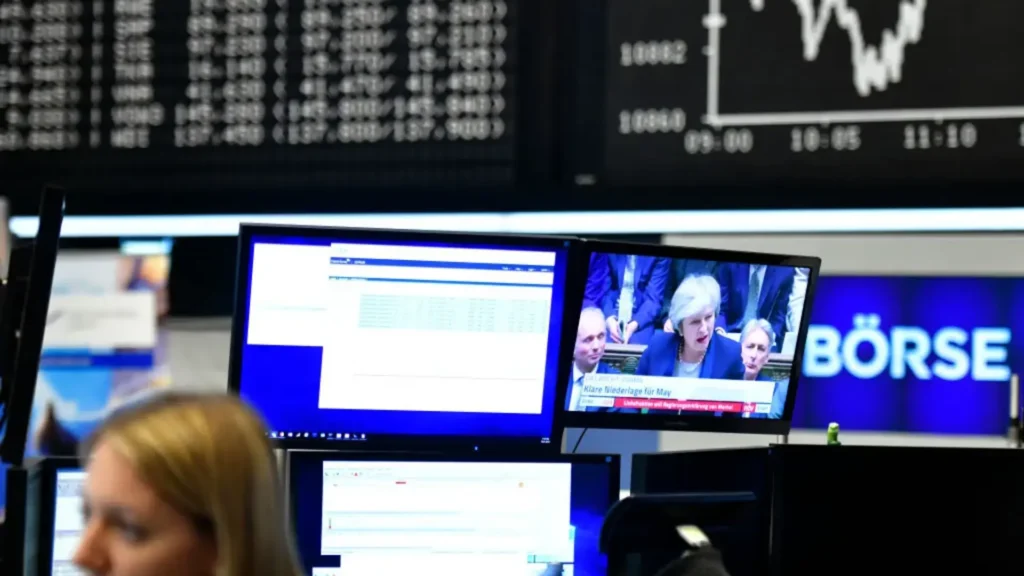
European stocks and gold outperform the S&P 500, boosted by rate-cut hopes and geopolitical optimism. | Credit: Thomas Lohnes/Getty Images
Share
Key Takeaways
The Stoxx 600 has outperformed the S&P 500 in 2024, defying economic and political headwinds.
Goldman Sachs raised its gold price forecast to $3,100 per ounce by the end of 2025, citing strong central bank demand.
Cryptocurrencies remain volatile, struggling to find clear direction amid shifting market conditions.
Despite geopolitical tensions and economic uncertainty, European stocks and gold have emerged as resilient winners in 2025, brushing off concerns over U.S. tariffs.
The Stoxx 600 has outpaced the S&P 500, a rare occurrence, while Goldman Sachs has sharply raised its gold forecast, citing continued central bank buying.
Meanwhile, cryptocurrencies remain in limbo. While Bitcoin initially reacted to tariff threats, it has since stabilized, with analysts debating whether it can serve as a hedge in a volatile global economy.
The rally has extended into February, with the European index climbing 3.3%, compared to the S&P 500’s more modest 1.3% rise.
Analysts attribute the gains to growing expectations of interest rate cuts by European central banks, easing inflation fears, and optimism over geopolitical developments, including potential progress toward a Ukraine ceasefire.
Positive corporate earnings revisions have also bolstered sentiment, with European earnings exceeding seasonal expectations.
However, some strategists warn that the rally may not last, as European stocks have historically struggled to sustain annual outperformance against U.S. equities.
While diversification flows and a shift away from U.S. tech dominance have fueled Europe’s momentum, weaker economic data and structural challenges could eventually cap further gains.
Gold Marches Toward $3,100 as Goldman Sachs Raises Forecast
Goldman Sachs now expects gold to reach $3,100 per ounce by the end of 2025, raising its forecast from $2,890.
The bank cited sustained central bank demand as a key driver, estimating that continued purchases could push prices as high as $3,300 if policy uncertainty persists.
Goldman also increased its estimate for central bank gold buying to 50 tonnes per month, with the potential for gold to hit $3,200 if purchases accelerate to 70 tonnes per month.
The firm reaffirmed its “Go for Gold” recommendation, seeing the metal as a hedge against trade tensions, recession risks, and U.S. fiscal instability.
Crypto In Limbo
While European stocks and gold have surged, cryptocurrencies remain in flux.
Bitcoin initially dipped when former President Donald Trump threatened tariffs on Mexico, Canada, China, and the EU.
However, crypto markets have since decoupled from trade policy concerns, responding more to broader economic conditions.
Cryptocurrencies now play a significant role in global finance, with over 580 million users worldwide.
However, Bitcoin’s classification as a commodity in multiple jurisdictions, including the U.S., means that potential trade restrictions could still impact the market.
James Butterfill, head of research at CoinShares, noted that while tariffs might initially hurt Bitcoin by slowing economic growth and increasing inflation fears, the long-term impact is less clear. If stagflation takes hold in the U.S., Bitcoin could eventually benefit as investors seek alternative stores of value.
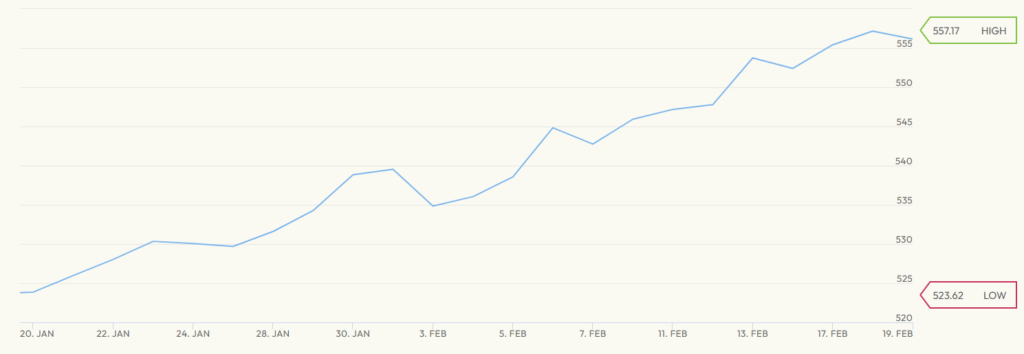
Bitcoin price dropped by 10% over the last month. | Credit: CoinMarketCap
Bitcoin has lost 10% over the past month, a decline attributed to factors beyond trade policy, including renewed inflation concerns and profit-taking by retail investors.
Unlike altcoins, which often behave like high-risk tech stocks, Bitcoin is increasingly seen as digital gold—a potential hedge against financial instability.
However, whether it can mirror gold’s resilience in times of crisis remains an open question.
Giuseppe Ciccomascolo began his career as an investigative journalist in Italy, where he contributed to both local and national newspapers, focusing on various financial sectors.
Upon relocating to London, he worked as an analyst for Fitch's CapitalStructure and later as a Senior Reporter for Alliance News. In 2017, Giuseppe transitioned to covering cryptocurrency-related news, producing documentaries and articles on Bitcoin and other emerging digital currencies. He also played a pivotal role in establishing the academy for a cryptocurrency exchange website. Crypto remained his primary area of interest throughout his tenure as a writer for ThirdFloor.