Key Takeaways
- X (formerly Twitter) uncovered a bribery network designed to reinstate accounts previously suspended for crypto scams.
- Banned accounts retain value because of their audience, trust, and potential profitability.
- Cryptocurrency payments, often laundered through mixers, provide scammers with anonymity and irreversible transactions.
- As platforms tighten defenses, criminals adapt, and new exploits or insider threats emerge when loopholes are patched.
In September 2025, X, the platform once known as Twitter, revealed something startling. Its Global Government Affairs team announced it had uncovered a bribery network designed to reinstate accounts previously suspended for crypto scams and platform manipulation.
According to the company, intermediaries approached employees with offers on behalf of scammers whose accounts had been banned. While X did not confirm whether any bribes were accepted, the revelations underscored a growing challenge: cybercriminals are willing to go to great lengths — even corrupting insiders — to keep their operations alive.
This case study tells the story of the bribery scandal, situating it within the broader fight against crypto scams. It explains the role of organized crime groups like The Com and outlines the lessons for companies, regulators, and users.
How Bribery and Fraud Keep Crypto Scammers Alive on Social Platforms
The bribery revelations came during a year already defined by record-breaking losses. By mid-2025, crypto-related phishing scams and fraud had cost users more than $2.1 billion globally.
X, one of the most influential crypto discussion and promotion platforms, had long been a prime target.
In late 2024, the company reported suspending over 335 million abusive accounts, an astonishing figure highlighting the problem’s scale and the scammers’ persistence.
A suspended account is a major setback for scammers. But for platforms like X, suspensions are only meaningful if they stick. The bribery network exposed in September revealed that some scammers were exploring a new path: repurchasing their way in.
X Confronts Bribery Network: Crypto Scammers Tried to Buy Their Way Back
On Sept. 19, 2025, X’s Global Government Affairs account posted a blunt statement:
“X has exposed and is taking strong action against a bribery network targeting our platform. Suspended accounts involved in crypto scams and platform manipulation paid middlemen to attempt to bribe employees to reinstate their suspended accounts. Legal proceedings are underway against participants, and we fully support law enforcement. Our commitment to ensuring our platform’s integrity is absolute.”
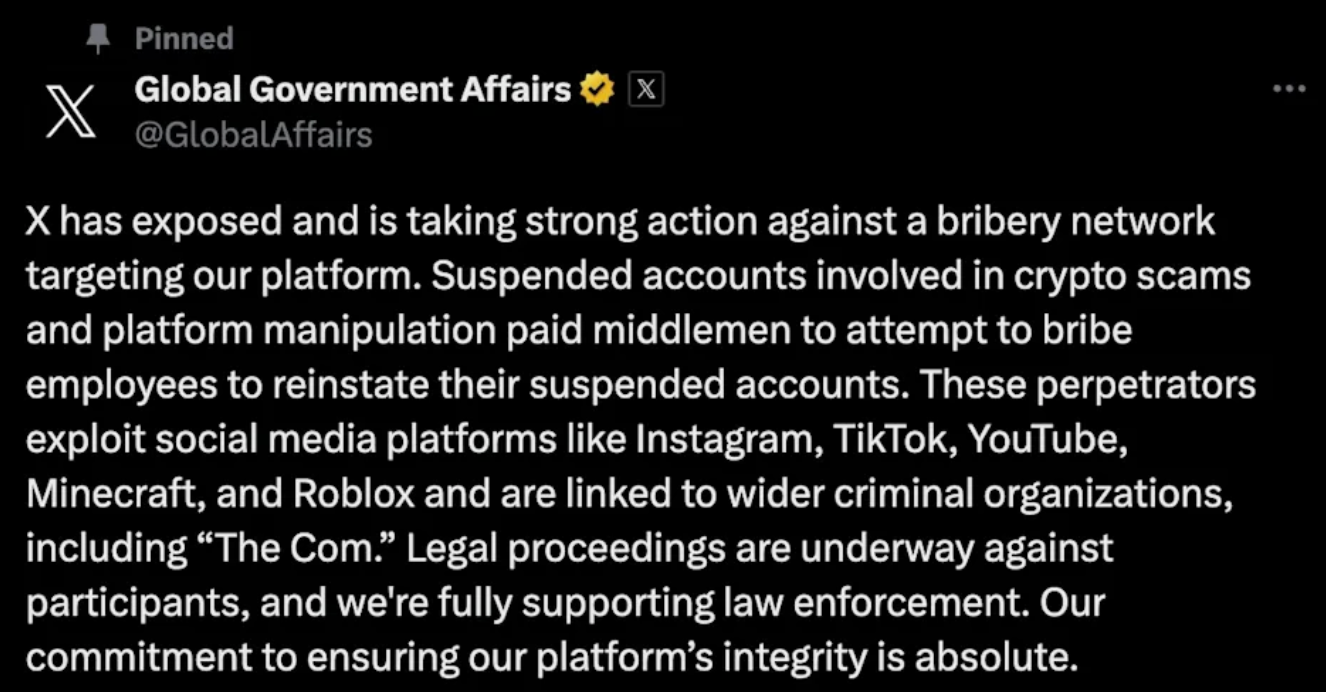
The statement also stressed two key points:
- The bribery scheme operated through middlemen, suggesting a coordinated and organized network.
- The same actors also targeted other platforms, including Instagram, TikTok, YouTube, Minecraft, and Roblox.
By naming multiple platforms, X signaled that this was not an isolated issue but part of a broader criminal ecosystem.
Inside the Scheme: How Scammers Used Crypto Bribes to Bypass Suspensions
While the company did not share full technical details, investigators and cybersecurity analysts described the mechanics of the scheme:
- Target Selection: Scammers identified employees or contractors with elevated admin access, the ability to restore suspended accounts, reset login details, or override moderation decisions.
- Intermediaries: Rather than approaching employees directly, scammers used brokers or “fixers” to reach out, adding deniability layers.
- Payment Method: Bribes were offered in cryptocurrency, often routed through mixers to obscure transaction origins. Crypto allowed for cross-border, irreversible transfers, which is ideal for illicit arrangements.
- Objective: The goal was simple: reactivate suspended accounts with large followings that could be exploited for phishing, fake token promotions, or coordinated spam.
The Com: Global Cybercrime Network Behind Bribery and Crypto Scam
X’s probe linked the bribery scheme to a wider criminal ecosystem known as The Com. Law enforcement has described The Com as an international community of hackers and cybercriminals, responsible for a spectrum of online offenses.
In July 2025, the FBI issued a public warning about one subgroup, Hacker Com, describing it as a technically skilled network engaged in:
- Phishing campaigns.
- SIM-swapping attacks.
- Ransomware operations.
- Large-scale cryptocurrency theft.
Remarkably, the FBI noted that many members are minors, drawn into the community through underground forums and social channels. Rivalries within The Com are fierce; disputes often erupt over stolen funds or reputation, with subgroups even targeting each other.
The common denominator is money, specifically cryptocurrency. Theft, extortion, and scams are often fueled by the goal of amassing digital assets, which can then finance further criminal activity.
Why Scammers Value Suspended Accounts
To understand why bribery made sense, consider the value of a large social media account.
- Audience: A suspended account may have tens of thousands of followers, built up over years. Reinstating it restores immediate reach.
- Trust: Followers may not notice that the account has been suspended, giving scammers an aura of legitimacy.
- Profitability: Even one fraudulent promotion can yield significant returns. For example, a phishing link disguised as an “airdrop” or “token presale” can drain wallets in minutes.
Paying a bribe is an investment. The scammer regains a valuable asset, while the insider risks detection for a potentially large payout.
Aftermath and Fallout: X Faces Scrutiny Amid Digital Wallet Ambitions
In its announcement, X emphasized that:
- Legal proceedings are underway against participants.
- The company is working closely with international law enforcement.
- Its enforcement measures will continue, with stronger safeguards against manipulation.
Notably, X did not say whether any employees had accepted bribes, a silence that leaves questions about how close scammers came to success.
The scandal landed at a sensitive moment. X is preparing to launch X Money, a digital wallet project in partnership with Visa. With regulators already concerned about the company’s role in online finance, the bribery revelations drew sharper scrutiny.
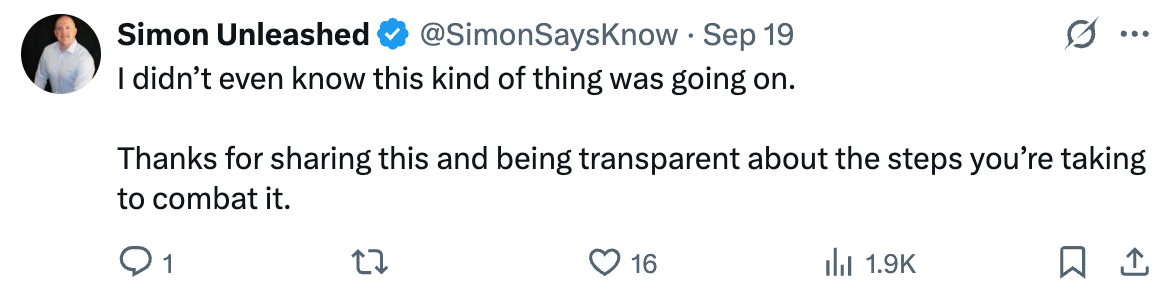
For users, the response was mixed. Many praised the company for exposing the scheme and cooperating with authorities. Others demanded greater transparency and proactive protection against manipulation.
Why Insider Threats Matter
This scandal is instructive because it illustrates the insider threat problem in digital organizations. Most security models focus on external attackers like hackers, malware,and phishing. However, insiders with privileged access can cause equal or greater harm.
Key Points:
- Access equals power: Employees with admin tools can override bans and controls.
- Motivation matters: Financial pressure, personal grievances, or greed can drive insiders to accept bribes.
- Crypto enables corruption: Pseudonymous, irreversible payments lower the risks for both sides.
- Detection is difficult: Suspicious reinstatements may look like ordinary customer service actions unless carefully monitored.
Lessons from X’s Bribery Scandal
Companies
- Limit the number of employees with sensitive admin privileges.
- Require multi-layer approvals for account reinstatements.
- Audit access logs regularly to detect anomalies.
Regulators
- Scrutinize platforms entering financial services for their security practices.
- Support cross-border investigations into organized groups like The Com.
- Encourage transparency reporting to improve accountability.
Users
- Treat reinstated accounts with caution.
- Never send crypto based on unsolicited promotions.
- Verify information through official channels, not just social media.
Linking Back to Cybercrime Trends
The bribery scheme is not an isolated case but part of a larger pattern: the professionalization of online crime. Groups like The Com operate like businesses, with hierarchies, intermediaries, and specialized roles.
The case also reflects the arms race between platforms and criminals:
- As platforms strengthen defenses, criminals evolve.
- When loopholes are exploited, platforms respond with patches.
- And when insiders are corrupted, new layers of control become essential.
This cycle is ongoing and shows no signs of slowing.
Looking Ahead: Integrity, Regulation and the Need for Collective Defense
For X, the bribery scandal is both a challenge and an opportunity. By exposing the scheme, the company has signaled its commitment to integrity. Yet its future ambitions will attract further scrutiny, especially with X Money.
Regulators, investors, and users want assurance that insider corruption cannot undermine financial services.
The scandal also highlights the importance of collaborative defense. Since the same actors targeted multiple platforms, companies may need to coordinate more closely and share intelligence on criminal networks.
Recommended Secure Partners
Conclusion
The X bribery scandal of 2025 demonstrates how far cybercriminals are willing to go. Unable to bypass suspensions, they tried to repurchase their way in — using cryptocurrency to grease the wheels.
The case underscores three truths:
- Insider threats are as dangerous as external ones.
- Cryptocurrency’s unique features make it a double-edged sword.
- Trust in digital platforms is fragile, and protecting it requires constant vigilance.
The lesson is clear for users, regulators, and platforms alike: integrity cannot be assumed; it must be safeguarded at every level.
FAQs
In September 2025, X revealed it had uncovered a bribery network where middlemen approached employees on behalf of crypto scammers. Their goal was to pay bribes to reinstate accounts previously suspended for scams and platform manipulation.
Suspended accounts often have large audiences and established trust. By regaining access, scammers could immediately exploit those accounts to promote fake tokens, phishing schemes, or coordinated spam — making them highly profitable.
X linked the scheme to a cybercriminal ecosystem known as “The Com”, which law enforcement agencies have tied to phishing, SIM-swapping, ransomware, and crypto theft. One subgroup, Hacker Com, has been on the FBI’s radar for its role in high-profile cyberattacks.
If scammers succeed in regaining banned accounts, users are more likely to be deceived by fraudulent posts. A reinstated account can look legitimate, increasing the risk of losing money to phishing links or fake “investment” opportunities.

Giuseppe Ciccomascolo began his career as an investigative journalist in Italy, where he contributed to both local and national newspapers, focusing on various financial sectors.
Upon relocating to London, he worked as an analyst for Fitch's CapitalStructure and later as a Senior Reporter for Alliance News. In 2017, Giuseppe transitioned to covering cryptocurrency-related news, producing documentaries and articles on Bitcoin and other emerging digital currencies. He also played a pivotal role in establishing the academy for a cryptocurrency exchange website. Crypto remained his primary area of interest throughout his tenure as a writer for ThirdFloor.


 Easy
Easy 















