Key Takeaways
- Taiko’s preconfirmations mark a breakthrough in tackling the blockchain trilemma of scalability, security, and decentralization.
- Users receive transaction assurances within two seconds thanks to preconfirmers who commit to block inclusion.
- The system began with whitelisted preconfirmers and will expand into a fully permissionless model where anyone can stake and participate.
- Key risks include ensuring that preconfirmation doesn’t get dominated by a few large players, and building sustainable profit models for preconfirmers.
The blockchain world has long wrestled with the trilemma: how to achieve scalability, security, and decentralization all at once.
Most solutions sacrifice one pillar to strengthen the others; faster systems often give up decentralization, while secure and decentralized ones struggle with speed.
Enter Taiko, a next-generation Ethereum layer-2 that refuses to compromise. Taiko relies directly on Ethereum’s own validators as a base rollup rather than centralized sequencers, preserving decentralization at its core. Its breakthrough lies in preconfirmations, a novel mechanism that delivers near-instant “soft confirmations” for transactions.
By allowing stake-backed actors called preconfirmers to guarantee inclusion of transactions (with penalties for failure), Taiko gives users feedback in about two seconds while inheriting Ethereum’s unmatched security.
In short, preconfirmations are the missing puzzle piece: a way to scale Ethereum rollups without abandoning the very principles that make blockchains trustworthy.
What Are Taiko’s Preconfirmations and Why They Matter
Taiko is a decentralized layer-2 ZK‑Rollup built as a Type 1 ZK‑EVM, designed for full Ethereum equivalence. It allows developers to deploy existing EVM‑based dApps seamlessly, preserving the core of Ethereum’s architecture, such as state trees, hash functions, and gas costs, without any modifications needed.
Taiko achieves scalability, security, and compatibility by employing a fully open, decentralized approach to sequencing and proving, with permissionless participation by design.
What Are Preconfirmations?
Preconfirmations are essentially “soft confirmations” issued by preconfirmers, specifically, stake-backed actors who monitor the mempool, pledge to include particular transactions in the next block, and face slashing penalties if they fail to do so.
This mechanism gives users a fast, trust-minimized assurance that their transactions will proceed, even before final on-chain settlement.
Why Preconfirmations Matter: Speed Meets Decentralization
- Near‑instant user feedback (2 Seconds): With preconfirmations, Taiko’s transactions now offer feedback within 2 to 3 seconds, a roughly 20–30× improvement over the traditional 12‑second block times inherited from Ethereum. This dramatically improves UX, particularly for DeFi, GameFi, and enterprise applications that require faster transaction responsiveness.
- Preserved Ethereum‑level decentralization: Unlike rollups that rely on centralized sequencers, Taiko leverages Ethereum’s own validator set as sequencers. Preconfirmations do not introduce new trust layers; instead, they layer a probabilistic, economically backed guarantee over an already secure and decentralized system. This keeps the system trust‑minimized while elevating performance.
Breaking the Trilemma: Scalability, Security & Decentralization via Taiko’s Preconfirmations
The blockchain trilemma is a well-known concept in blockchain design, first coined by Ethereum co-founder Vitalik Buterin. It states that public blockchains typically can only optimize two of the following three properties at the same time:
- Security: The ability of a network to resist attacks, malicious actors, and data tampering.
- Decentralization: The control is distributed across many participants, rather than concentrated in a single entity.
- Scalability: The capacity to process a high volume of transactions quickly and efficiently.
As you enhance one of these aspects, you often compromise one of the others. For instance, Bitcoin is highly secure and decentralized, but sacrifices scalability. On the other hand, networks that optimize for scalability, such as those relying on centralized infrastructure, might reduce decentralization or security
How Taiko’s Preconfirmations Reconcile the Trilemma
Taiko’s preconfirmations, soft confirmations issued by stake-backed preconfirmers who pledge to include your transaction and get slashed if they fail, deliver a powerful fusion:
| Property |
Traditional Rollups with Sequencers |
Taiko’s Preconfirmations |
| Scalability |
Moderate (based on block times and throughput) |
High — near-instant (2 sec) feedback |
| Security |
Depends on rollup design and trust in sequencer |
Inherits Ethereum’s security model |
| Decentralization |
Often centralized through sequencer control |
Fully decentralized; uses Ethereum validators |
- Scalability boost: Taiko’s preconfirmations drastically reduce user wait times by offering near-instant feedback, around 2 seconds, compared to Ethereum’s longer block times. This improvement is crucial for applications like DeFi or GameFi that require fast responsiveness.
- Security & decentralization preserved: Taiko relies on Ethereum’s own validator set rather than a centralized sequencer. That means it inherits the decentralized and secure infrastructure of Ethereum while eliminating trust bottlenecks.
Transforming Ethereum Rollups: The Impact of Taiko’s Preconfirmations
One of the biggest bottlenecks for Ethereum rollups has always been user experience. Waiting 12 seconds or more for a block confirmation might be acceptable for large transfers.
Still, it feels painfully slow in fast-moving environments like decentralized trading, on-chain gaming, or enterprise applications that demand real-time responsiveness.
Taiko’s preconfirmations change this equation. By enabling stake-backed actors to “preconfirm” a transaction’s inclusion in the next block, users get feedback in about two seconds—or even faster in some cases—without compromising decentralization or security.
As Reddit user jaxon_green1 explained:
“Preconfirmations are a game-changer for user experience on Ethereum’s L2s, and Taiko is rolling this out soon… When you submit a transaction on Taiko, the proposer quickly checks and ‘preconfirms’ it, promising it’ll be included in the next block. This happens in about 100ms, much faster than waiting for full Ethereum confirmation.”
Another user, neo101b, described the experience even more directly:
“Preconfirmation allows instant transactions, no waiting for anything to confirm. As soon as you hit the send button, it’s all done. It potentially achieves sub-second UX while preserving the core principles of decentralization and security.”
For DeFi traders, this means faster swaps and reduced slippage. Furthermore, for GameFi, it means seamless in-game economies where transactions feel as smooth as traditional web apps.
For enterprises, it unlocks the potential for blockchain-based settlement systems that don’t sacrifice speed for security.
Taiko’s preconfirmations bridge the gap between Layer-2 performance and Layer-1 trust, bringing Ethereum rollups closer to the holy grail of instant, decentralized finance.
Taiko’s Phase-by-Phase Rollout: From Permissioned to Permissionless
Phase 1: Whitelisted Preconfirmers (August 11–13, 2025)
- Overview: In mid-August 2025, Taiko launched the first phase of preconfirmations on Ethereum mainnet. During this stage, only a whitelisted set of preconfirmers were allowed to participate.
- Performance impact: This setup enabled near-instant transaction confirmations, providing feedback in about 2 seconds, a massive improvement compared to Ethereum’s 12-second block times.
- Why permissioned first? Starting with a controlled, whitelist-based rollout allowed the Taiko team to test, monitor, and refine the system before scaling it to the wider community.
Phase 2: Transition to Permissionless Participation (Upcoming)
- Overview: The next step is to open preconfirmation participation to anyone. In this phase, the role of preconfirmer will no longer be limited to selected participants, anyone will be able to join by staking and providing transaction guarantees.
- Vision for Taiko: This change will make Taiko fully permissionless, in line with Ethereum’s ethos of decentralization. By eliminating gatekeeping, Taiko ensures that its rollup ecosystem remains open, trust-minimized, and accessible.
- Current status: While no specific timeline has been announced for Phase 2, the transition is a cornerstone of Taiko’s roadmap, signaling its long-term commitment to decentralization.
| Phase |
Timeline |
Participants |
Outcome |
| Phase 1 |
August 11–13, 2025 |
Whitelisted preconfirmers only |
2-second confirmations; tested performance in a controlled environment |
| Phase 2 |
Upcoming (TBD) |
Open to anyone (permissionless) |
Full decentralization, anyone can preconfirm, fulfilling Taiko’s long-term goal |
Behind the Scenes: Collaboration Driving Taiko’s Preconfirmation Innovations
Taiko’s preconfirmation breakthrough didn’t happen in isolation—it was the product of deep collaboration between some of the most respected teams in the Ethereum ecosystem. Each brought a crucial piece of expertise to make preconfirmations both secure and practical:
- Chainbound: Focused on the research and design foundations, Chainbound played a central role in stress-testing the preconfirmation model. Their reviews ensured that economic incentives, slashing conditions, and protocol logic were robust enough to withstand real-world usage without compromising Ethereum-level security.
- Gattaca: Led the charge on testing and the early implementation of the preconfirmer role. By building and trialing the initial systems, Gattaca helped validate that the preconfirmation process could deliver near-instant UX without undermining decentralization, laying the groundwork for the mainnet debut.
- Nethermind: Contributed critical infrastructure support, particularly around protocol upgrades and proving systems. Their experience in Ethereum client development ensured Taiko’s proving architecture and block proposal mechanisms could scale in line with the ambitious goals of preconfirmations.
Together, these collaborators brought research depth, engineering execution, and protocol-level expertise—making Taiko’s vision of secure, decentralized, and lightning-fast rollups a reality.
Technical Enhancements Enabling Taiko’s Preconfirmations
The rollout of preconfirmations has been supported by major protocol improvements introduced in Taiko’s Pacaya release. These upgrades lay the groundwork for faster, more efficient, and more secure rollup operations:
- Batch block proposals for efficiency: Instead of submitting blocks one at a time, Pacaya enables proposers to submit blocks in batches. This reduces overhead, streamlines sequencing, and improves throughput without sacrificing decentralization.
- Simplified proving architecture: The more complex proving setup has been replaced by a single multiprover contract, consolidating logic and reducing potential bottlenecks. This makes the proving process faster, easier to maintain, and more scalable as participation expands.
- Faster withdrawals: Withdrawal proving windows have been shortened to just two hours, dramatically improving capital efficiency for users who need quick access to their funds without waiting days for final settlement.
- Expanded asset support: Pacaya introduces support for ERC-20 solvers and Ether as proving bonds. This flexibility lowers barriers to entry for participants, diversifies collateral options, and ensures the proving system is aligned with Ethereum-native assets.
“Developers Rethink What’s Possible On-Chain” — Taiko’s Director of Engineering
“With our Phase 1 preconfirmations delivering transaction times of approximately 2 seconds while we work toward complete decentralization, we’re seeing developers fundamentally rethink what’s possible on-chain,” Taiko’s director of engineering, Gustavo Gonzalez, told CCN.
“From a developer’s perspective, preconfirmations enable new application categories that were previously impossible on decentralized infrastructure.”
According to Gonzalez, DeFi protocols are reaching out about building strategies that were simply impossible before: real-time market making, cross-DEX arbitrage with guaranteed execution, and complex multi-step transactions that need precise timing. Gaming teams are even more excited because they can now implement mechanics that feel as responsive as traditional games.
“From the user’s perspective, the transition to Based Preconfirmation is frictionless. It operates out-of-the-box with common wallets and development environments (e.g., OKX, Binance, Metamask) without requiring any additional configuration. Users stop second-guessing their transactions and start treating blockchain apps like normal applications. We’re seeing engagement rates improve across our ecosystem because the friction that made people hesitant to interact with DeFi or gaming dApps is disappearing,” he added.
In its next phase of preconfirmations, Taiko will transition to a fully permissionless model after EIP-7917 is implemented as part of the Ethereum Fuksa upgrade. This upgrade provides Taiko with access to the lookahead functionality, which is a requirement for us to decentralize preconfirmations beyond the current permissioned whitelist.
“To maintain security during this transition, we’re building a comprehensive architecture that includes proper slashing mechanisms for validators who fail to honor their preconfirmation commitments, multiple fallback systems if individual preconfers go offline, and economic incentives that attract quality validators while deterring bad actors. Proposers will register through a registry contract by staking collateral (can be TAIKO or ETH), creating accountability without being prohibitively expensive for honest participants,” Gonzalez said.
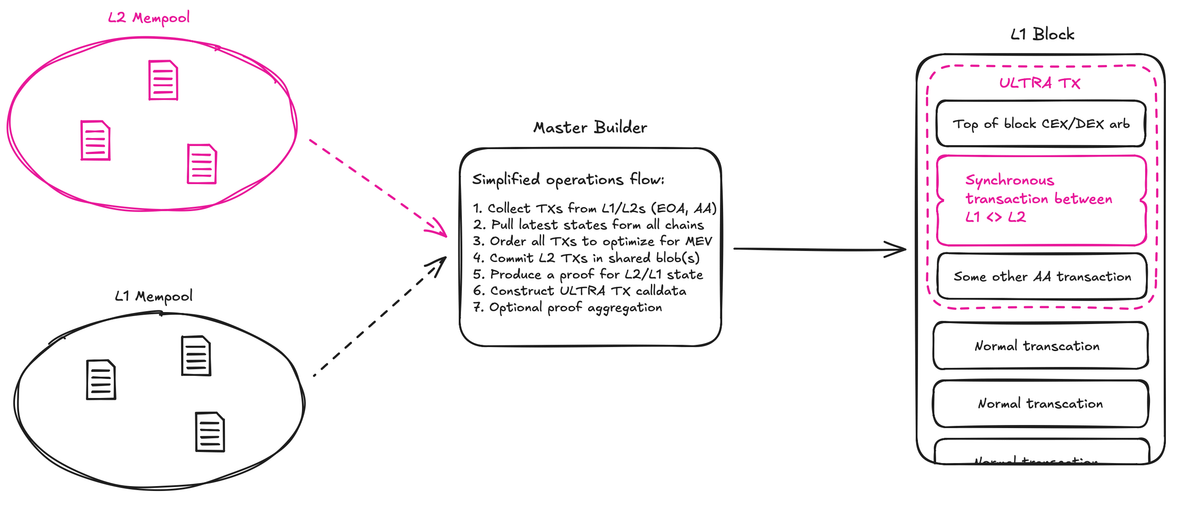
With preconfirmations, a proposer can be certain that they will be able to batch transactions for a certain number of slots, allowing them to aggregate more before submitting to the L1. Not to mention, better UX will increase activity, allowing costs to be spread among more transactions.
The data costs to Ethereum have already materially dropped since we started implementing these optimizations.
“On top of this, we are working on a new protocol design that will make proposing substantially cheaper and more efficient, dropping costs for preconfers significantly and ultimately for users.”
L2 Ecosystem Vast But Fragmented
According to Taiko’s director of engineering, the current L2 ecosystem is vast but also fragmented. Each rollup is like a silo, as apps deployed to one may not exist on another. User balances and smart wallets are isolated, and bridging between rollups is slow, costly, and often relies on centralized liquidity providers. This is exactly the problem our booster rollup architecture is designed to solve.
“What gets me excited is the composability unlock. Under the current architecture, lack of coordination between L1 block proposers and L2 sequencers restricts atomic execution across layers, limiting both user experience and protocol composability. Our based preconfirmation model changes this completely. Booster rollups would unlock synchronous composability across shards, making it feasible to construct transactions that span multiple L2s and L1 in a single operation,” Gonzalez told CCN.
“Our goal is to bring L1 preconfirmations to market by 2025, and we’re building infrastructure that benefits the entire ecosystem. Because all contracts and assets originate from L1, there’s no need for wrapped tokens or third-party bridges, reducing attack surfaces and increasing security through code and state uniformity.”
For Gonzalez, DeFi applications a logical starting point because latency directly impacts profitability. Execution preconfirmations provide a stronger guarantee and ensure a transaction’s exact execution ordering and state before L1 inclusion. Transactions are executed immediately in L2 based on the preconfirmed state.
This benefits arbitrageurs, DEX aggregators, and sophisticated trading strategies that require guaranteed execution and precise ordering.
“We’re seeing interest in lending protocols that can offer instant liquidations and cross-chain bridges where fast finality creates much better user experiences,” he said.
“Gaming represents significant potential. Execution preconfirmations reduce uncertainty, making applications more responsive while preserving Ethereum’s security model. Real-time strategy games, trading card games, and MMOs can now offer experiences that feel closer to traditional games.”
“As the first based rollup with this capability, we’re positioned to work with applications that require performance and credible neutrality(no counterparty risk). Enterprise use cases like supply chain tracking and IoT integrations can finally build on blockchain infrastructure that meets their performance needs while maintaining the transparency and security that only decentralized systems provide,” Gonzalez concluded.
Challenges Ahead: Scaling, Centralization Risks, and Profit Models
While Taiko’s preconfirmations represent a major breakthrough in Ethereum rollup design, the model is not without challenges. For Taiko to scale sustainably and remain aligned with Ethereum’s ethos, several risks must be addressed.
1. Risk of Centralized Preconfirmers
In the early stages, participation is restricted to a handful of whitelisted preconfirmers. If this structure persists, or if only a few actors dominate when the system becomes permissionless, Taiko risks replicating the same centralization problem it aims to solve.
Ensuring a broad, diverse set of preconfirmers is crucial to prevent concentration of power and censorship risks.
2. Necessity of Fair Profit Models
Preconfirmers are economically incentivized to provide soft confirmations by staking collateral and earning rewards. For the system to scale, there must be a robust and fair profit model that:
- Adequately compensates preconfirmers for risk and operational costs.
- Prevents monopolization by large players with deeper resources.
- Ensures long-term sustainability without creating excessive transaction fees for users.
Striking this balance is critical; too little incentive could discourage participation, while too much could centralize the role in the hands of a few.
3. Technical and Governance Hurdles in the Permissionless Transition
Moving from a controlled whitelist model to a fully permissionless ecosystem will not be simple. Challenges include:
- Technical: Building infrastructure that can safely handle thousands of preconfirmers while avoiding bottlenecks.
- Economic: Designing slashing and reward mechanisms that scale fairly and deter malicious actors.
- Governance: Managing upgrades, disputes, and changes in a decentralized manner without relying on centralized coordination.
Conclusion
Taiko’s preconfirmations represent one of the most significant steps forward in Ethereum rollup design to date. By combining near-instant transaction assurances with Ethereum’s base-layer security and decentralization, Taiko addresses the blockchain trilemma in a way that few projects have dared to attempt.
Challenges remain—particularly in ensuring broad participation, sustainable incentives, and a smooth transition to permissionless operation—but the foundation is clear. If Taiko succeeds in scaling preconfirmations while avoiding centralization risks, it could set a new standard for Ethereum rollups, redefining what’s possible for DeFi, GameFi, and enterprise adoption alike.
Taiko is showing that speed, security, and decentralization no longer need to be trade-offs—they can coexist.
FAQs
Taiko’s preconfirmations replace centralized sequencers with stake-backed preconfirmers who guarantee transaction inclusion. This reduces censorship risks, improves decentralization, and delivers near-instant user feedback (2 seconds), something traditional rollups often struggle to provide.
Yes, Taiko’s preconfirmations help balance scalability, security, and decentralization by combining Ethereum-level security with decentralized participation and faster transaction confirmations. While challenges remain, preconfirmations are a major step toward overcoming the blockchain trilemma.
The main risks include potential centralization if only a few preconfirmers dominate, economic sustainability of the preconfirmer profit model, and technical challenges in fully transitioning to a permissionless system. However, penalties for misbehavior and ongoing protocol upgrades help mitigate these risks.
Taiko is currently in a phased rollout. Phase 1 uses whitelisted preconfirmers, but in Phase 2 the network plans to open preconfirmation participation to anyone, making the system fully permissionless and aligned with Ethereum’s decentralized ethos.
The information provided in this article is for informational purposes only. It is not intended to be, nor should it be construed as, financial advice. We do not make any warranties regarding the completeness, reliability, or accuracy of this information. All investments involve risk, and past performance does not guarantee future results. We recommend consulting a financial advisor before making any investment decisions.

Giuseppe Ciccomascolo began his career as an investigative journalist in Italy, where he contributed to both local and national newspapers, focusing on various financial sectors.
Upon relocating to London, he worked as an analyst for Fitch's CapitalStructure and later as a Senior Reporter for Alliance News. In 2017, Giuseppe transitioned to covering cryptocurrency-related news, producing documentaries and articles on Bitcoin and other emerging digital currencies. He also played a pivotal role in establishing the academy for a cryptocurrency exchange website. Crypto remained his primary area of interest throughout his tenure as a writer for ThirdFloor.


 Easy
Easy