Dogecoin ETF (DOJE) Launch Guide: Key Dates, How to Buy and Key Risks.
Share
Key Takeaways
DOGE offers fast, low-fee transfers, its typical first confirmation comes in about 1 minute.
Charities and gig platforms use DOGE for rapid cross-border settlements.
IoT and DeFi integrations could expand DOGE’s role beyond peer-to-peer transfers.
Institutional adoption depends on ETF inclusion and regulatory clarity.
Dogecoin launched on December 6, 2013, as a meme-inspired cryptocurrency based on Litecoin’s codebase. By 2025, it operates using a proof-of-work consensus mechanism and has evolved into a fast, low-cost payment network supported by one of the most active online communities in the digital asset sector.
Once considered a novelty, DOGE now powers transactions in retail, entertainment, charity and emerging machine-to-machine economies. A machine-to-machine economy is when devices, sensors or software agents trade value or services with each other automatically, without humans initiating every transaction.
Beyond its grassroots use cases, Dogecoin is gaining attention in institutional circles and finding pathways into advanced blockchain integrations, signaling its growing relevance in both consumer and enterprise applications.
How Dogecoin Powers Everyday Purchases
Fast, low-cost transactions have made DOGE an alternative option for everyday purchases.
Top Crypto Mining Sites
Sponsored
Disclosure
We sometimes use affiliate links in our content, when clicking on those we might receive a commission at no extra cost to you. By using this website you agree to our terms and conditions and privacy policy.
Quick confirmation times: Transactions clear within minutes, supporting in-store and online retail.
Ultra-low fees: Typically well under a cent, though network congestion or exchange withdrawal fees can sometimes make them higher.
Wide integration: Accepted through major payment processors at online stores and physical outlets.
Lower risk for merchants: Reduced chargebacks and faster settlement than traditional payment rails.
Global reach: Payment processors like BitPay and CoinPayments enable DOGE transactions at supported point-of-sale systems, though merchant adoption remains smaller than that of Bitcoin or stablecoins.
From speculative asset to point-of-sale reality, DOGE’s presence in retail sets the stage for a role in microtransactions and other fast-paced payment environments.Here are two examples:
AMC Theatres: Accepts Dogecoin for tickets and concessions via BitPay, both online and at participating locations.
Newegg: Processes DOGE payments for electronics and hardware through BitPay at checkout.
Dogecoin’s Role in Microtransactions for Digital Content and Services
Low transaction fees allow Dogecoin to support microtransactions that are impractical through conventional banking systems.
Platforms offering pay-per-view content, in-game purchases or per-minute service billing use DOGE for instant, low-cost payments.
Gaming environments have been early adopters, integrating Dogecoin for purchasing digital items or tipping streamers.
Streaming services also utilize DOGE for direct audience-to-creator transfers, creating a frictionless revenue channel that bypasses ad networks and high-fee intermediaries.
Some examples include:
Twitch via third-party tipping bots: Viewers send DOGE directly to streamers through integrations like Streamlabs or TwitchAlerts that support crypto.
Reddit Community Points + DOGE tipping bots: Certain Reddit communities run DOGE-based tipping scripts where posts and comments earn small amounts of DOGE tips.
MCP3D / Minecraft servers: Some independent Minecraft server operators accept DOGE for in-game purchases like skins, land plots, or VIP memberships.
X creator tipping: DOGE is integrated through external payment processors and lets audiences tip creators directly inside the platform. Using @myDOGEtip.
Odysee / LBRY video platform: While primarily LBRY Credits-based, some channels accept DOGE for premium content unlocks.
How Dogecoin Powers Real-Time Tipping and Global Social Engagement
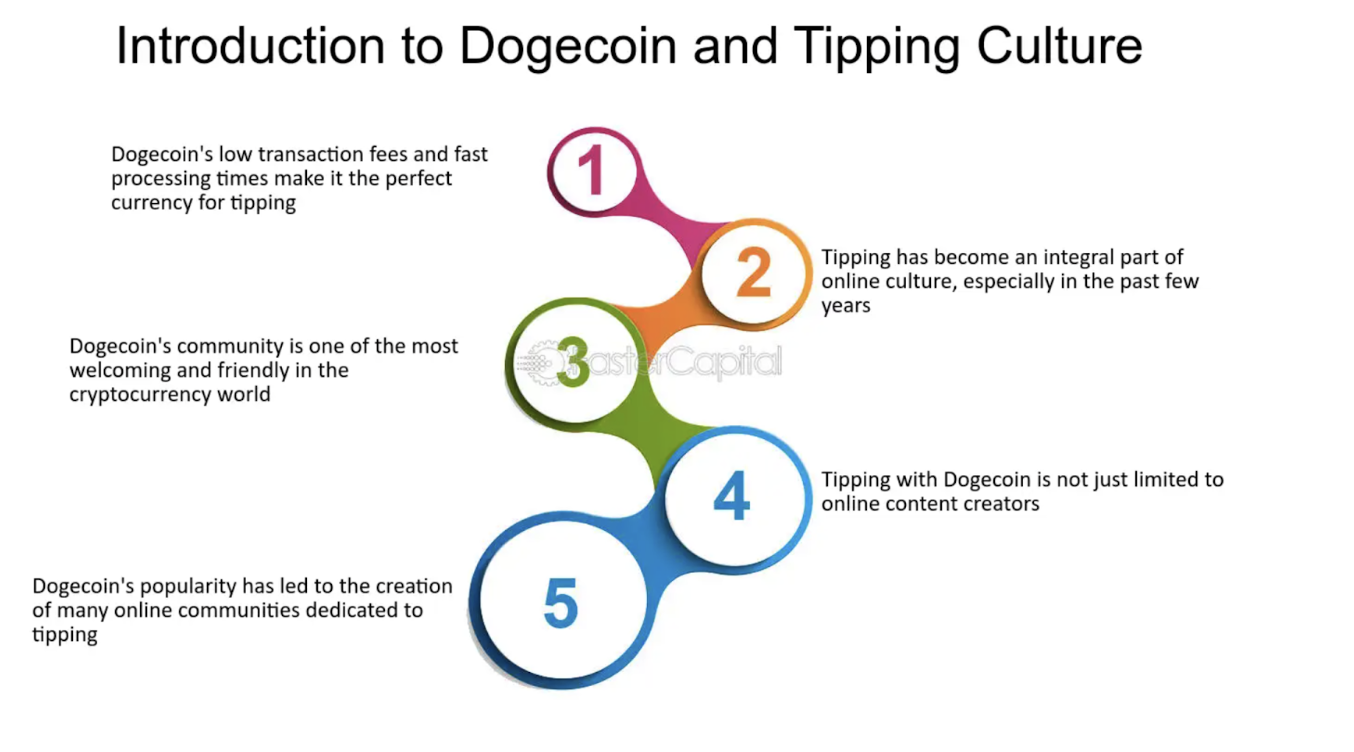
Tipping has been core to Dogecoin since its early days and in 2025 continues via social media integrations. On platforms like X (formerly Twitter) and Reddit, third-party bots, such as @MyDOGEtip enable instant DOGE transfers to creators.
Dogecoin tipping. | Source: fastercapital.com
These are not native features, but work through external payment processors, maintaining Dogecoin’s role in fast, borderless appreciation for content.
This direct creator support model works across borders without currency conversion delays, making DOGE a preferred token for global social engagement.
The speed of transfers also supports interactive live events, where viewers send DOGE tips in real time to trigger responses, unlock content or contribute to group funding goals.
From Memes to Meaning: How Dogecoin Fuels Charitable Giving
Low-cost, fast-settlement donations in DOGE are powering real-world impact across communities and causes.
Well-building in Kenya (Doge4Water): The Dogecoin Foundation teamed up with Doge4Water in 2014 to fund wells near Kenya’s Tana River. Over 4,000 contributors donated DOGE, raising more than $30,000 in value, including a single anonymous donation of 14 million DOGE ($11,000 at the time).
Jamaican Bobsled Team fundraiser: In early 2014, the community raised over $25,000 worth of Dogecoin to help send the team to the Sochi Winter Olympics.
Crypto-friendly fundraising platforms (The Giving Block): The Water Project has accepted DOGE donations for years using The Giving Block, enabling transparent funding of water initiatives in Africa.
Nonprofit crypto tools (Every.org): Platforms like Every.org simplify DOGE donations by handling legal compliance, wallet management, and immediate conversion to cash grants, no coding or tax complexity needed.
Source: Every.org
Dogecoin Payments in the Freelance and Gig Economy
Some freelance and microtask platforms support Dogecoin for faster payouts. Some services match independent workers with employers offering payment in DOGE, demonstrating real-world adoption.
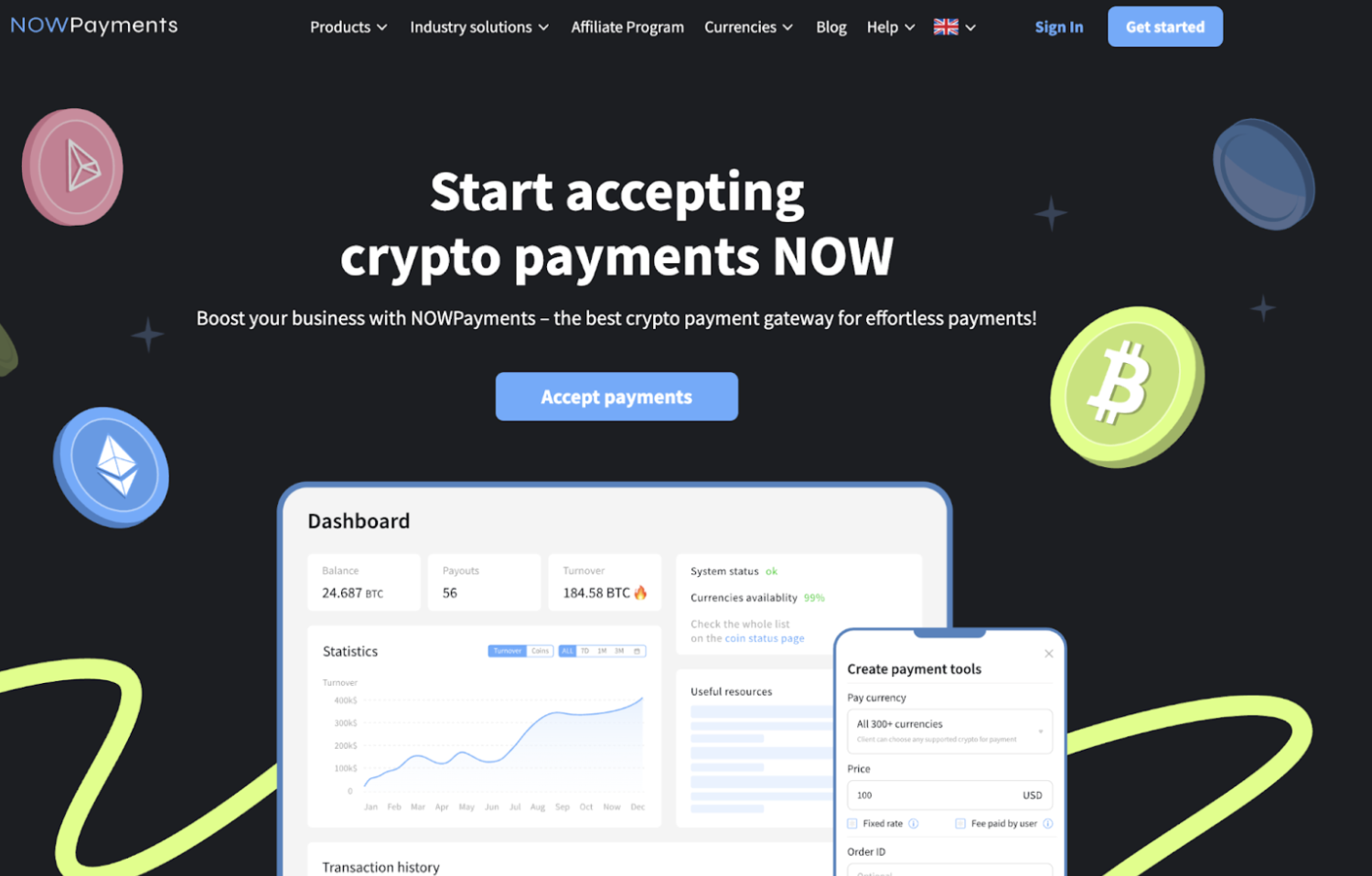
Source: NowPayments
NOWPayments enables freelancers to send invoices and receive payments in cryptocurrencies such as DOGE through automated systems. It’s used across various freelance and Web3 platforms.
Although still niche, these integrations make DOGE a viable payment method for certain gig-economy participants.
Source: coinremitter
Dogecoin in the Internet of Things and Automated Payments
Dogecoin’s low fees and 1-minute block times make it technically suitable for automated microtransactions within the Internet of Things (IoT). In theory, connected devices could use DOGE to purchase bandwidth, pay for energy consumption or exchange data with minimal cost and latency.
At present, most DOGE–IoT integrations remain in the testing or pilot stage rather than in large-scale production. Here are a few concrete pilot examples worth watching:
Smart shipping payments: IoT-enabled containers equipped with sensors could autonomously trigger Dogecoin payments upon verified arrival, automating supply chain transactions.
Smart energy grids: Households with surplus solar energy could sell it directly to neighbors through DOGE microtransactions, enabling a decentralized microgrid payment model.
Why does it matter?
This illustrates the potential for autonomous, machine-driven payments using Dogecoin, removing manual intervention entirely. It reflects how IoT devices could perform both status checks and settle payments using DOGE’s fast, low-cost transactions.
How Dogecoin Enters DeFi through Cross-Chain Bridges and Wrapped Tokens
Although Dogecoin does not natively support smart contracts, cross-chain bridges and wrapped DOGE tokens (wDOGE) have connected it to Ethereum-compatible DeFi platforms. While wDOGE exists, such as on Ethereum, its liquidity and usage in DeFi remain limited compared to major wrapped assets like wBTC or wETH.
Wrapped DOGE contracts enable niche use as collateral in DeFi protocols, expanding its role beyond a payment token into yield generation and asset-backed borrowing.
Institutional Interest and Potential Fund Inclusion for Dogecoin
Following the approval of crypto spot exchange-traded funds starting with Bitcoin on January, 10 2024, market speculation has grown around the potential inclusion of DOGE in diversified digital asset funds.
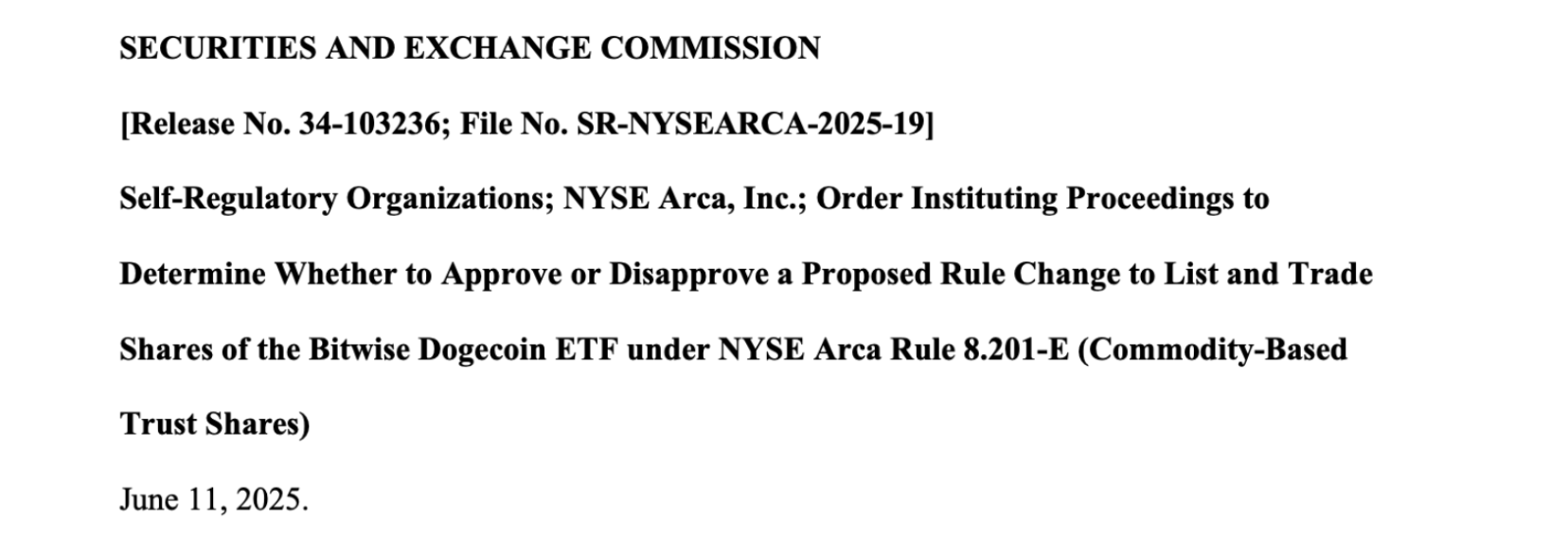
Grayscale made the first formal step on January 31, 2025, filing a Form 19b‑4 with the SEC to convert its newly launched Dogecoin Trust into a spot DOGE exchange-traded fund. The SEC formally acknowledged this action in mid-February, initiating its standard 240-day review clock, which suggests a decision could arrive in mid-to-late October 2025.
Other players in the space include:
Bitwise, which submitted its own ETF application in early 2025.
21Shares, filing an S‑1 in April and receiving acknowledgement in mid-May.
If approved, these ETFs could broaden institutional exposure to Dogecoin, increasing liquidity and validating it as a mainstream digital asset. However, final outcomes still hinge on regulatory clarity and whether the SEC grants approval to these proposed products.
Source: SEC
Moreover, BitOrigin’s recent $10 million acquisition of Dogecoin, buying 40.5 million DOGE as the first step toward a $500 million treasury strategy, has drawn attention from market analysts.
Technical indicators — including a breakout above long-term resistance and bullish RSI trends — are fueling speculation of a new DOGE cycle. Analysts like Trader Tardigrade (on X) suggest the setup could push prices to $1 or higher if momentum holds.
This institutional move signals growing confidence in DOGE’s utility and credibility. If regulatory clarity is achieved, especially around ETF approval, Dogecoin could gain deeper liquidity and appeal to broader investor categories.
Meme Meets Bureaucracy: The Truth Behind DOGE Governance
Efforts to enforce anti-money laundering and “know your customer” rules remain challenging due to DOGE’s informal and peer-to-peer nature.
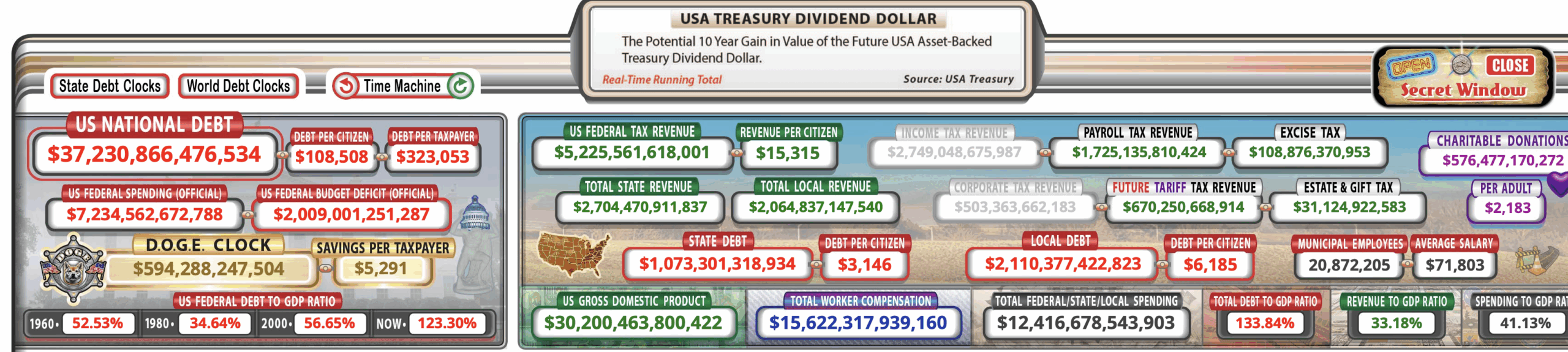
In popular lore, the Department of Government Efficiency (DOGE) was humorously linked to Elon Musk, as in, “DOGE” featuring the Dogecoin meme. In reality, the department is a small, cross-agency U.S. federal initiative tasked with streamlining bureaucratic processes and improving service delivery, not regulating cryptocurrency.
D.O.G.E Clock
Also, Musk’s actual involvement was temporary. He served briefly as a special government advisor, not a formal department head, and no longer leads the initiative.
Despite Musk’s departure, DOGE’s internal operations and advisory work continue within various federal agencies, though without formal leadership or transparent oversight. This highlights how Dogecoin’s cultural branding, amplified by Musk, can shape public perception even when it has little to do with the project’s real governance structure.
Key Risks and Barriers to Dogecoin’s Sustainable Adoption
Despite its popularity, several factors could hinder Dogecoin’s ability to achieve lasting adoption:
Regulatory ambiguity: Inconsistent global rules for meme coins could restrict use in specific markets.
Dogecoin powers retail purchases, microtransactions, tipping, charity donations, gig economy payments, IoT transactions, and DeFi participation via cross-chain bridges.
How is Dogecoin used in the gig economy?
Freelancers receive instant DOGE payouts upon task completion, avoiding banking delays and reducing cross-border transaction costs.
Can Dogecoin be used in DeFi even without native smart contracts?
Yes. Wrapped DOGE enables lending, liquidity mining, and collateral use on Ethereum-compatible DeFi platforms through cross-chain bridges.
What could drive institutional adoption of Dogecoin?
ETF inclusion, regulatory clarity, transaction efficiency, and strong brand recognition could attract more institutional investment.
Disclaimer:
The information provided in this article is for informational purposes only. It is not intended to be, nor should it be construed as, financial advice. We do not make any warranties regarding the completeness, reliability, or accuracy of this information. All investments involve risk, and past performance does not guarantee future results. We recommend consulting a financial advisor before making any investment decisions.
Andrew Kamsky is a chart analyst and writer with a background in economics and ACCA certification. He has held roles at a Big Four firm, a fintech bank, and a listed bank specializing in currency hedging. His work explores Bitcoin, macro trends, and market structure. Outside finance, he's passionate about music, travel, and neon design.


 Easy
Easy