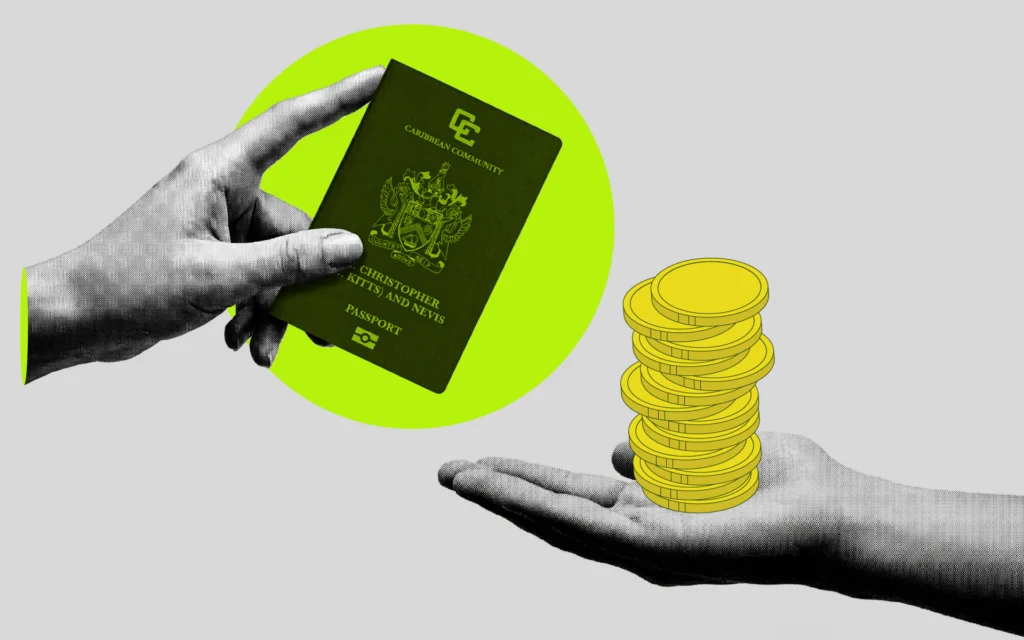
How Crypto Investors Can Apply for St Kitts & Nevis Citizenship in 2026
Share
Key Takeaways
St Kitts & Nevis recognizes cryptocurrency as a valid source of wealth, but applicants must convert Bitcoin or crypto into traditional currency and pass KYC checks.
Crypto investors can apply through government contribution, public benefit investment, or real estate investment.
The country has no personal income tax, capital gains tax, wealth tax, or inheritance tax.
St Kitts & Nevis citizenship can be processed in around 6–9 months and offers visa-free travel to 150+ countries.
St Kitts & Nevis has quietly become one of the most discussed Caribbean jurisdictions among crypto investors, Bitcoin entrepreneurs, and digital-asset founders. As cryptocurrency wealth grows globally, more investors are exploring second citizenship options that offer mobility, tax efficiency, and legal flexibility.
Unlike many traditional citizenship-by-investment programs, St Kitts & Nevis has begun adapting to crypto wealth. The government now accepts cryptocurrency as a partial source of wealth when applying for citizenship, although applicants must still provide traditional documentation and convert funds to fiat before completing investments.
At the same time, the country is seeing new crypto-focused projects, businesses, and regulatory frameworks emerge, positioning it as a growing destination for crypto-based investors.
This guide explains how crypto investors can apply for St Kitts & Nevis citizenship in 2026, including legal requirements, existing crypto businesses, real investor examples, and risks beginners should understand.
Why Crypto Investors Are Considering St Kitts & Nevis
Crypto wealth is reshaping investment migration. As Bitcoin adoption grows, investors are looking for jurisdictions that:
St Kitts & Nevis has gradually adapted to this trend. Authorities now accept cryptocurrency as part of the source-of-wealth verification for citizenship applications, although applicants must also provide additional financial proof not derived from crypto.
This policy shift reflects growing recognition that crypto wealth is becoming a legitimate asset class for high-net-worth individuals.
Interest is also rising globally. A 2025 crypto wealth report found 241,700 crypto millionaires worldwide, a 40% increase in one year, with many exploring citizenship and residency programs.
Caribbean jurisdictions like St Kitts & Nevis are increasingly targeting this new class of investors.
Crypto Regulation in St Kitts & Nevis
St Kitts & Nevis introduced the Virtual Asset Act (2020) to regulate cryptocurrency businesses operating from the jurisdiction. This law created a legal framework for:
Crypto exchanges
Digital asset service providers
Blockchain companies
Virtual asset businesses
The regulation outlines registration, compliance, and supervision requirements for crypto businesses.
This is important for investors because it means crypto operations are legally recognized rather than operating in a grey area.
The country has also introduced blockchain-verified due diligence for citizenship applications, demonstrating adoption of blockchain technologies within government processes.
These developments signal that St Kitts & Nevis is gradually integrating crypto into its financial and legal infrastructure.
Existing Crypto Businesses and Ecosystem
St Kitts & Nevis already has a growing crypto ecosystem. According to startup data, the country hosts around 72 cryptocurrency-related companies, including 16 funded startups raising approximately $37 million.
The Eastern Caribbean banking ecosystem is also adapting. For example, Bank of Nevis International supports institutional crypto trading with compliance-friendly reporting systems.
This banking infrastructure is critical for crypto investors seeking operational flexibility.
Real Example: Crypto Investor Building ‘Destiny’ in Nevis
One of the most notable crypto-related developments is the Destiny project, proposed by Belgian-born Bitcoin investor Olivier Janssens.
Janssens, who obtained citizenship through investment, plans to build a crypto-focused community on Nevis under new Special Sustainability Zone laws.
The project includes:
Crypto-friendly infrastructure
Tech-focused community
Renewable energy requirements
High-net-worth investor housing
The development could include 10,000 homes across 10 square kilometers, representing about 11% of the island.
The project has sparked debate locally, with some residents supporting economic growth while others raising concerns about governance and land use.
Regardless, the project highlights growing crypto investor interest in St Kitts & Nevis.
Step-by-Step: How Crypto Investors Can Apply
Crypto investors typically follow a structured process.
First, applicants must select an authorized agent. St Kitts & Nevis does not allow direct applications, meaning licensed intermediaries handle submissions.
Next, applicants prepare documentation. Crypto investors usually need:
Because cryptocurrency wealth can be complex, enhanced due diligence is often required.
After submission, the Citizenship by Investment Unit conducts background checks and compliance reviews.
If approved, applicants complete the investment and receive citizenship.
Processing typically takes 4–9 months, depending on documentation complexity.
Investment Routes Available in 2026
Crypto investors applying for St Kitts & Nevis citizenship in 2026 can choose between several structured investment pathways. These options are designed to support national development while offering investors a route to citizenship.
The most commonly used option is the Sustainable Island State Contribution (SISC), which requires a minimum contribution of $250,000 for a single applicant, with higher amounts depending on family size. This contribution is non-refundable and supports national development initiatives such as infrastructure, climate resilience, education, and economic diversification.
6/➢ St. Kitts & Nevis
Established program since 1984
Cryptocurrency accepted through verified agents
No taxes on income, wealth, or capital gains
Visit over 150 countries (including the EU, UK, and Singapore)
Another route is the Public Benefit Investment option, which also typically starts at $250,000 and funds approved public projects designed to create jobs and stimulate economic growth in the country. These projects often include tourism developments, infrastructure upgrades, or economic initiatives aimed at strengthening the country’s long-term economy.
For investors who prefer asset ownership, real estate investment remains another major pathway. Applicants can purchase government-approved developments starting at $325,000, or acquire private real estate valued at $600,000 or more. Real estate investments usually come with holding requirements — often around seven years — before resale is allowed under program rules.
Crypto investors typically convert Bitcoin or other digital assets into fiat currency before completing these investments. While St Kitts & Nevis now recognizes cryptocurrency as a valid source of wealth, payments themselves must still be made through regulated financial channels to comply with anti-money laundering requirements.
In 2026, total costs generally start around $275,000–$305,000 when government fees, due diligence costs, and legal expenses are included. These costs vary depending on family size and chosen investment route.
Tax Advantages for Crypto Investors
One of the biggest reasons crypto investors consider St Kitts & Nevis is its favorable tax environment. The country does not impose personal income tax, capital gains tax, inheritance tax, or wealth tax for residents, making it one of the more tax-friendly jurisdictions globally.
This structure can be particularly attractive to crypto investors because digital asset gains are often taxed heavily in other countries. In St Kitts & Nevis, there is no direct tax on cryptocurrency transactions or crypto trading profits, which has helped position the jurisdiction as a potential destination for digital asset investors.
Additionally, crypto investors may benefit from flexible residency requirements. St Kitts & Nevis citizenship does not require individuals to live permanently in the country, allowing investors to maintain global mobility while holding citizenship.
However, an important consideration is that tax obligations may still apply in the investor’s home country. Some countries tax global income regardless of residency or citizenship status. This means obtaining St Kitts & Nevis citizenship does not automatically eliminate tax obligations elsewhere.
Crypto investors should therefore consider tax residency rules, reporting obligations, and international compliance requirements before making decisions.
Risks Crypto Investors Should Understand
While St Kitts & Nevis citizenship offers advantages, there are also risks and considerations that crypto investors should evaluate carefully.
One major factor is that citizenship-by-investment programs evolve over time. Investment thresholds, documentation requirements, and processing timelines can change. For example, St Kitts & Nevis has already increased minimum investment levels and strengthened due diligence rules in recent years to improve program integrity.
International scrutiny is another important risk. The European Union has signaled that investor citizenship programs may pose security risks and could potentially lead to visa-free travel restrictions if standards are not strengthened.
Similarly, U.S. and EU authorities have raised concerns about Caribbean citizenship programs, prompting stricter due diligence and compliance requirements.
Crypto investors should also be aware that cryptocurrency wealth verification may involve enhanced due diligence. Authorities may require wallet history, exchange statements, and detailed proof of source of funds.
Another important consideration is tax residency. Simply obtaining citizenship does not automatically change tax residency. Investors may still be subject to taxation in their original jurisdictions unless residency requirements are formally changed.
These factors highlight why citizenship-by-investment should be viewed as a long-term strategic decision rather than a short-term financial move.
Why Interest Is Growing in 2026
Interest in St Kitts & Nevis citizenship is rising as crypto wealth expands globally. Investment migration analysts note that second citizenship is increasingly used to reduce geopolitical risk, improve mobility, and maintain global financial access.
At the same time, crypto-focused developments are beginning to appear in St Kitts & Nevis. One notable example is the Destiny project, led by Bitcoin investor Olivier Janssens. The proposed development aims to create a crypto-friendly community in Nevis under new Special Sustainability Zone laws.
Reports indicate the project could include thousands of homes and crypto-focused infrastructure, reflecting growing interest from digital asset investors.
The project has sparked debate locally, with some residents supporting economic growth while others raise concerns about governance and development scale.
Regardless of outcome, the project highlights a broader trend: crypto investors are increasingly exploring jurisdictions like St Kitts & Nevis for long-term development and relocation.
Emerging Crypto-Friendly Destination for Digital Asset Investors
St Kitts & Nevis is not yet a major crypto hub like Dubai, Singapore, or Switzerland. However, it is gradually becoming more relevant to crypto investors seeking second citizenship, tax flexibility, and global mobility.
With minimum investment routes starting around $250,000, favorable tax policies, and recognition of cryptocurrency wealth, the country offers a structured pathway for digital asset investors. At the same time, increased due diligence, international scrutiny, and evolving regulations highlight the importance of careful planning.
Interest from crypto entrepreneurs, investor-led developments, and expanding global crypto wealth suggest that St Kitts & Nevis may continue to gain attention in the investment migration space.
For crypto investors considering second citizenship in 2026, St Kitts & Nevis is increasingly becoming a jurisdiction worth watching — not as a mature crypto hub yet, but as an emerging destination shaped by the growth of digital asset wealth.
FAQs
How much does St Kitts & Nevis citizenship cost in 2026?
The minimum investment typically starts at $250,000 through the government contribution route. Real estate options start at $325,000, while total costs including fees usually range between $275,000 and $305,000 or more depending on family size.
Can crypto investors apply using Bitcoin?
Yes, crypto investors can use Bitcoin or other digital assets as proof of wealth, but payments must still be made in fiat currency after converting crypto. Additional due diligence may be required to verify the source of funds.
How long does it take to get citizenship?
Processing typically takes 6 to 9 months, depending on documentation, due diligence, and application complexity.
Are there risks to St Kitts & Nevis citizenship?
Yes. Citizenship-by-investment programs face international scrutiny, and rules or visa-free access could change over time. Authorities have already introduced stricter due diligence and reforms to strengthen credibility.
Disclaimer:
The information provided in this article is for informational purposes only. It is not intended to be, nor should it be construed as, financial advice. We do not make any warranties regarding the completeness, reliability, or accuracy of this information. All investments involve risk, and past performance does not guarantee future results. We recommend consulting a financial advisor before making any investment decisions.
She is a fintech writer based in Canada with an academic background in psychology and project management. She has previously contributed to crypto media platforms, including Cointelegraph. Her professional experience includes work as a relationship manager in the telecommunications industry, and her writing since 2020 has focused on digital assets, blockchain technology, and artificial intelligence, with attention to their interaction with traditional finance.


 Easy
Easy