Is WLFI at risk of further downside? | Credit: Hameem Sarwar
Share
Key Takeaways
WLFI’s price dropped sharply after a controversial $75 million loan raised fears of liquidation risk.
Bearish indicators, negative sentiment, and ongoing distribution show sellers remain in control.
Unless key resistance levels are reclaimed, WLFI is likely to face continued downside pressure.
World Liberty Financial (WLFI) is facing intense scrutiny.
The token has dropped after a controversial $75 million loan triggered fears of a deeper liquidity crisis across the DeFi ecosystem.
The situation escalated quickly.
At the center of the issue is a massive borrowing move by the project’s treasury.
On-chain data shows that billions of WLFI tokens were deposited as collateral to secure roughly $75 million in stablecoins from the Dolomite protocol.
Here is how it affected WLFI’s price and what could be next.
Warning Sends WLFI Price Crashing
The controversy gained traction after DeFi analyst Ethan shared a breakdown on X, warning that the loan’s structure introduces systemic risk.
At its core, the issue is simple.
WLFI used its own token as collateral to borrow stablecoins. That creates a feedback loop. If the price drops, the collateral weakens.
If the collateral weakens, liquidation risk increases. And if liquidation begins, it could accelerate the selloff.
“If that WLFI collateral position ever gets close to liquidation, it’s basically unliquidatable without major losses for lenders,” adding that a forced sell-off of such a large supply could destabilize the market.
Besides that, he further questioned the timing of a $40 million stablecoin transfer, which CCN reported on earlier.
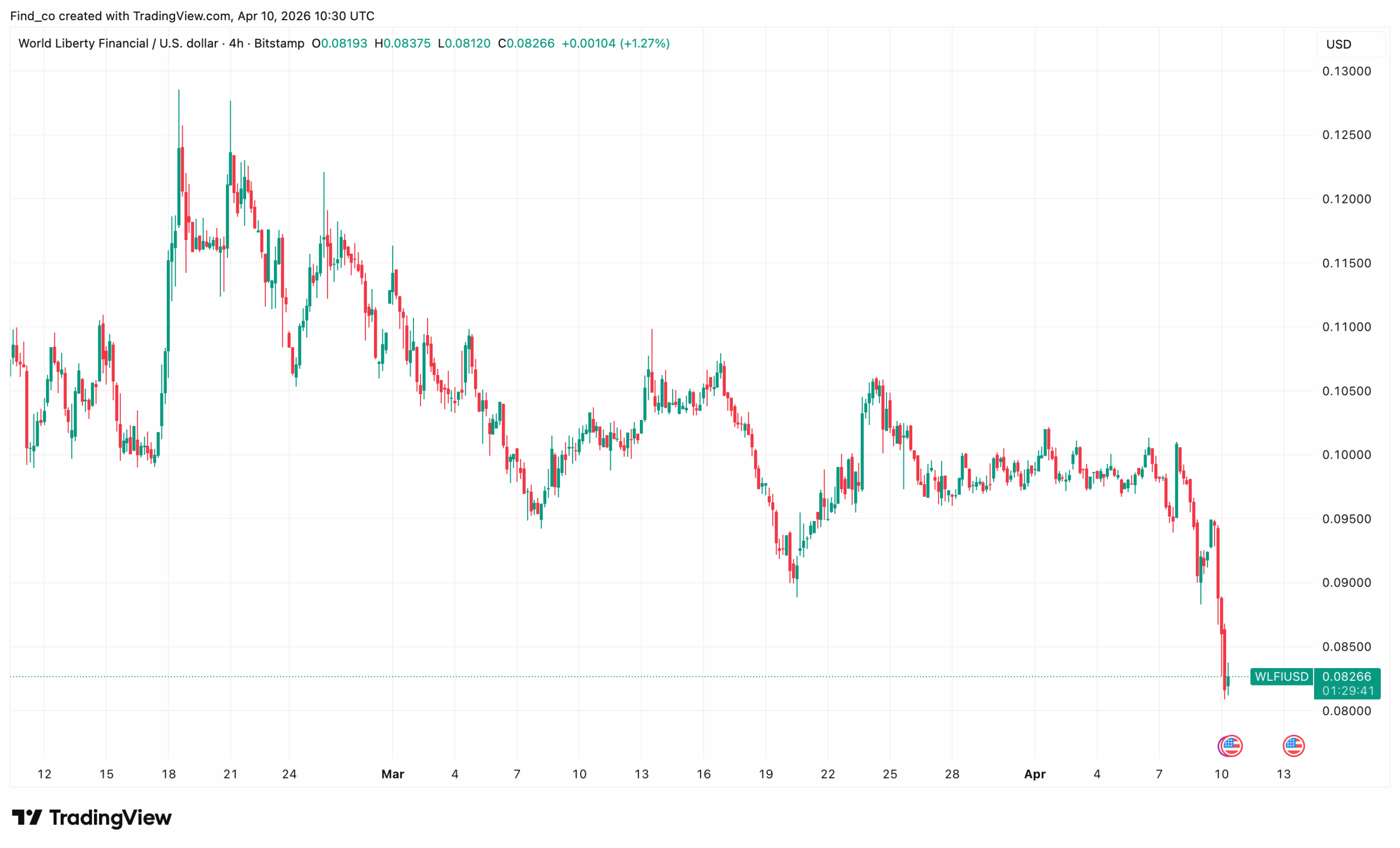
Following the move, the WLFI price crashed to a new record low. While it has briefly bounced, the altcoin technical setup on the 4-hour chart remains bearish.
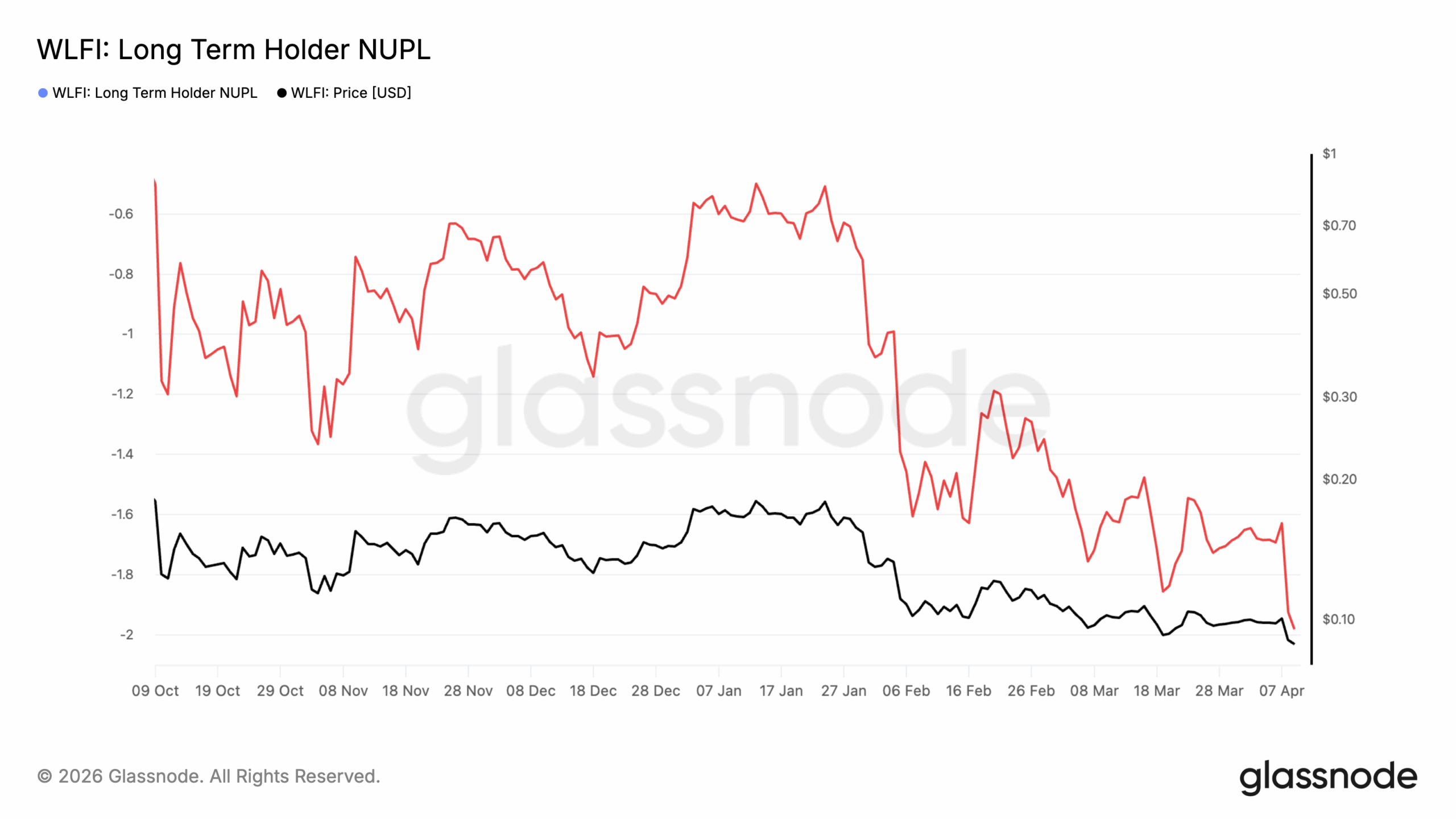
Amid the controversy, on-chain data from Glassnode shows that WLFI’s price remains in a state of capitulation, with long-term holders heavily underwater.
The NUPL remains strongly negative and has been trending lower. This means the long-term holders are not in profit and are likely holding at a loss.
This kind of structure typically reflects a late-stage bear phase or prolonged accumulation period.
However, this is also where opportunity starts to build. Deeply negative NUPL zones historically align with value areas, where weak hands have already exited, and supply is limited.
The downside tends to be more muted here than earlier in the cycle. But for WLFI’s price, the recent crisis might not allow demand to push the market value higher.
For a real trend reversal, you’d want to see NUPL start climbing steadily toward zero. That would indicate long-term holders moving back into profit and a shift in market structure.
In short, WLFI remains depressed. As such, the price is likely to close in on another all-time low.
Project Pushback: “Nowhere Near Liquidation”
World Liberty Financial has responded directly.
In its official thread on X, the team pushed back against claims of imminent risk.
The project stated that the position is “nowhere near liquidation” and emphasized that it can add more collateral if needed.
This aligns with the team’s broader statements.
Leadership has dismissed concerns as exaggerated, arguing that the strategy is designed to enhance liquidity and yield opportunities, not destabilize the system.
At the same time, they hinted at upcoming governance measures, including structured token release plans to stabilize the market.
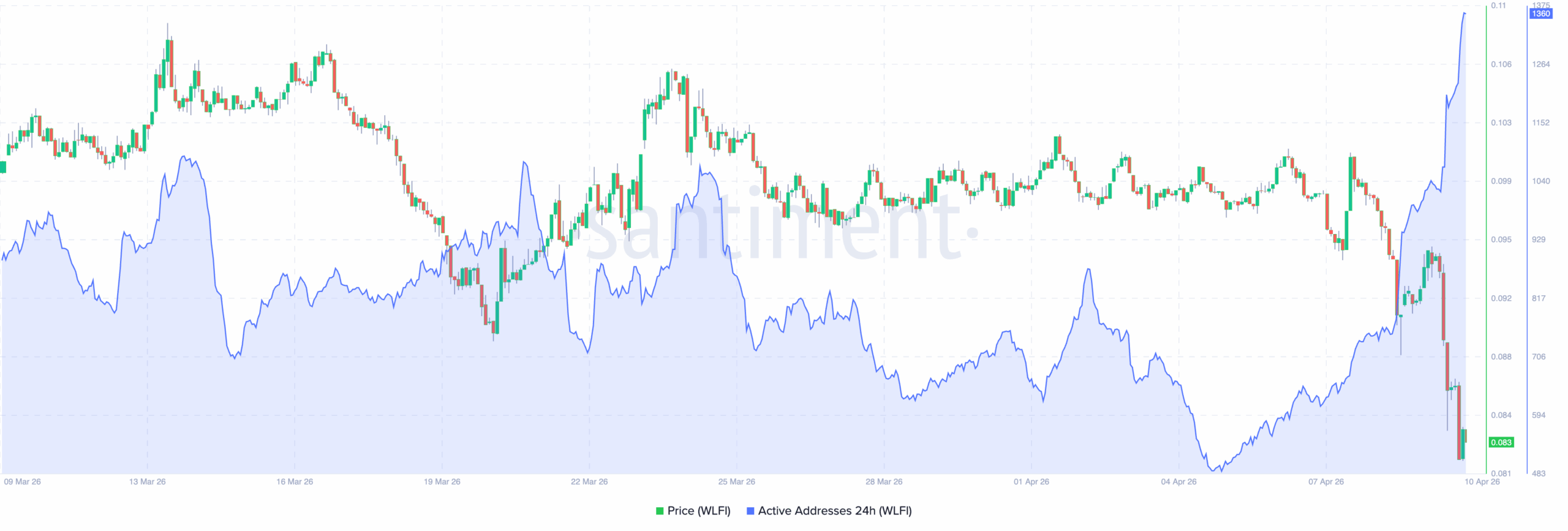
Active addresses just exploded to a new high, while WLFI price dropped.
Normally, rising activity supports price. But when activity spikes into a selloff, it often means distribution or panic-driven participation rather than organic growth.
What likely happened here is a surge in users transacting during volatility (either selling, rotating, or reacting to a catalyst).
The key now is what happens next. If active addresses remain elevated while WLFI’s price stabilizes and begins to reclaim levels, this spike can be reinterpreted as genuine adoption and a potential bottoming signal.
But if activity quickly drops off after this spike, it confirms that it was event-driven rather than sustainable demand.
Given the earlier NUPL data showing long-term holders still deep in losses, this kind of activity spike leans more toward churn than accumulation.
Should this trend persist, the altcoin might consolidate in the short term or break lower.
WLFI Price Outlook: Selling Pressure Intensifies
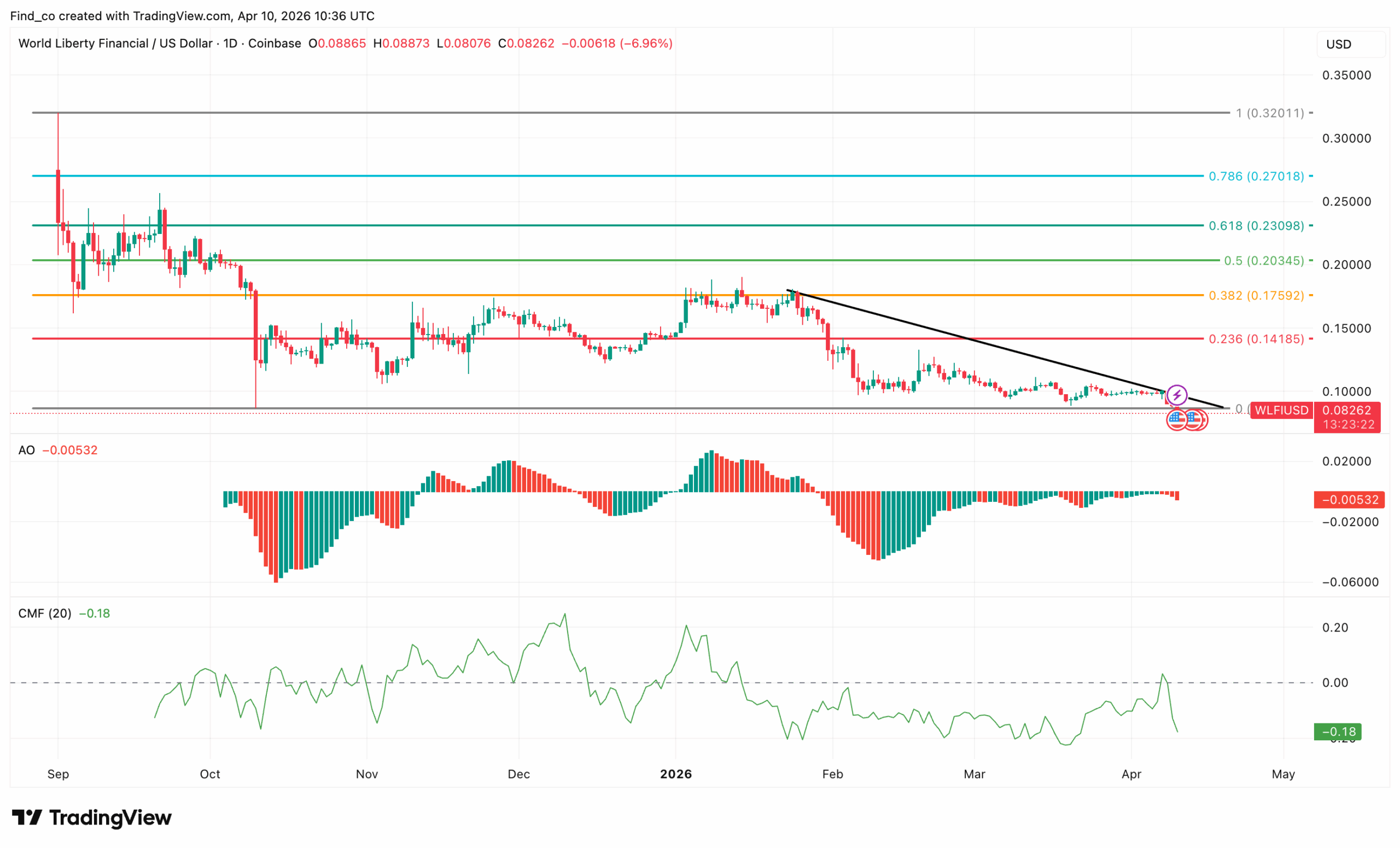
Despite the clarification, WLFI’s broader structure remains bearish, with consistent lower highs reinforcing a descending trendline that continues to cap upside attempts.
Notably, the asset failed to reclaim the $0.12-$0.15 range, confirming seller dominance.
Meanwhile, momentum indicators are not offering relief. The Awesome Oscillator (AO) stays in negative territory, signaling sustained bearish momentum.
At the same time, the Chaikin Money Flow (CMF) prints around -0.15, indicating persistent capital outflows. This combination suggests weak buyer conviction.
However, the WLFI price now tests a historically reactive base. If this level holds, a short-term bounce could emerge, targeting $0.10.
Conversely, a breakdown would likely accelerate losses toward the $0.07 region, representing a new all-time low.
Disclaimer:
The information provided in this article is for informational purposes only. It is not intended to be, nor should it be construed as, financial advice. We do not make any warranties regarding the completeness, reliability, or accuracy of this information. All investments involve risk, and past performance does not guarantee future results. We recommend consulting a financial advisor before making any investment decisions.
Victor Olanrewaju is a crypto analyst and reporter at CCN with deep roots in on-chain research and technical analysis. His crypto journey began in 2017, but it was the 2020 Uniswap airdrop that sparked a full-time pivot into the space.
With a foundation in copywriting, Victor honed his craft creating high-converting content for leading crypto brokers — most notably an XRP price prediction that ranked #1 on Google during the 2021 bull run.
He later joined AMBCrypto in 2022, where he combined storytelling with technical and on-chain analysis to cover key market narratives.
In 2024, he expanded his expertise at BeInCrypto, collaborating with analysts and using tools like Glassnode, Santiment, and IntoTheBlock to break down Bitcoin and altcoin trends.
At CCN, Victor covers the top cryptocurrencies, memecoins, macro shifts, blending real-time insights with deep-dive metrics.
He holds a Bachelor’s degree in Physics from the University of Ibadan, equipping him to simplify complex data for a wide audience. Follow his work or connect on LinkedIn or X.