The kind of architecture where AI is an advisor, not an executor is a much healthier model. | Credit: Emanuele Cremaschi/Getty Images
Share
Key Takeaways
No AI architecture yet developed possesses the contextual awareness to properly evaluate the human and legal implications of signed transactions.
When we hand keys to these models, we’re trusting systems that cannot be deterministically debugged or constrained.
We need accountable agents, bounded autonomy, cryptographic guarantees, and transparent execution paths.
In the convergence of AI and blockchain, we’re witnessing a wave of experimentation—some of it inspiring, some of it worrying.
One trend in particular has caught my attention lately: Developers embedding private keys directly into AI agents, or giving LLMs key access to execute on-chain transactions.
I have said before that the holy grail in Web3 AI is for AI agents to take an instruction from the user—e.g., turn my $1,000 to $10,000—with the wallet approvals, and figure out a way to get it done.
While the motivation is understandable—creating autonomous, intelligent agents that can act on behalf of users—this approach opens a Pandora’s box of risks that the industry isn’t ready for.
Let me be clear: AI models with private key access are a systemic risk that cannot be ignored.
AI Doesn’t Understand Accountability
A private key, in the blockchain world, is absolute power. It’s the one credential that separates control from chaos, and it comes with no built-in fail-safes.
AI models, no matter how advanced, fundamentally lack contextual understanding of the gravity of signing transactions.
They don’t experience consequences. They don’t feel guilt. They don’t fear legal repercussions. And they certainly don’t file bug reports when something goes wrong.
Relying on AI to self-police or reliably assess risk in an open financial environment is akin to leaving your vault door open because your security guard usually does the right thing.
Prompt Injection Meets Value Transfer
We’ve already seen how susceptible large language models are to prompt injection attacks. Now, imagine that vulnerability tied to financial authority. Malicious actors don’t need to break cryptography anymore—they just need to engineer the right conversation.
If your AI assistant has access to your crypto wallet, all it takes is a cleverly constructed prompt, hidden in a conversation or scraped from the web, to manipulate the AI into draining your funds.
And because LLMs work probabilistically, the same input can lead to different outputs—making auditing behavior post-incident almost impossible.
Autonomous ≠ Trustworthy
There’s also a philosophical issue here.
Web3 is fundamentally about trust minimization and verifiability. AI, on the other hand, operates in probabilistic, non-deterministic ways that are currently impossible to fully verify or predict.
When we hand keys to these models, we’re trusting systems that cannot be deterministically debugged or constrained, especially once they’re deployed on-chain and begin interacting autonomously.
We’re essentially building black-box agents with access to irreversible financial controls. That’s not decentralization. That’s delegation to a dice roll.
Better Approaches Are Emerging
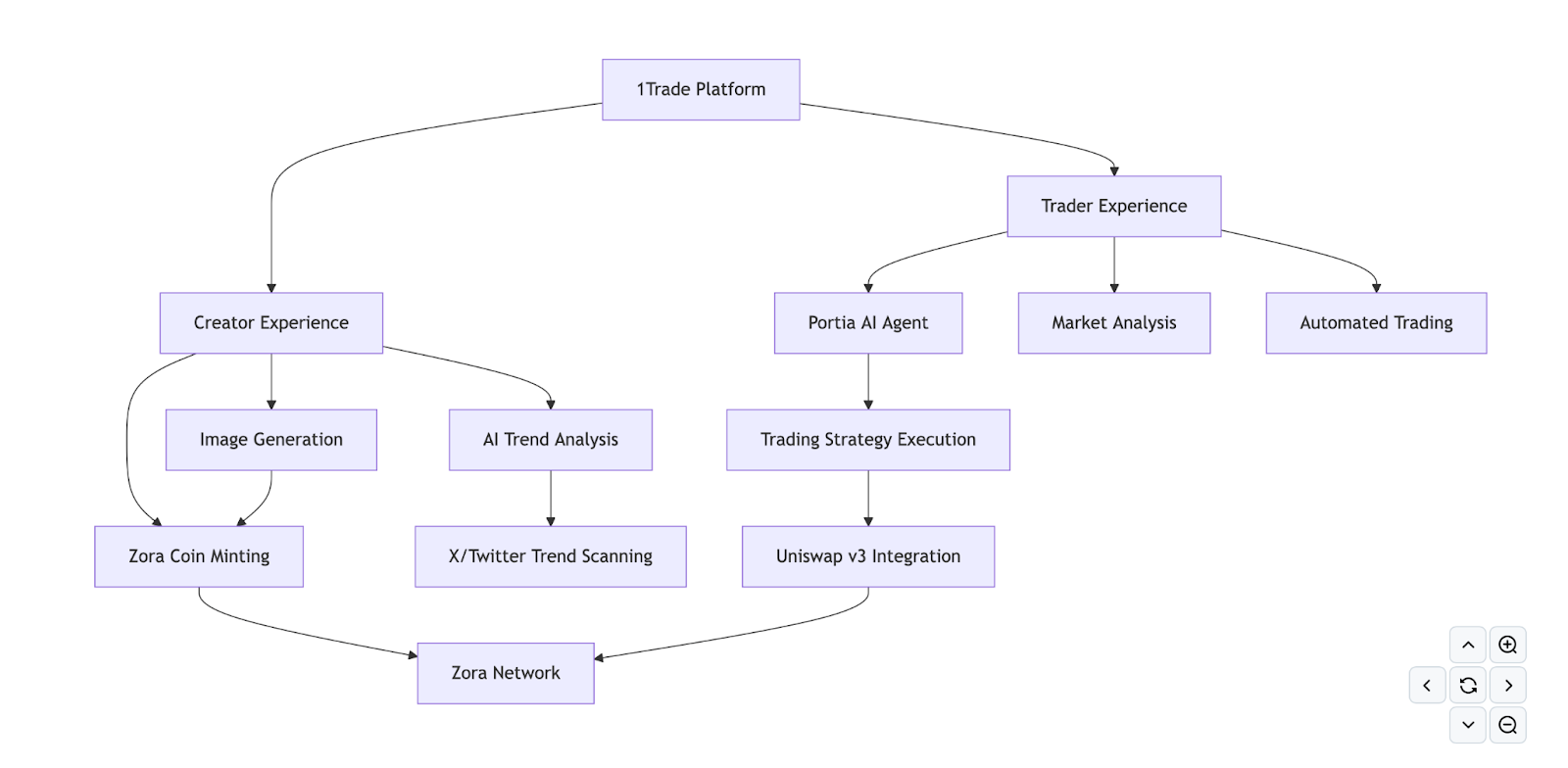
Fortunately, we’re already seeing teams exploring safer, more modular approaches. During a recent Encode Club AI hackathon, one of the winning projects was a dApp that integrates AI agents for DeFi execution but with strict boundaries.
Instead of giving the model full key access, the system uses a proxy pattern: The AI suggests actions, but the final transaction is routed through a verification layer where rules, limits and crucially, user permissions are enforced.
“The agent can then suggest trades or even execute them directly using Reactive Smart Contracts via Uniswap v3, depending on the user’s preferences.” | Source: Github.
This kind of architecture—where AI is an advisor, not an executor—is a much healthier model. We still get the benefits of natural language interaction, automation and intelligence, but within a framework where human intent and protocol-defined logic remain in control.
The Way Forward
Web3 needs AI. There’s no denying that intelligent agents will play a huge role in how we navigate the complexity of decentralized systems, manage assets and interface with smart contracts.
But that future cannot be built on the lazy shortcut of handing LLMs cryptographic authority.
Instead, we need accountable agents, bounded autonomy, cryptographic guarantees and transparent execution paths. That means integrating tools like multi-party computation, key sharding, intent-based protocols and verification frameworks.
It means building AI-native UX without compromising on the core values of security, sovereignty and determinism.
As builders, we have a choice. We can chase flashy demos—or we can lay the groundwork for systems that are not only powerful, but safe. Giving keys to a language model might seem futuristic, but in reality, it’s just a faster way to reintroduce the same custodial risks Web3 was meant to solve.
Disclaimer:
The views, thoughts, and opinions expressed in the article belong solely to the author, and not necessarily to CCN, its management, employees, or affiliates. This content is for informational purposes only and should not be considered professional advice.
About the Author
Rong Kai Wong
Rong Kai Wong is CEO of Reactive Network, which develops infrastructure for real-time smart contract automation. A graduate of Imperial College London in Chemical Engineering, he spent eight years in Singapore’s law enforcement sector before managing blockchain investments at Binance. His cross-sector background informs his focus on secure, interoperable blockchain systems.