Key Takeaways
- Telegram CEO Pavel Durov has lamented the rise of government policies he views as dystopian.
- Durov pointed to alleged instances of rising surveillance and censorship from Australia to the U.K.
- The U.K. government’s digital ID proposal is opposed by civil rights campaigners and opposition parties.
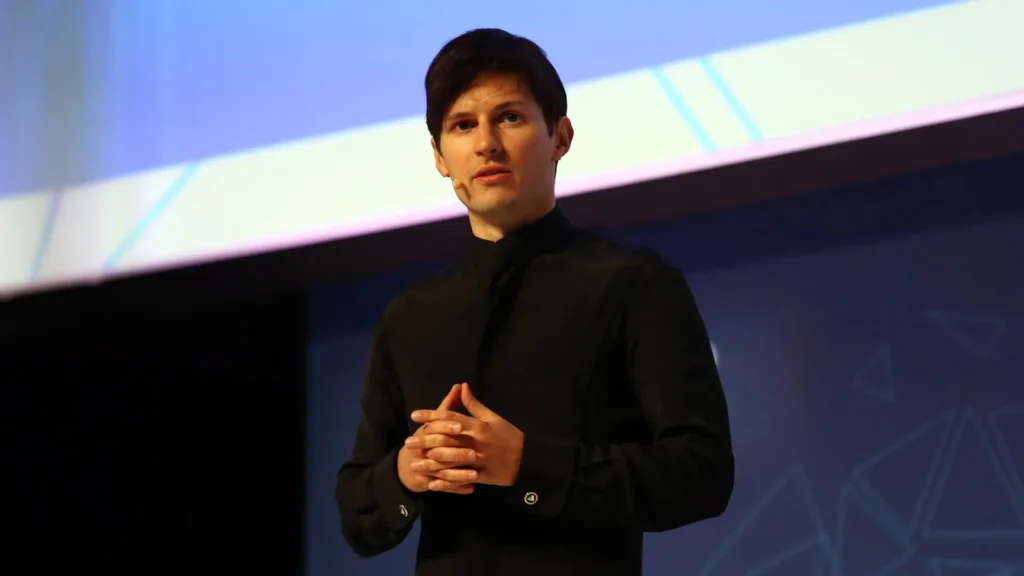
Pavel Durov, a renowned libertarian and privacy advocate, has criticized what he views as “dystopian measures” that threaten to undermine freedom on the internet.
Pointing to government policies in “once-free countries,” the Telegram founder highlighted symptoms of the rising digital surveillance he condemns, including proposals to introduce mandatory digital IDs in the U.K.
The U.K.’s Controversial Digital ID Plans
Announced by the government in September, the U.K.’s planned “Britcard” is pitched as a way to crack down on illegal working and improve how citizens interact with government services.
The proposed scheme has sparked controversy in the country, which has never previously imposed mandatory IDs, digital or otherwise.
Nearly three million Brits have signed a petition calling for the government to scrap its plans, well over the 100,000 signatures required to prompt a debate in parliament.
“We think this would be a step towards mass surveillance and digital control,” the petition states, adding that “no one should be forced to register with a state-controlled ID system.”
Opposition United Against Britcard
Civil rights groups and opposition parties have rallied together to oppose the scheme.
The Conservative leader, Kemi Badenoch, said that her party would “oppose any push […] to impose mandatory ID cards on law-abiding citizens.”
Similarly, the Liberal Democrats insisted they would “fight tooth and nail to oppose” the government’s plans.
Even Nigel Farage, who leads the anti-immigration Reform UK party, has come out against Britcard.
“The Labour government’s plan to impose digital ID cards on all adults will do nothing to combat illegal immigration,” he argued.
“It might be more accurate to call” the Britcard “anti-British card,” Farage said, adding that “our country has never been a “Your papers, please’ surveillance society.
Digital Surveillance in the U.K.
The Britcard proposal is the latest in a string of policies implemented by the current government to come under fire for curtailing digital freedoms.
While Durov’s claim that the U.K. “is imprisoning thousands for their tweets” lacks evidence, in recent years, the country has increasingly cracked down on social media posts deemed threatening.
After anti-immigration protests descended into riots last year, the police came under fire for arresting suspects over social media posts and charging them under “stirring up hatred” provisions in the Public Order Act.
The cases of Lucy Connolly and Jordan Parlour brought national attention to the issue after they received prison sentences for inciting racial hatred.
Don’t Sleep on Dystopian Creep, Durov Warns
Durov’s message, which he shared on Telegram to mark his 41st birthday, doesn’t limit criticism to the U.K.
“Germany is persecuting anyone who dares to criticize officials on the Internet,” he claimed, presumably referring to the case of former Deputy Chancellor Robert Habeck, who pressed charges against a man who shared a meme mocking him online.
Other instances of alleged dystopian creep Durov highlighted include an Australian law that requires platforms to verify users’ age and the EU’s controversial “Chat Control” proposal.
Introduced by the European Commission in 2022, the “Proposal for a Regulation laying down rules to prevent and combat child sexual abuse” would compel online platforms to scan messages for evidence of abuse.
If passed, the regulation would have severe consequences for Telegram, as it may require the app to introduce a backdoor that bypasses encryption, or face being banned in the EU.
Durov’s final point of contention is even more personal.
“France is criminally investigating tech leaders who defend freedom and privacy,” he stated. The accusation seemingly alludes to Durov’s own legal challenges.
The Telegram founder has been embroiled in a legal battle with French authorities since he was arrested on charges of failing to police illegal content on the platform in 2024.
“A dark, dystopian world is approaching fast — while we’re asleep,” Durov warned.
“Our generation risks going down in history as the last one that had freedoms — and allowed them to be taken away,” he added.
Recommended Secure Partners

James Morales is CCN’s blockchain and crypto policy reporter. He has been working in the news media since 2020, writing about topics such as payments, banking and financial technology. These days, he likes to explore the latest blockchain innovations and the evolving landscape of global crypto regulation.
With an educational background in social anthropology and media studies, James uses his platform as a journalist to explore how new technologies work, why they matter and how they might shape our future.