.
Key Takeaways
- The Bittensor halving occurred on Sunday, Dec. 13.
- Post-halving, the network has reduced mining rewards to 0.5 TAO per block.
- The Bittensor ecosystem has come a long way in four years, and there is more to look forward to.
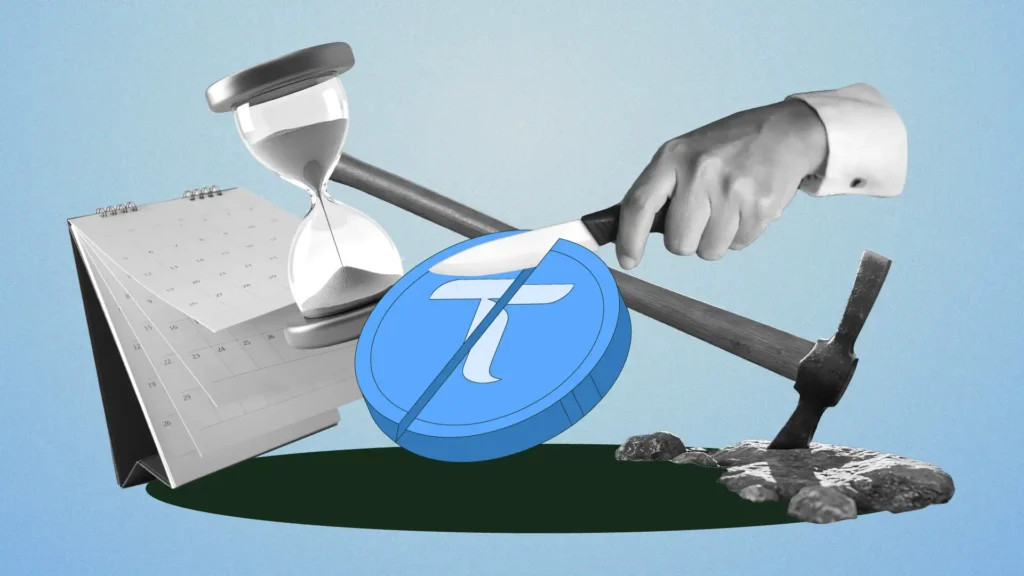
On Monday, Dec. 14, Bittensor executed its first halving, slashing mining rewards from one to 0.5 TAO per block.
At the conclusion of its first epoch, the decentralized AI platform is expanding rapidly.
Post-halving, reduced emissions could spur further growth, but only for ecosystem participants that successfully adapt to the new economic reality.
Bittensor Halving Explained
Bittensor’s consensus model draws inspiration from Bitcoin (BTC), but introduces several crucial differences.
Whereas Bitcoin consensus is a numbers game that rewards computational power—or, occasionally, pure luck—Bittensor miners compete to complete dynamic tasks tied to real-world applications.
Stacking GPUs alone doesn’t guarantee TAO rewards. Hardware capacity certainly plays a role, but a miner that delivers better outcomes with fewer resources can outperform one that relies on brute force.
Like Bitcoin, Bittensor emissions halve roughly once every four years.
With a block time of roughly 12 seconds, the network minted about 7,200 TAO per day during the first epoch. Post-halving, that number drops to 3,600 TAO.
But with the broader crypto market looking bearish, can TAO emulate BTC’s post-halving rallies?
TAO Supply and Adoption
According to James Altucher, an advisor at the Bittensor treasury company TAO Synergies, the latest supply crunch comes just as the most successful “subnets” are starting to reach a wider audience.
Four years after Bittensor launched, there are now 129 active subnets powering everything from quantitative trading algorithms (SN15, SN8) to AI translation (SN59) and 3D image generation (SN17).
Some of the most successful include platforms like Chutes (SN64), Gradients (SN56), and Targon (SN4), which have emerged as powerful enablers of open-source AI, relied on by a growing community of developers to train, finetune, and run models.
For instance, Chutes now has over 650,000 users and thousands of GPU nodes running AI models that process tens of billions of tokens each day.
As adoption rises, so does demand for TAO.
“After Bitcoin’s first halving, it went up 7,000% over the next 18 months,” Altucher observed, adding: “I don’t know if that will happen with TAO […] But who knows?”
Growing the Decentralized Economy
While Bittensor is usually viewed as an AI network, “you can incentivize it to produce almost any intelligence commodity you want,” observed Chris Zacharia, who founded the subnet incubator Bitstarter.
Tasks assigned to miners usually involve machine learning, but they don’t have to. TAO rewards go to the best solution, regardless of the path taken to get there.
This point isn’t lost on Arrash Yasavolian, the co-founder and CEO of Taoshi (SN8)—a decentralized marketplace for trading signals.
Quantitative traders who supply signals are mostly using AI, Yasavolian explained, but he acknowledged some may be using a hybrid approach that involves human input.
Taoshi grades their results, rewarding strategies that maximize returns and minimize risk.
Bittensor’s technology-agnostic incentive framework explains why a growing number of subnets are orienting toward trading and finance.
While the first generation of applications sought to replicate Big Tech chatbots and other centralized AI services, Bittensor increasingly powers trading bots, price prediction, arbitrage, and liquidity optimization.
In situations where outcomes are judged by quantifiable, real-world performance, competition within a decentralized network drives significant improvements.
The Rise of Subnet Alpha
When Bittensor was launched in 2021, miners were only rewarded in TAO, with each subnet being allocated a share of emissions according to its overall stake size and validator votes.
However, in February 2025, the network introduced a new incentive system, allowing miners and stakers to earn subnet-specific “Alpha” tokens, also known as dTAO.
Since its launch, the reception to dTAO has been mixed. While many subnet tokens have performed poorly, general enthusiasm remains high.
For instance, TAO Synergies, the Bittensor treasury company, has allocated a portion of its reserves to Alpha staking.
It employs a strategy that combines broad exposure with more targeted, venture-style investing focused on select subnets.
Post-halving, dTAO will face the same supply tightening as Bittensor’s network token.
With fewer emissions and some of the larger subnets attracting significant attention, Bittensor’s halving could push Alpha to new heights.
What Does the Future Hold for Bittensor?
At the dawn of Bittensor’s second epoch, successful subnets are the network’s growth engine.
However, if the creation of separate subnets in 2023 marked Bittensor’s “Cambrian explosion,” caps on their number have helped focus that explosive energy, explained Steffen Cruz, former CTO at Bittensor’s Opentensor Foundation, and the co-founder of Macrocosmos.
By limiting the number of slots available, Bittensor ensures that only the strongest subnets survive.
Post-halving, there are discussions about potentially doubling the current cap, from 128 to 256. But Cruz is wary of rasing it too soon.
Each time Bittensor has increased the subnet limit, it has taken some time for “evolutionary pressure” to take effect, he observed.
Before raising the cap again, “I would want to hit a minimum of 50% of all subnets being really strong” Cruz said. For now, “there’s teams that have work to do before they reach that mature state,” he concluded.

James Morales is CCN’s blockchain and crypto policy reporter. He has been working in the news media since 2020, writing about topics such as payments, banking and financial technology. These days, he likes to explore the latest blockchain innovations and the evolving landscape of global crypto regulation.
With an educational background in social anthropology and media studies, James uses his platform as a journalist to explore how new technologies work, why they matter and how they might shape our future.