Key Takeaways
- Vitalik Buterin suggested regulators could impose tougher accountability when stolen crypto reaches North Korea.
- Binance says it will absorb losses from its approximately $6.34 billion breach.
- Replacing customer assets and recovering funds from attackers remain separate challenges.
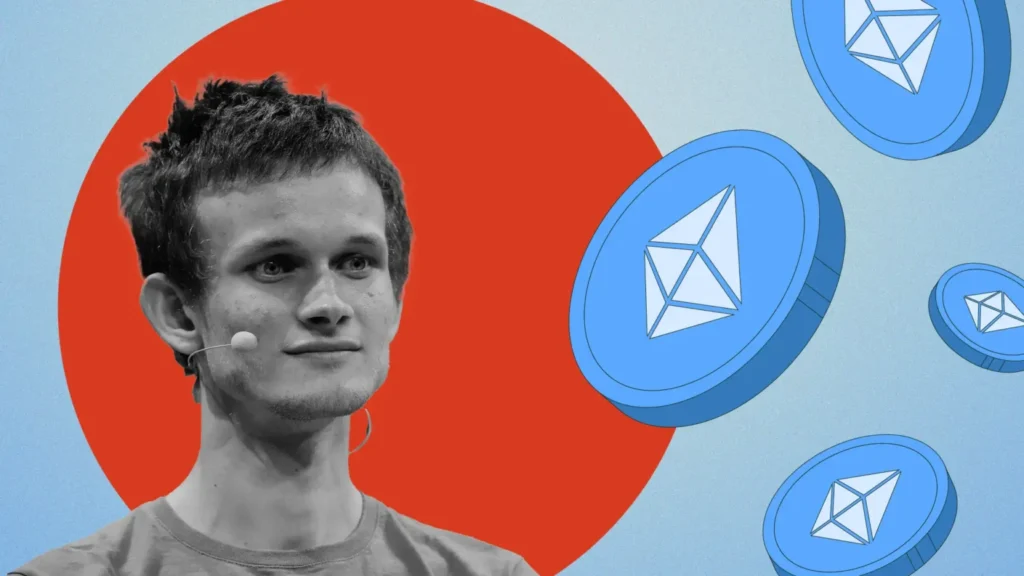
Ethereum co-founder Vitalik Buterin has raised the prospect of tougher consequences for crypto companies whose security failures allow stolen funds to reach North Korea.
Vitalik Buterin Compares Hacks to ‘Donating to North Korea’
In a Nov. 4 interview with Moneycontrol, Buterin suggested persistent hacking could push regulators to demand more conservative security practices.
Describing an extreme scenario in which stolen funds reach North Korea, he said: “They should treat that as donating to North Korea.”
“Things are going to move in that direction in terms of pushing people to take things more seriously. Everyone is adapting now,” he said.
He also distinguished the security of blockchain applications from the infrastructure surrounding them.
In his assessment, recent major attacks have increasingly targeted user interfaces and centralized components, even as smart-contract security has improved.
Buterin said companies were recognizing that their immediate responsibility was:
“not to win but to survive”
He expects exchanges and institutions to adopt a defensive approach he called “bunker mode,” in which they prioritize resilience against attacks.
His recommendations included multisignature wallets and more deliberate questioning of security arrangements.
Binance’s Repayment Pledge Addresses Customer Losses
The comments follow the Oct. 29 Binance breach, which the exchange estimates affected approximately $6.34 billion in digital assets.
In its Nov. 3 investigation update, Binance said it would absorb “the financial impact of the stolen funds, not our users.”
The company said it had allocated more than enough funding to cover the loss and had replenished 98% of affected token assets as of Oct. 31.
It also reported approximately $2.85 billion in frozen or intercepted assets, subject to reconciliation and market-price changes.
“In the long term, the only solution is that we do have to make things actually secure,” Buterin added.
“The challenge is the set of things that you can do securely keeps going up and up.”
FBI Links North Korea
The North Korean connection extends beyond Buterin’s hypothetical comparison.
In an Oct. 31 alert, the FBI attributed the Binance theft to North Korea’s TraderTraitor operation.
The agency said investigators had observed stolen assets being converted primarily into Ethereum.
It urged exchanges and other service providers to block transactions associated with identified attacker addresses.
“If you have any information to provide, please contact your local FBI field office or FBI’s Internet Crime Complaint Center,” the report said.
Vitalik Buterin Sees Security Test Beyond Wallet Balances
Buterin also argued that recent major breaches have increasingly targeted interfaces and centralized infrastructure.
To combat this, he recommended multisignature wallets and greater scrutiny of security arrangements.
TRM Labs’ analysis of the Binance attack highlighted the importance of authorization controls, as the firm traced unauthorized transfers across ten blockchains.
On Ethereum, attackers used pre-signed EIP-7702 authorizations to make a hot wallet execute malicious instructions.
Transfers on other networks used conventional signatures, leading TRM to assess that Binance’s wallet-signing infrastructure had been compromised.
Binance announced it had rebuilt systems along the attack path and strengthened device controls.
The information provided in this article is for informational purposes only. It is not intended to be, nor should it be construed as, financial advice. We do not make any warranties regarding the completeness, reliability, or accuracy of this information. All investments involve risk, and past performance does not guarantee future results. We recommend consulting a financial advisor before making any investment decisions.

Kurt Robson is a London-based reporter at CCN, specialising in the fast-moving worlds of crypto and emerging technology. He began his career covering local news in Cornwall after graduating from Falmouth University with First Class Honours in Journalism. There, he cut his teeth on everything from council meetings to missing swans.
He quickly rose through the ranks to become a frontline journalist at several of the UK’s leading national newspapers. Over the years, he has interviewed musicians and celebrities, reported from courtrooms and crime scenes, and secured multiple front-page exclusives.
Following the upheaval of the COVID-19 pandemic, Kurt shifted his focus to technology journalism—just ahead of the AI boom. With a natural curiosity and a trained eye for emerging trends, he has found a new rhythm in reporting on innovation.
At CCN, Kurt's work focuses on the cutting edge of crypto, blockchain, AI, and the evolving digital world. Drawing on his background in people-first reporting and his deep interest in disruptive tech, Kurt delivers stories that are insightful, entertaining, and human-centric.