Key Takeaways
- Lord Chris Holmes rejects the “innovation vs regulation” narrative.
- Calls for AI legislation.
- Targeted regulation can drive innovation.
The UK should abandon the false choice between innovation and regulation if it wants to lead in fintech and AI, Conservative peer Lord Chris Holmes said on Monday.
He argued that “right-sized” regulation can accelerate technological progress rather than hinder it.
UK Regulation Should Enable Fintech and AI Innovation
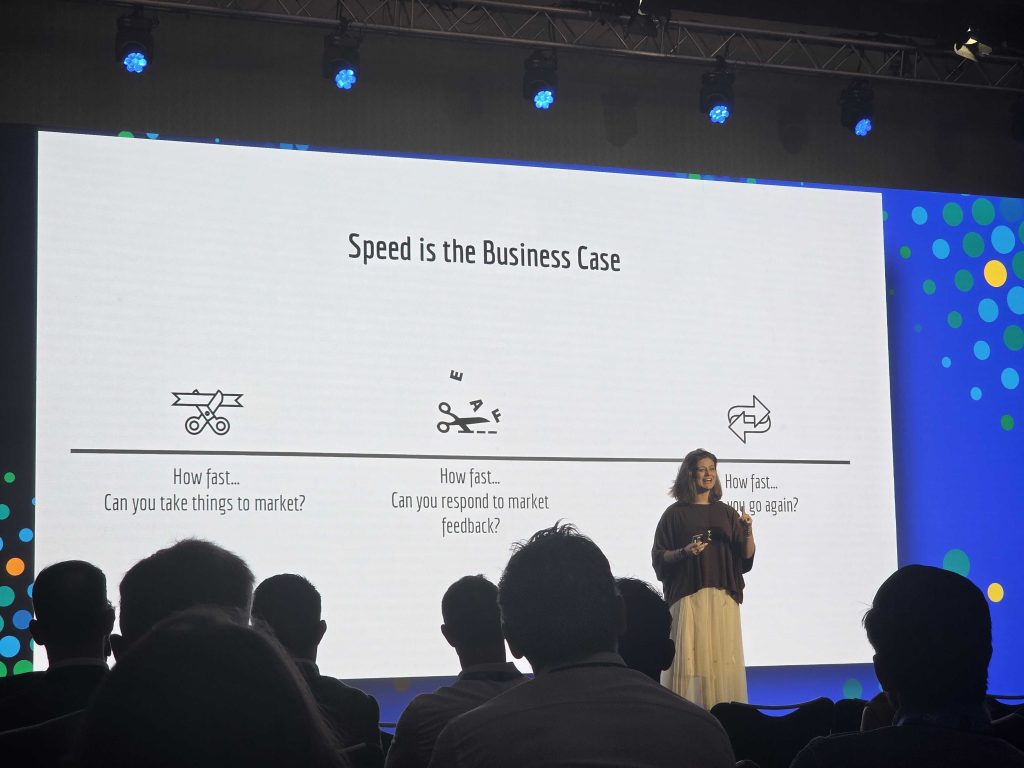
Speaking at the PaymentsUnleashed EMEA conference in London, Holmes criticized the government’s current approach to technology regulation.
He noted that lawmakers had failed to introduce technology-focused legislation despite major financial services reforms moving through Parliament.
Holmes also argued that regulators should adopt “right-sized, right-touch” regulation that is technology-neutral and focused on outcomes rather than specific technologies.
“…through that you get technology future-proofing,” Holmes said.
“You put yourself in the best position as a regulator.”
He rejected the commonly repeated argument that governments must choose between innovation and regulation.
“We have to kill off a myth that recurs with tedious inevitability, that you can either have innovation or regulation – you can’t have both,” Holmes said.
“It’s such a great big yawn… it’s nothing more than the cry of the pioneer in every epoch of human civilisation.”
Holmes said well-designed regulation provides certainty that encourages innovation rather than restricting it.
Government Missing Opportunity on AI Legislation
Holmes said the current government, like its predecessor, had shown “no desire whatsoever” to introduce cross-sector AI legislation based on broad principles.
Instead, he said ministers were pursuing a domain-specific approach without incorporating AI provisions into legislation currently before Parliament.
“We have a government… with no desire whatsoever to pass light-touch, right-touch, principles-based, outcomes-focused, cross-sector, cross-economy AI legislation,” Holmes said.
He noted that Parliament is currently considering financial services legislation, yet the bill contains little reference to AI or distributed ledger technology despite their growing importance to the sector.
“As we say, we’re doing the Financial Services and Markets Bill at the moment. Everyone in this room would think maybe there’s some AI, maybe there’s some DLT… strangely silent,” Holmes said.
Holmes said he and fellow lawmakers were seeking to change that, arguing AI legislation should focus on enabling benefits such as reducing fraud, improving financial inclusion, and supporting markets.
Small, Targeted Laws Can Keep Pace With Technology
Holmes also rejected suggestions that legislators cannot keep up with rapidly evolving technologies.
According to Holmes, legislation should establish principles and desired outcomes rather than prescribe specific technologies.
To illustrate his argument, Holmes pointed to the UK’s regulatory framework for mobile telecommunications introduced more than three decades ago.
He said the framework did not suppress innovation but instead laid the foundations for the growth of major global technology companies.
“If you think about over 30 years ago, when the UK put a regulatory framework in for mobile telephony… what came out of that? Did it stifle innovation?”
Adding: “It created unbelievable innovation and some extraordinary, massive multinational businesses that are still thriving today.”
Top Trending Crypto Articles

Kurt Robson is a London-based reporter at CCN, specialising in the fast-moving worlds of crypto and emerging technology. He began his career covering local news in Cornwall after graduating from Falmouth University with First Class Honours in Journalism. There, he cut his teeth on everything from council meetings to missing swans.
He quickly rose through the ranks to become a frontline journalist at several of the UK’s leading national newspapers. Over the years, he has interviewed musicians and celebrities, reported from courtrooms and crime scenes, and secured multiple front-page exclusives.
Following the upheaval of the COVID-19 pandemic, Kurt shifted his focus to technology journalism—just ahead of the AI boom. With a natural curiosity and a trained eye for emerging trends, he has found a new rhythm in reporting on innovation.
At CCN, Kurt's work focuses on the cutting edge of crypto, blockchain, AI, and the evolving digital world. Drawing on his background in people-first reporting and his deep interest in disruptive tech, Kurt delivers stories that are insightful, entertaining, and human-centric.