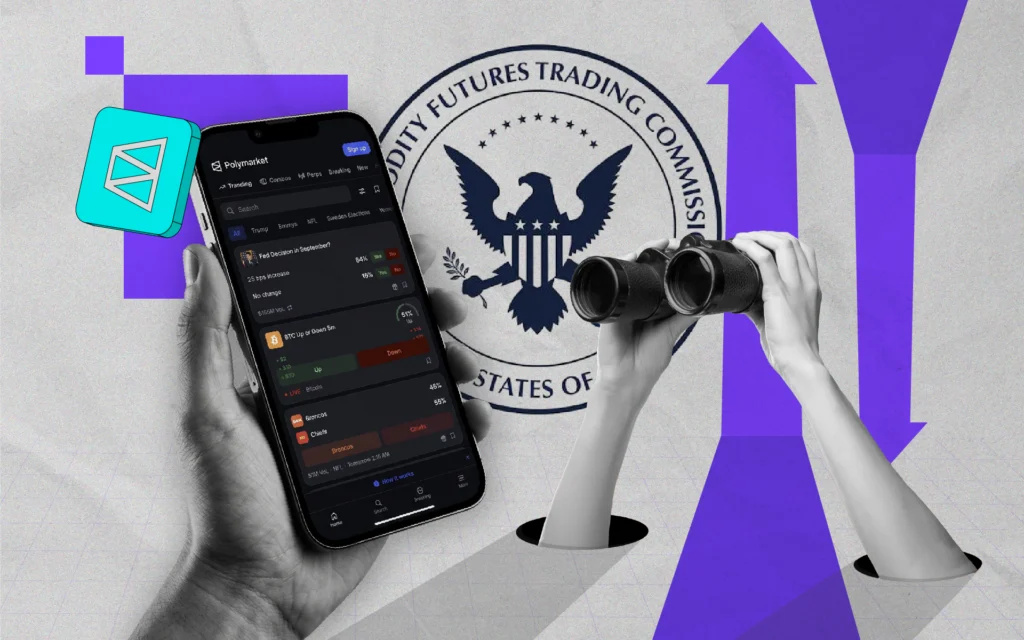
The company has held talks with the European Securities and Markets Authority (ESMA), the European Commission, and the UK’s Financial Conduct Authority.
Meanwhile, a new video from Fern has drawn fresh attention to a Wall Street Journal investigation that reported that Polymarket paid accounts to promote clips in which creators discussed exploiting inside information.
Try Our Recommended Crypto Exchanges
Sponsored
Disclosure
We sometimes use affiliate links in our content, when clicking on those we might receive a commission at no extra cost to you. By using this website you agree to our terms and conditions and privacy policy.
In June, the Journal reported that Polymarket and the marketing firm Virality paid social media accounts to circulate at least 19 videos that discussed opportunities to use inside information.
At least five featured streamer Adin Ross.
In one clip highlighted by Fern, Ross said he knew who would feature on Drake’s Iceman album, adding: “I actually can bet on all this.”
In another, he suggested he could influence the outcome of a market about whom Donald Trump might meet: “I can just make that happen.”
A person familiar with the negotiations told the Journal that Ross had a multimillion-dollar promotional deal with Polymarket.
The clips were part of a wider marketing operation.
Politico separately found that a Polymarket executive sent at least $350,000 from his personal PayPal account to creators and influencers, many of whom posted about the platform without clearly identifying a paid partnership.
Polymarket’s European push comes shortly after ESMA warned that a growing number of incidents showed prediction markets were “rife with insider trading,” according to the FT’s report on the watchdog’s September risk assessment.
There is also another obstacle in Polymarket’s plan.
In a July statement, ESMA said some event contracts can count as financial instruments. This means that those who qualify and have binary payouts are likely to fall under measures prohibiting their sale to retail clients.
In other words, being classified as finance would not automatically open Europe to Polymarket’s ordinary users.
The answer depends on the type of contract, while products outside financial rules could still face national gambling restrictions.
Perez had access to prepared remarks before the president delivered them.
He profited on 39 of 43 contracts, according to the CFTC’s order, and agreed to pay a further $65,000 penalty and stop trading for three years.
Those bets were placed on Kalshi, meaning the case does not connect Perez to Polymarket’s marketing campaign.
However, it does show the widespread issue of insider trading across the prediction market industry.
Polymarket’s own rules prohibit trading on confidential information obtained through a breach of trust, which makes it even more confusing when paired with allegations that it promotes insider trading.
Why Might Polymarket and Kalshi Look the Other Way?
On Polymarket and Kalshi, users trade against one another. The platform does not have to pay a winning trader out of its own pocket.
“It doesn’t really matter who wins or loses,” Fern’s video explains.
A journalist interviewed in the video says platforms need “a steady stream of new users” to provide liquidity, the traders willing to take the other side of a bet.
An insider with a strong information advantage may attract trading activity, while less-informed users bear the losses.
Kalshi says it earns transaction fees rather than taking a position on who wins.
Kalshi assisted the CFTC in the Gabriel Perez case, while Polymarket says it bans trading on confidential information obtained through a breach of trust.
On markets that charge fees, the platform can earn money regardless of who wins. Banning a suspected insider could reduce trading—and the fees it collects.
Kurt Robson is a London-based reporter at CCN, specialising in the fast-moving worlds of crypto and emerging technology. He began his career covering local news in Cornwall after graduating from Falmouth University with First Class Honours in Journalism. There, he cut his teeth on everything from council meetings to missing swans.
He quickly rose through the ranks to become a frontline journalist at several of the UK’s leading national newspapers. Over the years, he has interviewed musicians and celebrities, reported from courtrooms and crime scenes, and secured multiple front-page exclusives.
Following the upheaval of the COVID-19 pandemic, Kurt shifted his focus to technology journalism—just ahead of the AI boom. With a natural curiosity and a trained eye for emerging trends, he has found a new rhythm in reporting on innovation.
At CCN, Kurt's work focuses on the cutting edge of crypto, blockchain, AI, and the evolving digital world. Drawing on his background in people-first reporting and his deep interest in disruptive tech, Kurt delivers stories that are insightful, entertaining, and human-centric.