Key Takeaways
- A reported trading windfall puts prediction markets’ winners under scrutiny.
- Kalshi and Polymarket US accept eligible users from 18, while New York mobile sportsbooks require customers to be 21.
- New York is challenging both operators over alleged unlicensed gambling.
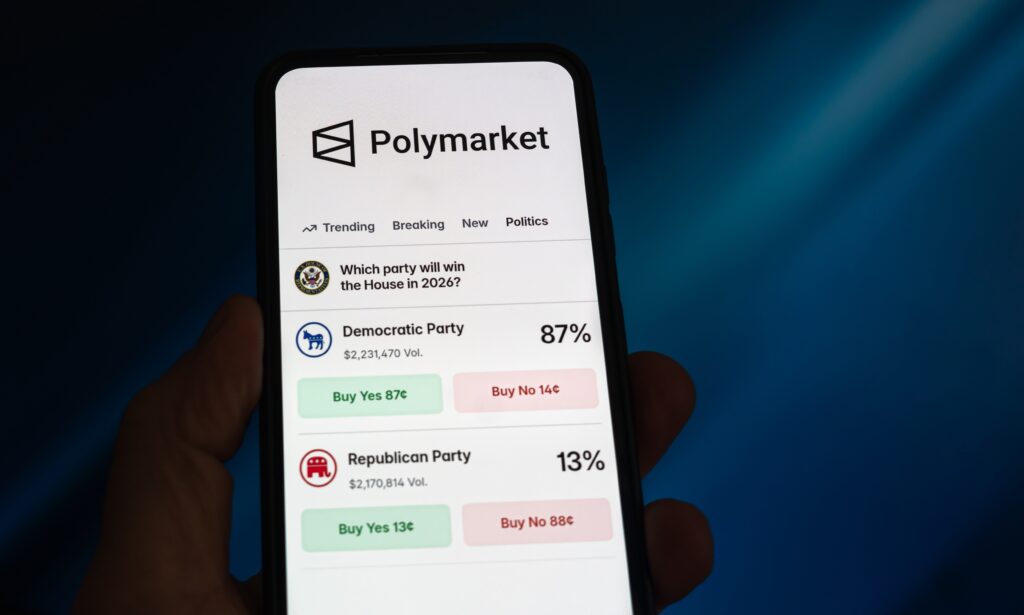
A private group of Polymarket traders has made an estimated $40 million since 2024, according to the Financial Times, as prediction markets face scrutiny over access for young adults.
The reported windfall arrives alongside a stark age divide as New Yorkers must be 21 to use licensed mobile sportsbooks, but Kalshi and Polymarket US set their minimum age at 18.
Inside Polymarket’s Alpha Group
The FT’s Oct. 3 report identified roughly 30 members of the Discord group Alpha who had made around $40 million, including at least three teenagers.
Members pooled capital and expertise to exploit mispriced contracts.
In one example, a trader placed a $1 million order for “yes” shares on whether Trump would create a Bitcoin reserve within his first 100 days.
Alpha members filled half the order within a minute and collectively earned $250,000, according to Polymarket data cited by the FT.
The report described members calling casual, uninformed traders “dumb money.”
The underlying strategy is to identify prices that overstate or understate the likelihood of an outcome.
For example, if a hypothetical contract trades at 70 cents but a trader estimates its true probability at 40%, taking the opposite position could offer an advantage.
Kalshi’s account eligibility rules require applicants to be at least 18. Polymarket US’s rulebook sets the same minimum and requires that the participant have reached the age of majority in the participant’s jurisdiction.
The Times Union’s Oct. 4 campus report illustrated the difference through two 18-year-old UAlbany freshmen.
One reported spending around $900 on Kalshi; the other described committing several thousand dollars to prediction markets.
New York Says the Contracts Are Gambling
New York is fighting back against the regulations allowing that access.
On Sept. 24, Attorney General Letitia James and Governor Kathy Hochul announced a lawsuit against QCX LLC, which operates as Polymarket US.
The state alleges its contracts constitute gambling and that the business lacks the required gaming licence.
Its announcement explicitly identifies availability to 18–20-year-olds as a concern.
New York also announced a lawsuit against Kalshi in July.
Safeguards Do Not Resolve the Age Dispute
Kalshi says it offers trading breaks, self-imposed limits, self-exclusion and mental health resources.
In May, it announced a $2 million, two-year commitment to the National Council on Problem Gambling’s trader health and safety initiative.
Polymarket also announced enhanced protections on Sept. 30, including voluntary self-exclusion and deposit limits.
However, those measures address participation after a user gains access.
New York’s lawsuit questions whether people too young for licensed mobile sportsbooks should be able to trade on outcomes at all.
Top Trending Crypto Articles

Kurt Robson is a London-based reporter at CCN, specialising in the fast-moving worlds of crypto and emerging technology. He began his career covering local news in Cornwall after graduating from Falmouth University with First Class Honours in Journalism. There, he cut his teeth on everything from council meetings to missing swans.
He quickly rose through the ranks to become a frontline journalist at several of the UK’s leading national newspapers. Over the years, he has interviewed musicians and celebrities, reported from courtrooms and crime scenes, and secured multiple front-page exclusives.
Following the upheaval of the COVID-19 pandemic, Kurt shifted his focus to technology journalism—just ahead of the AI boom. With a natural curiosity and a trained eye for emerging trends, he has found a new rhythm in reporting on innovation.
At CCN, Kurt's work focuses on the cutting edge of crypto, blockchain, AI, and the evolving digital world. Drawing on his background in people-first reporting and his deep interest in disruptive tech, Kurt delivers stories that are insightful, entertaining, and human-centric.