Key Takeaways
- The NBA is restricting several betting markets offered by its sportsbook partners.
- Its sportsbook agreements do not give it equivalent control over Kalshi and Polymarket.
- The changes raise questions about the consistency of integrity protections across competing platforms.
The NBA is tightening control over bets that could reward manipulated performances, but its authority does not extend to every platform where fans trade on basketball outcomes.
As prediction exchanges fall outside the NBA’s agreements, this raises the question of whether they will adopt the same limits as concern over insider trading grows.
Which Bets Is the NBA Restricting?
According to InGame, which cites a league letter obtained by ESPN, the restrictions include:
- Parlays combining multiple statistical unders for the same player.
- Wagers on the winner of the opening tip.
- Certain negative outcomes involving individual plays, including missed shots.
- Unders on players expected to play fewer than 12 minutes.
An under wins when a player finishes below a specified statistical threshold.
Combining several unders can allow a bettor to profit across multiple categories if that player makes an unexpectedly early exit.
DraftKings said the changes partly formalize limits it already applies.
“The NBA’s guidance formalizes many of the market restrictions already reflected in DraftKings Sportsbook’s practices,” a spokesperson told InGame.
Why Player Unders Have Become an Integrity Concern
The restrictions address a vulnerability first exposed by the Jontay Porter scandal; advance knowledge of limited playing time can affect several wagers simultaneously.
The NBA banned Porter in April 2024 after finding that he had wagered on NBA games and even limited his participation for betting-related reasons.
For example, an early departure off the court can reduce a player’s opportunities to score and assist.
A bettor who therefore knows about a planned departure beforehand could hold an advantage across those two markets.
What Are Kalshi and Polymarket Offering?
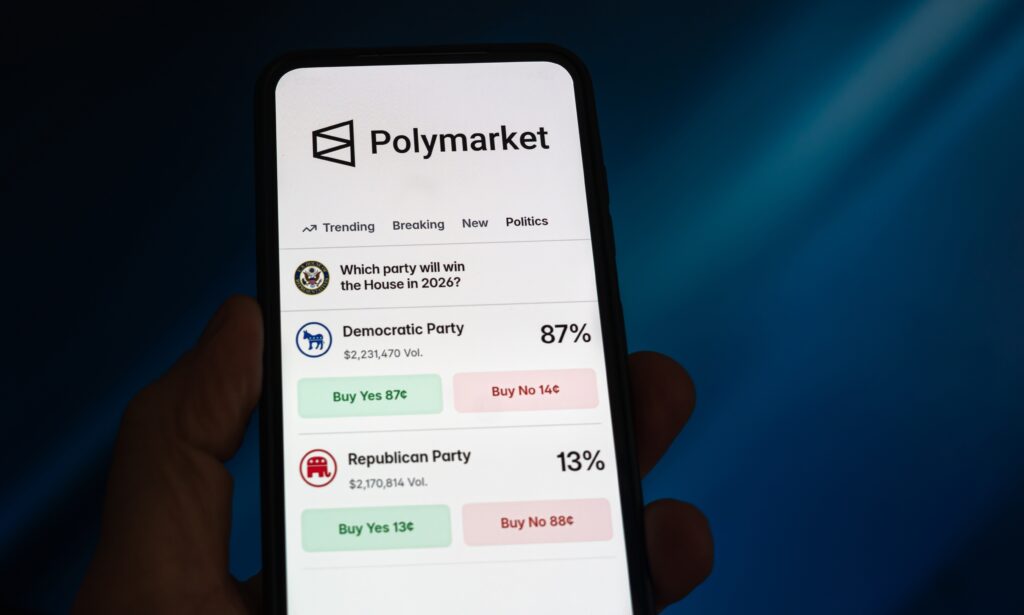
Public pages reviewed by CCN on Oct. 19 show that both exchanges offer NBA trading.
Kalshi’s basketball hub lists individual matchups alongside spread and total markets.
Polymarket US also lists upcoming NBA games, while its separate international platform carries markets including the 2027 championship.
As CCN previously explained, sports prediction contracts have become a focal point of the dispute between federal derivatives regulation and state gambling oversight.
An exchange contract and a sportsbook wager can expose users to the same sporting outcome, yet operate under different regulatory structures.
A future agreement with a prediction exchange could give the league greater contractual influence over that operator’s products.
Legal Sports Report reported that the NBA had not announced such a partnership when the restrictions emerged.
Prediction Markets Face Growing Scrutiny
The NBA’s restrictions arrive amid broader questions about whether prediction markets adequately protect users against insider trading and manipulation.
In May, House Oversight Committee Chairman James Comer launched an investigation into Kalshi and Polymarket, requesting information about identity checks and how the platforms detect suspicious trading.
“As online prediction platforms grow and become more mainstream, some bad actors have exploited the platforms to make thousands of dollars by placing bets based on nonpublic information,” said Chairman Comer.
“Americans deserve to know that these platforms are taking steps to prevent insider trading,” he added.
Concerns have already led to concrete disciplinary action.
In February, the Commodity Futures Trading Commission issued an advisory following two Kalshi cases involving misuse of nonpublic information and fraud.
“In May 2025, social media posts contained videos that appeared to show a political candidate trading on his own candidacy on Kalshi,” the CFTC wrote in its report.
Meanwhile, in August and September 2025, “an individual traded a prediction market related to a YouTube channel while having an employment relationship… with the subject of the contract.”
Critics have also challenged whether sports contracts allow operators to bypass protections required of state-licensed gambling businesses.
As CCN previously reported, state regulators and tribal groups have contested the industry’s reliance on federal derivatives oversight, arguing that sports contracts amount to gambling subject to additional restrictions.
The information provided in this article is for informational purposes only. It is not intended to be, nor should it be construed as, financial advice. We do not make any warranties regarding the completeness, reliability, or accuracy of this information. All investments involve risk, and past performance does not guarantee future results. We recommend consulting a financial advisor before making any investment decisions.

Kurt Robson is a London-based reporter at CCN, specialising in the fast-moving worlds of crypto and emerging technology. He began his career covering local news in Cornwall after graduating from Falmouth University with First Class Honours in Journalism. There, he cut his teeth on everything from council meetings to missing swans.
He quickly rose through the ranks to become a frontline journalist at several of the UK’s leading national newspapers. Over the years, he has interviewed musicians and celebrities, reported from courtrooms and crime scenes, and secured multiple front-page exclusives.
Following the upheaval of the COVID-19 pandemic, Kurt shifted his focus to technology journalism—just ahead of the AI boom. With a natural curiosity and a trained eye for emerging trends, he has found a new rhythm in reporting on innovation.
At CCN, Kurt's work focuses on the cutting edge of crypto, blockchain, AI, and the evolving digital world. Drawing on his background in people-first reporting and his deep interest in disruptive tech, Kurt delivers stories that are insightful, entertaining, and human-centric.