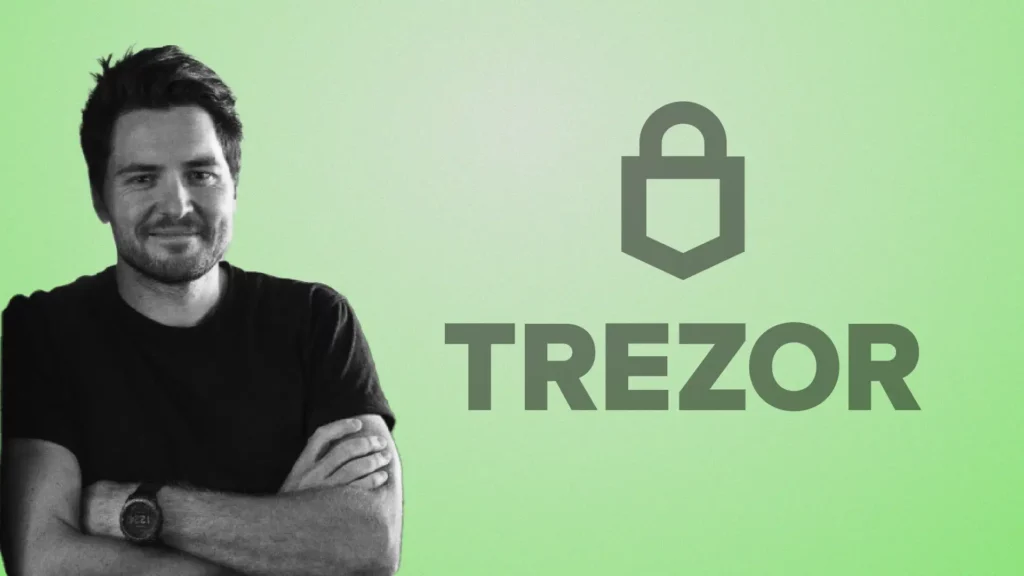
Ian Rogers has learned a thing or two from his time at Apple, and is bringing it into the crypto world.
Share
Key Takeaways
In a new interview with CCN, Ian Rogers has criticised industry security standards.
Rogers believes security is about limiting damage, not perfection.
He believes quantum’s threat to crypto is not imminent.
Ian Rogers, Ledger’s chief experience officer, has criticized what he called “irresponsible” security practices in the crypto industry, saying that software wallets and mobile-first designs give users a false sense of security.
Sitting down with CCN at Solana Breakpoint on Thursday, Rogers also downplayed near-term concerns about quantum computing, saying Ledger’s internal leadership is guiding his view.
Try Our Recommended Crypto Exchanges
Sponsored
Disclosure
We sometimes use affiliate links in our content, when clicking on those we might receive a commission at no extra cost to you. By using this website you agree to our terms and conditions and privacy policy.
Rogers criticized parts of the crypto ecosystem for not pushing stronger security defaults.
He said exchanges “have a responsibility to tell their customers how to be safer,” and argued they should guide users toward hardware-backed security controls, including passkeys.
“Your pass key… could be your ledger,” he said, suggesting there could be settings that explicitly prioritise Ledger-based security.
He also said software wallets should not imply that biometric locks are enough.
“It’s irresponsible,” he said, to suggest “a thumbprint is safe to protect value.”
No Security Is Perfect
Rogers framed Ledger’s approach as risk management under worst-case assumptions, not absolute protection.
“No, security is perfect, right?” he said, adding that the work of security teams is to “imagine the worst possible scenario” and “minimize that blast radius.”
He described Ledger’s objective as being “secure by design,” meaning product decisions are structured to reduce exposure if an attack occurs.
He also argued that this security posture creates trade-offs in product development speed.
“Sometimes it takes us longer to build something than someone else, because when you’re worried about security and self custody, often it takes longer to build,” he said.
Dismissing Quantum Concerns
On quantum computing as a threat to crypto security, Rogers was blunt.
“No,” he said when asked if he was afraid.
He explained his confidence as deference to Ledger’s cryptography leadership.
“Because I’m the expert, no, but because I work with experts,” he said.
Rogers pointed to Ledger CTO Charles Guillemet by name, saying Guillemet “has been very vocal on this subject” and that “Charles is not the slightest bit worried, and until Charles is worried, I’m not worried.”
Rogers added that Ledger is already preparing.
“We’re already… working on solutions, and we will have those solutions deployed long before it’s necessary,” he said.
Barriers to Adoption
Rogers argued that mainstream users default to the smartphone App Store mental model, which he sees as a barrier to hardware wallet adoption.
“Your phone was built to share information. It was not built to protect value, right?” he said.
In his framing, the industry has not done enough to clearly communicate that distinction, leaving many users underprotected as crypto usage expands.
Rogers acknowledged that even strong device security cannot fully protect users from manipulation.
He described seed phrases as “a big mental leap” for many people, which scammers exploit.
His warning was unambiguous.
“Anyone who is asking for your 24 words is a thief, straight up,” he said.
Lessons from Apple
Rogers said his product philosophy, shaped by prior roles, centres on building a cohesive experience rather than selling a standalone device.
“You’re not building a piece of hardware, you’re really building an experience,” he said.
Rogers said Ledger’s public product moments, including “Ledger Open,” draw on the “own show” approach he associated with Apple.
“If it’s not big enough to be on stage, why are you doing it? You know it also acts as a nice filter,” he explained.
“So I think these are good lessons that pretty much anybody can take into their businesses.”
Kurt Robson is a London-based reporter at CCN, specialising in the fast-moving worlds of crypto and emerging technology. He began his career covering local news in Cornwall after graduating from Falmouth University with First Class Honours in Journalism. There, he cut his teeth on everything from council meetings to missing swans.
He quickly rose through the ranks to become a frontline journalist at several of the UK’s leading national newspapers. Over the years, he has interviewed musicians and celebrities, reported from courtrooms and crime scenes, and secured multiple front-page exclusives.
Following the upheaval of the COVID-19 pandemic, Kurt shifted his focus to technology journalism—just ahead of the AI boom. With a natural curiosity and a trained eye for emerging trends, he has found a new rhythm in reporting on innovation.
At CCN, Kurt's work focuses on the cutting edge of crypto, blockchain, AI, and the evolving digital world. Drawing on his background in people-first reporting and his deep interest in disruptive tech, Kurt delivers stories that are insightful, entertaining, and human-centric.