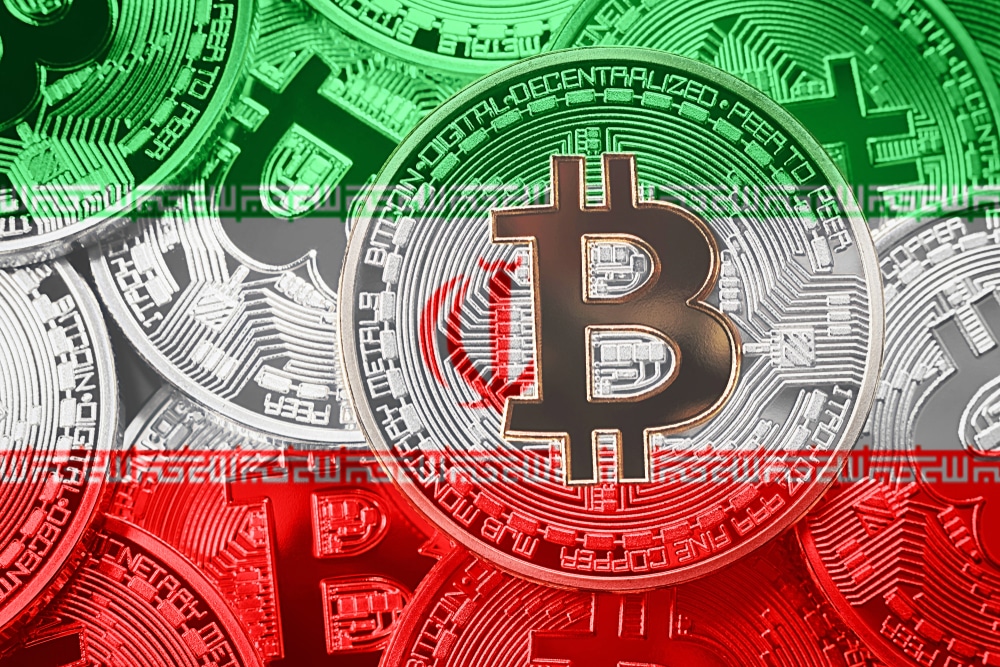
Iran accepts crypto payments for military equipment. | Credit: CCN.
Share
Key Takeaways
Iran’s Defense Ministry has signaled that cryptocurrency can be used as a payment option for certain military exports.
Using crypto offers an alternative to traditional banking channels, which are heavily constrained by international sanctions.
The development has raised concerns among analysts about sanctions enforcement, weapons proliferation, and broader global security risks.
Iran, which has long relied on cryptocurrency to navigate international trade restrictions, may soon take this a step further by accepting crypto payments for military equipment.
Reports suggest the initiative has been quietly developed over the past year, potentially making Iran one of the first nation-states to openly signal its willingness to use cryptocurrencies in strategic arms transactions.
Try Our Recommended Crypto Exchanges
Sponsored
Disclosure
We sometimes use affiliate links in our content, when clicking on those we might receive a commission at no extra cost to you. By using this website you agree to our terms and conditions and privacy policy.
Iran’s Ministry of Defense Export Center, known as Mindex, has begun allowing foreign buyers to pay for military equipment using cryptocurrency, according to details published on its official website.
The payment option applies to a wide range of hardware, including ballistic missiles such as the Emad series, Shahed drones, Shahid Soleimani–class warships, short-range air defense systems, small arms, rockets, and anti-ship cruise missiles.
Mindex lists cryptocurrency alongside barter arrangements and payments in Iranian rials as acceptable settlement methods.
Cryptocurrencies such as Bitcoin (BTC) and USDT offer an alternative.
Their ability to move value across borders without relying on conventional financial intermediaries reduces the risk of blocked transactions, making them increasingly attractive for sanctioned states seeking to conduct international trade.
Could Iran’s Use of Cryptocurrency Spur Geopolitical Tensions?
Iran’s use of crypto as a payment option for military exports could raise geopolitical and regulatory concerns, particularly given existing international sanctions frameworks.
Given the long-standing tensions between the United States and Iran, observers note that such developments may attract closer scrutiny from regulators, including OFAC.
Any response would likely hinge on whether authorities can directly link crypto-based transactions to sanctioned entities or prohibited activities.
Publicly available information suggests the relevant payment language has appeared in official materials for nearly a year.
Which means that this is not necessarily a sudden policy shift, but rather a practice that has only recently drawn wider attention.
Geopolitical and Legal Sensitivities
From an international law perspective, Iran’s defense exports already operate under significant constraints.
Certain arms-related activities have historically conflicted with United Nations Security Council resolutions, such as Resolution 2231, which imposed restrictions on the transfer of missiles.
While some provisions have formally expired, enforcement and interpretation remain subjects of dispute among member states.
Implications for Crypto Markets and Regulation
Analysts caution that links between crypto-financed weapons and conflicts involving U.S. allies could prompt governments to respond with additional sanctions and tighter monitoring of crypto flows tied to sanctioned jurisdictions.
In that scenario, authorities could seek to identify and blacklist blockchain addresses associated with sanctioned entities, potentially expanding sanctions designations to include wallets or intermediaries connected to defense exporters.
Centralized exchanges may also face pressure to strengthen geofencing and compliance controls to avoid exposure.
European regulators could similarly cite such cases when advancing tighter oversight under existing frameworks, including the Markets in Crypto-Assets (MiCA) regime.
Meanwhile, international bodies such as the Financial Action Task Force (FATF) may update guidance around virtual assets and high-risk use cases.
More broadly, the situation underscores ongoing debates around the limits of cryptocurrency oversight.
While public blockchains offer transparency, the use of privacy-enhancing tools or intermediaries can complicate enforcement efforts. Regulators continue to weigh how best to address these gaps without stifling legitimate innovation.
Some analysts have also pointed to earlier reports suggesting that other sanctioned or conflict-affected states may have explored cryptocurrency for restricted financial activities, highlighting a wider trend that policymakers are still grappling with.
Prashant Jha is a seasoned crypto journalist based in Delhi, India, with a Bachelor’s Degree in Computer Science Engineering. Passionate about the evolving world of blockchain and cryptocurrencies, he has been a dedicated voice in the industry since 2018. Prashant’s expertise lies in regulatory reporting, where he unravels complex legal and financial developments with clarity and precision. Before joining CCN in 2024, he honed his craft at Cointelegraph, establishing himself as a trusted name in crypto journalism.
His coverage spans major industry events, including the high-profile collapses of FTX, Three Arrows Capital (3AC), and LUNA, offering readers insightful analyses of their regulatory and market implications. Prashant’s technical background enables him to bridge the gap between intricate blockchain technology and its real-world applications, making his work accessible to novices and experts.
Beyond his professional pursuits, Prashant is an avid music enthusiast, often exploring diverse genres to unwind. A sports lover, he has a particular passion for cricket and frequently engages in discussions about the game. His multifaceted interests and sharp journalistic instincts make him a valuable contributor to CCN, where he continues shaping the crypto landscape's narrative.