Key Takeaways
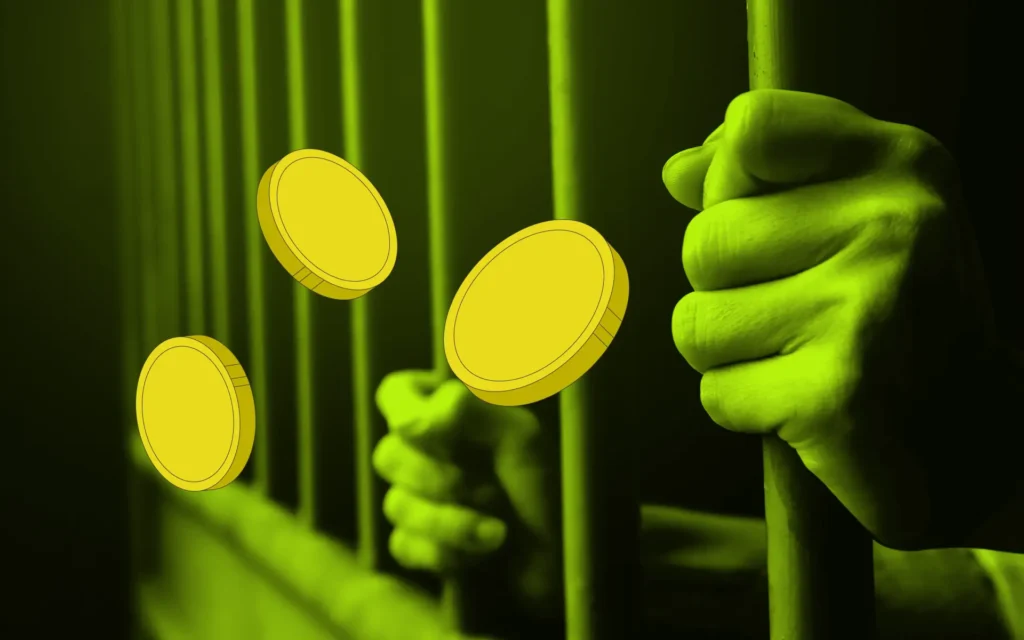
- A member of South Korea’s “Chilseongpa” crime group has been jailed for eight years after embezzling around $332,000 in Bitcoin.
- The case expanded into wider criminal activity.
- South Korea had intensified its crypto crackdown.
A South Korean court has sentenced a member of an organized crime group to eight years in prison after he embezzled crypto worth hundreds of thousands of dollars and lost the funds gambling.
Gangster Jailed Over Bitcoin Embezzlement
According to South Korean media reports, the Busan District Court said a man, identified with the second name Kim, had misused roughly 500 million won ($332,000) in Bitcoin entrusted to him for sale from a friend and instead spent the proceeds on online casino bets.
The court convicted him under laws covering aggravated economic crimes, including embezzlement and fraud.
According to South Korean media reports, Kim was an enforcer for the Busan-based organized crime group known as “Chilseongpa.”
In July 2019, he received Bitcoin from an acquaintance acting on behalf of an investor, with an agreement to liquidate the assets for a 0.5% commission.
Instead, prosecutors said Kim converted the crypto into cash and gambled away the funds online, failing to return the proceeds.
However, the case expanded beyond embezzlement.
While on trial, Kim fled before sentencing and later became involved in a broader criminal enterprise.
Authorities said that in 2021, while on the run, he joined an investment fraud ring operating via Telegram and took on a role overseeing money laundering operations.
The group defrauded 149 victims of approximately 9.7 billion won through hundreds of transactions over more than a year, luring investors with false promises tied to gold and cryptocurrency price movements.
Bitcoin Case Follows Push For Frozen Transaction Fees
The sentencing comes amid growing regulatory scrutiny of crypto-related crime in South Korea.
In January, authorities said they were considering a “payment freeze” system that would allow regulators to temporarily suspend transactions from crypto accounts or wallets suspected of illicit activity.
The proposal aims to prevent suspects from quickly moving or concealing funds — a challenge in crypto markets where transactions are rapid and can cross borders easily.
Under the framework, virtual asset service providers must comply with freeze orders, similar to traditional banking controls.
Broader Crackdown
South Korea has stepped up enforcement following a series of high-profile crypto-related crimes.
Earlier this year, customs authorities uncovered an international crypto laundering network worth roughly 150 billion won ($107 million).
The operation, which ran for several years, used legitimate cross-border payments — including those for cosmetic surgery and education — to disguise illicit foreign exchange transactions.
Funds were converted into crypto overseas, transferred into South Korea, and then cashed out via local platforms, often routed through multiple bank accounts to obscure their origin.
Authorities say such schemes highlight the increasing sophistication of crypto-enabled financial crime, including illegal remittances, fraud and market manipulation.
Strict Rules, But Gaps Remain
South Korea already has one of the world’s more tightly regulated crypto markets, including real-name account requirements and investor protection laws.
However, regulators acknowledge that gaps persist, particularly around cross-border flows and enforcement of anti-money laundering standards such as the Financial Action Task Force’s “Travel Rule.”
Officials highlighted the rising use of tactics like “smurfing,” where scammers split stolen funds into smaller transactions to evade detection thresholds.

Kurt Robson is a London-based reporter at CCN, specialising in the fast-moving worlds of crypto and emerging technology. He began his career covering local news in Cornwall after graduating from Falmouth University with First Class Honours in Journalism. There, he cut his teeth on everything from council meetings to missing swans.
He quickly rose through the ranks to become a frontline journalist at several of the UK’s leading national newspapers. Over the years, he has interviewed musicians and celebrities, reported from courtrooms and crime scenes, and secured multiple front-page exclusives.
Following the upheaval of the COVID-19 pandemic, Kurt shifted his focus to technology journalism—just ahead of the AI boom. With a natural curiosity and a trained eye for emerging trends, he has found a new rhythm in reporting on innovation.
At CCN, Kurt's work focuses on the cutting edge of crypto, blockchain, AI, and the evolving digital world. Drawing on his background in people-first reporting and his deep interest in disruptive tech, Kurt delivers stories that are insightful, entertaining, and human-centric.