Key Takeaways
- France’s Marine Le Pen has pivoted from wanting to ban crypto in 2016 to actively promoting domestic Bitcoin mining in 2025.
- Despite strict oversight, France encourages blockchain innovation and has positioned itself as a European Web3 hub.
- However, crypto has become a decisive campaign issue in major democracies.
Cryptocurrencies are now entering mainstream political agendas — and in France, they’re becoming a point of divergence between the government and the opposition.
The far-right Rassemblement National, long skeptical of the crypto industry, has recently begun to revise its stance.
This shift comes as global trends show a growing alignment between pro-crypto platforms and electoral success.
Top Trending Crypto Articles
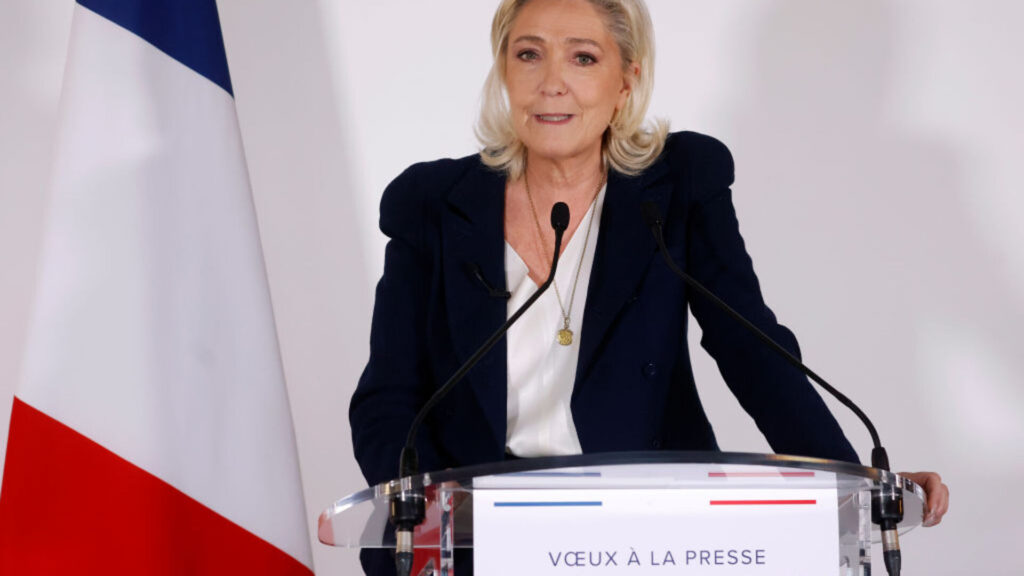
France’s Far-Right Makes a Radical Pivot: From Banning to Mining Bitcoin
In a dramatic reversal, France’s far-right Rassemblement National (RN) has gone from condemning cryptocurrencies to championing them.
In 2016, Marine Le Pen decried Bitcoin as a tool of global financial elites. By 2022, she shifted toward a position of regulation.
In 2025, Le Pen is proposing domestic Bitcoin mining powered by surplus nuclear energy.
During a visit to the Flamanville nuclear plant, she endorsed installing mining rigs on EDF sites to transform unused electricity into a sovereign crypto asset.
This U-turn reflects ideological flexibility and strategic repositioning in a changing political landscape.
France’s Crypto Stance: Between Caution and Innovation
While other Nations rush to embrace crypto as a political rallying cry, France has taken a more measured approach.
The French government has consistently supported the EU’s regulatory framework, particularly the Markets in Crypto-Assets (MiCA) regulation, which sets common standards for transparency, consumer protection, and licensing across member States.
Paris has championed this rule-based structure as essential for trust and market stability, especially after several global crypto scandals.
But regulation hasn’t meant resistance. France has simultaneously promoted a strong fintech and Web3 ecosystem, encouraging startups and institutional players to develop blockchain applications under clear legal conditions.
The country has attracted significant global exchanges and supported pilot programs in decentralized finance, tokenization, and central bank digital currencies.
Pro-Crypto Campaigns Are Winning Elections Around the World
Cryptocurrencies have rapidly moved from the margins to the center of global politics.
From the U.S. to Asia, pro-crypto platforms are helping politicians win elections — especially among younger, digital-native voters.
In the U.S., Donald Trump won the Presidential elections thanks to his support for cryptocurrencies.
The U.S. just passed two relevant laws aiming to regulate and boost digital assets in the country—GENIUS and Clarity Acts—while one of Trump’s first acts in his second term was signing a bill to launch a national crypto reserve.
With millions of retail investors and a growing Web3 sector, support for digital assets is now a mainstream bipartisan political position in the U.S.
Before the vote, campaigns accepted crypto donations, promoted blockchain policy, and used NFTs for fundraising.
Former President Yoon Suk-yeol in South Korea partly won by pledging crypto deregulation, capturing the youth vote.
In Japan, the government made Web3 and crypto central to its “New Capitalism,” promoting NFTs and blockchain as engines of growth. In both cases, crypto wasn’t just tolerated but actively championed.
Across Latin America and Africa, from El Salvador to Nigeria, crypto is framed as economic liberation in systems plagued by inflation or financial exclusion.
Top Trending Crypto Articles

Giuseppe Ciccomascolo began his career as an investigative journalist in Italy, where he contributed to both local and national newspapers, focusing on various financial sectors.
Upon relocating to London, he worked as an analyst for Fitch's CapitalStructure and later as a Senior Reporter for Alliance News. In 2017, Giuseppe transitioned to covering cryptocurrency-related news, producing documentaries and articles on Bitcoin and other emerging digital currencies. He also played a pivotal role in establishing the academy for a cryptocurrency exchange website. Crypto remained his primary area of interest throughout his tenure as a writer for ThirdFloor.