Key Takeaways
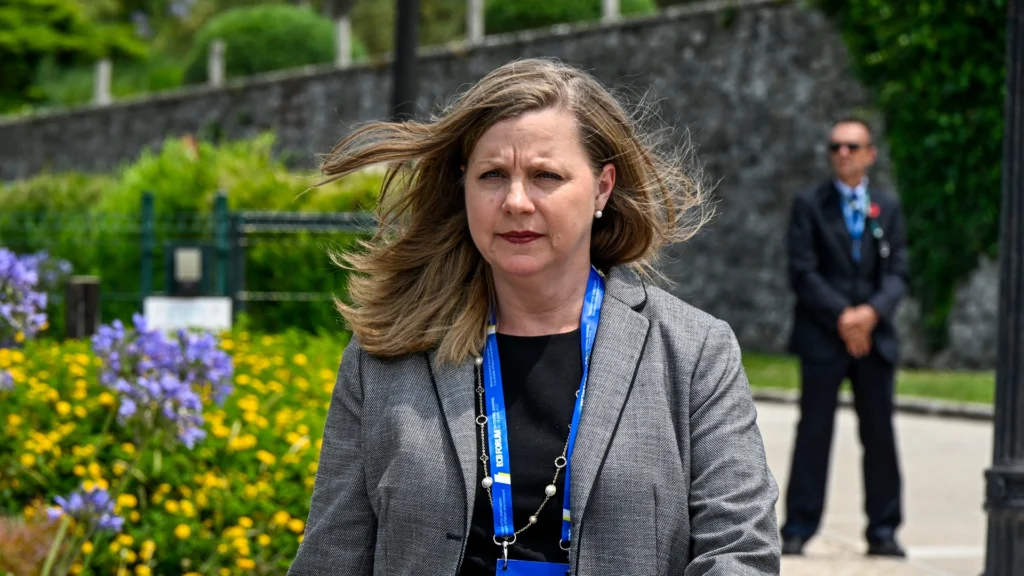
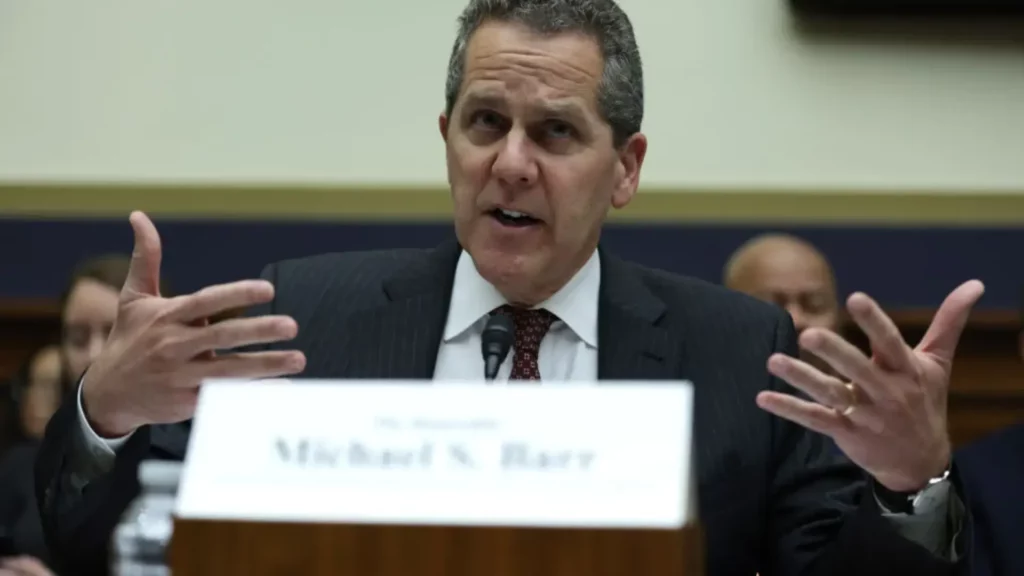
- President Trump appointed Michelle Bowman as the new Federal Reserve Vice Chair for Supervision, replacing Michael Barr.
- Bowman has been skeptical of a U.S. Central Bank Digital Currency (CBDC).
- Recently, however, she has signaled a more open stance toward digital assets.
President Donald Trump has nominated Federal Reserve Governor Michelle Bowman to serve as the central bank’s new vice chair for supervision, filling the vacancy left by Michael Barr’s resignation.
Bowman, known for her skepticism toward retail central bank digital currencies (CBDCs), has expressed limited but consistent support for regulated innovation in the digital asset space.
Her elevation to the Fed’s top regulatory role could mark a shift in the central bank’s tone, favoring a more cautious and pragmatic approach to crypto while maintaining strong oversight of traditional financial institutions.
Senate To Decide on Bowman Appointment
The Senate Banking Committee voted 13–11 to advance Bowman’s nomination, moving her one step closer to confirmation.
The full Senate will now consider her appointment, which is expected to draw further scrutiny and debate.
On the same day, Senate Democrats blocked a separate attempt by Banking Committee Chair Tim Scott (R-S.C.) to fast-track two of President Trump’s other nominees.
Scott sought unanimous consent to confirm Luke Pettit as assistant secretary of the Treasury and Marcus Molinaro as administrator of the Federal Transit Administration.
Both had previously cleared the committee with strong bipartisan support, with votes of 19–5 and 20–4, respectively.
Democrats objected to the motion, stalling both nominations for now.
Trump Appoints Michelle Bowman as Fed’s Top Bank Regulator
Bowman, a former Kansas banking regulator and community bank executive, is expected to take a lighter approach to financial oversight.
She previously joined the Fed during Trump’s first term and has been a vocal critic of overregulation, particularly when it comes to small banks.
Trump praised Bowman’s expertise in banking, inflation, and financial policy, describing her appointment as part of his broader push to undo what he called years of economic “mismanagement.”
Bowman will also retain her seat on the Federal Open Market Committee (FOMC), which meets this week and is widely expected to leave interest rates unchanged.
A Shift in Crypto Oversight?
Bowman’s appointment could mark a shift in the Fed’s approach to digital assets. She has consistently shown openness to stablecoins and regulated digital assets.
In contrast, Barr took a more cautious, though not outright hostile, stance toward crypto. He repeatedly warned against banks holding crypto on their balance sheets during his tenure, calling it “unsafe and unsound.”
While he avoided a full-scale crackdown, his regulatory approach was viewed by some in the industry as an attempt to limit crypto firms’ access to the banking system—a strategy critics dubbed “Operation Choke Point 2.0.”
Barr also led efforts to tighten oversight of stablecoins, arguing that they carried “run risks” similar to unregulated private money. However, he maintained that the Fed was not blocking banks from serving crypto clients, instead emphasizing risk management and financial stability.
Despite his regulatory caution, Barr’s past role as an advisor to Ripple complicated his image as an anti-crypto figure. His departure removes a key skeptic of bank-held digital assets and paves the way for Bowman, whose approach could signal continuity with a more balanced tone.
Bowman’s Stance on CBDCs and Stablecoins
Bowman has been an outspoken critic of a U.S. CBDC, particularly one intended for retail use. She has consistently questioned its necessity, arguing that existing payment systems already provide efficiency and accessibility.
In November 2021, at a Q&A with the American Bankers Association (ABA), Bowman questioned the need for a U.S. CBDC, stating, “I’m not really sure that I understand or see the business case for creating it,” citing the current system’s reliability.
In April 2023, she argued a CBDC wouldn’t significantly improve payments over existing systems like FedNow or enhance financial inclusion, as “over 95% of households have bank accounts.”
She also dismissed claims that a CBDC would strengthen the dollar’s global role, stating its dominance comes from “the U.S. economy’s size, deep financial markets, strong institutions, and rule of law.”
Bowman has, however, acknowledged the potential role of stablecoins in digital payments, though she has warned that they can be “less secure, less stable, and less regulated” than traditional money.
While her stance on digital assets remained largely unchanged for years, recent comments from Bowman and Fed Governor Christopher Waller in February 2025 suggest the central bank may be taking a more open approach toward digital innovation.
Bowman’s leadership could provide a clearer regulatory path for crypto firms, but whether that translates into meaningful policy shifts remains to be seen.

Giuseppe Ciccomascolo began his career as an investigative journalist in Italy, where he contributed to both local and national newspapers, focusing on various financial sectors.
Upon relocating to London, he worked as an analyst for Fitch's CapitalStructure and later as a Senior Reporter for Alliance News. In 2017, Giuseppe transitioned to covering cryptocurrency-related news, producing documentaries and articles on Bitcoin and other emerging digital currencies. He also played a pivotal role in establishing the academy for a cryptocurrency exchange website. Crypto remained his primary area of interest throughout his tenure as a writer for ThirdFloor.